


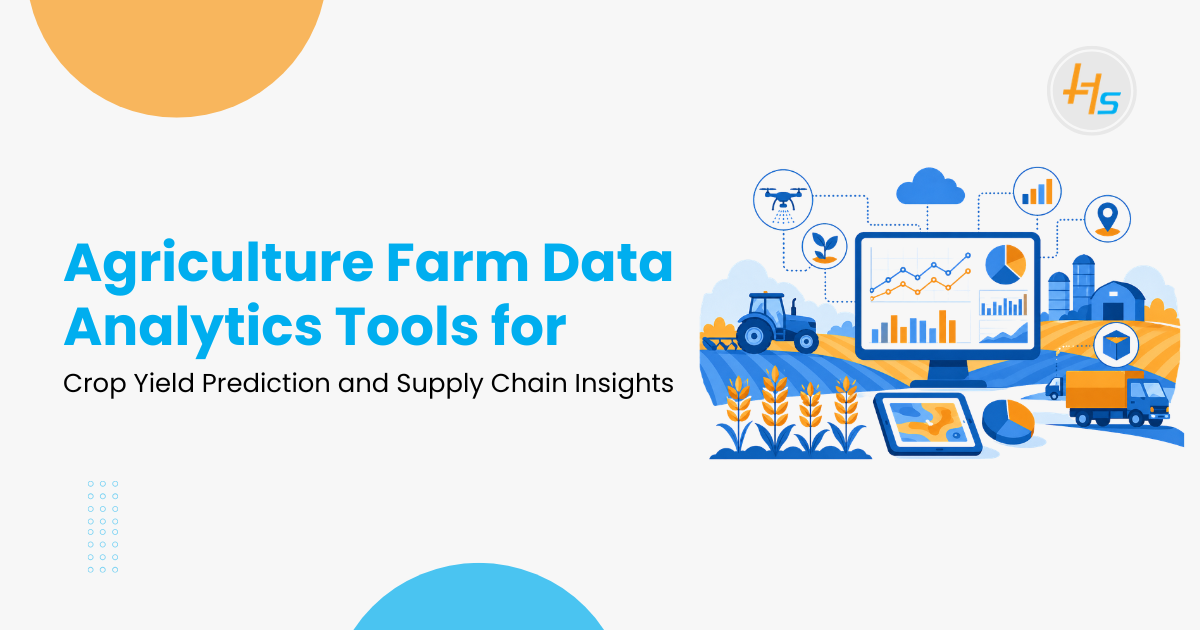
Agriculture has entered a data-driven phase. Farmers and agribusinesses now rely on digital tools for decision-making. Data analytics plays a key role in improving crop yield and managing supply chains. According to Statista, the global smart agriculture market exceeded $20 billion in 2023. A report by the Food and Agriculture Organization states that food production must increase by 60% by 2050 to meet global demand. Another study shows that data-driven farming can improve crop yield by up to 25%.
Traditional farming methods lack precision and real-time insights. Farmers often face issues such as unpredictable weather, poor yield estimation, and inefficient supply chains. A Software Development Company builds advanced analytics platforms for agriculture. A Custom Software Development Company creates tailored tools for crop prediction and supply chain optimization. These solutions improve productivity and reduce losses.
Table of Contents
Understanding Agriculture Data Analytics
Agriculture data analytics involves collecting, processing, and analyzing farm data. It helps farmers make informed decisions.
Core Functions
- Collect farm data
- Analyze environmental conditions
- Predict crop yield
- Monitor supply chains
- Generate insights
These functions improve farm efficiency.
Challenges in Traditional Farming
Traditional farming methods have supported agriculture for many years, but modern farming now faces greater pressure. Farmers must produce more food, manage rising costs, deal with climate changes, and reduce waste. Without data analytics, many farming decisions still depend on guesswork, past experience, or delayed information.
This creates several operational and financial challenges.
1. Unpredictable Weather
Weather plays a major role in crop growth, irrigation planning, harvesting schedules, and pest control. In traditional farming, many farmers depend on general forecasts or personal observation.
This creates problems such as:
- Sudden rainfall damaging crops
- Delayed sowing decisions
- Heatwaves reducing productivity
- Frost harming young plants
- Poor irrigation timing
For example, unexpected rain during harvest can damage grain quality and increase losses.
With better weather analytics, farmers can plan activities more accurately.
2. Poor Yield Estimation
Accurate crop yield prediction is important for pricing, storage planning, labor management, and supply chain coordination. Traditional methods often rely on rough estimates based on visual inspection or past seasons.
This can lead to:
- Wrong market planning
- Storage shortages
- Overstocking transport capacity
- Pricing mistakes
- Revenue uncertainty
For example, underestimating crop output may create warehouse shortages during harvest season.
Yield analytics helps farmers make better financial decisions.
3. Inefficient Resource Use
Resources such as water, fertilizer, seeds, fuel, and pesticides are expensive. In traditional farming, farmers may apply the same amount across the entire field without checking actual soil or crop needs.
This causes:
- Water wastage
- Higher fertilizer costs
- Soil damage over time
- Extra pesticide use
- Lower profit margins
Some field areas may need more input, while others need less. Without data, resource use becomes inefficient.
Smart farming systems help apply resources only where needed.
4. Supply Chain Gaps
After harvesting, crops must move quickly through storage, transport, markets, and processing centers. Traditional farming systems often lack real-time supply chain coordination.
Common problems include:
- Delivery delays
- Poor route planning
- Cold storage failures
- Product spoilage
- Market timing losses
- Higher transport costs
For example, fruits and vegetables can lose value quickly if transport is delayed.
Connected supply chain tools improve movement and reduce wastage.
5. Lack of Data Integration
Farm data often exists in separate places such as notebooks, spreadsheets, machine systems, weather apps, and supplier records.
This creates challenges like:
- No single view of farm operations
- Slow decision-making
- Duplicate records
- Harder planning
- Limited historical insights
When data is scattered, farmers cannot easily compare field performance, costs, or seasonal trends.
Why Custom Analytics Tools are Important
Off-the-shelf solutions may not meet farm-specific needs. Each farm has unique conditions.
A Custom Software Development Company builds tailored analytics platforms.
Key Benefits
- Accurate crop predictions
- Better resource management
- Improved supply chain visibility
- Scalable solutions
- Real-time insights
Custom tools adapt to different farming environments.
Role of a Software Development Company
A Software Development Company develops analytics systems for agriculture.
Core Responsibilities
- Design data architecture
- Build analytics models
- Integrate IoT devices
- Ensure system security
- Provide ongoing support
These steps ensure reliable solutions.
Key Components of Farm Data Analytics Systems
Modern analytics systems include several components.
1. Data Collection Systems
Data collection is the first step.
- Sensors for soil and weather
- Satellite imagery
- IoT devices
2. Data Processing Layer
The system processes raw data.
- Clean and validate data
- Store structured data
3. Analytics Engine
The engine analyzes data.
- Predict crop yield
- Identify patterns
4. Visualization Tools
Dashboards present insights.
- Graphs and charts
- Real-time updates
Crop Yield Prediction Techniques
Accurate yield prediction helps farmers plan better.
Methods Used
- Machine learning models
- Historical data analysis
- Weather forecasting integration
Key Factors
- Soil quality
- Weather conditions
- Crop type
- Irrigation patterns
Benefits
- Better planning
- Reduced risk
- Increased productivity
Role of Machine Learning in Yield Prediction
Machine learning improves prediction accuracy.
Techniques
- Regression models
- Decision trees
- Neural networks
Benefits
- Identify patterns
- Improve accuracy
- Adapt to new data
Supply Chain Insights in Agriculture
Supply chain management is critical in agriculture.
Key Challenges
- Transportation delays
- Storage issues
- Demand fluctuations
Analytics Solutions
- Track product movement
- Predict demand
- Optimize logistics
Benefits
- Reduced wastage
- Improved delivery time
- Better pricing strategies
Real-Time Data Monitoring
Real-time monitoring improves decision-making.
Features
- Live weather updates
- Soil moisture tracking
- Crop health monitoring
Benefits
- Immediate action
- Reduced losses
- Improved efficiency
Real-World Example
A farming cooperative faced low yield and supply chain inefficiencies. It lacked data-driven insights.
The organization partnered with a Custom Software Development Company.
Solution
- Implemented IoT-based data collection
- Built machine learning models for yield prediction
- Integrated supply chain tracking
Results
- Increased crop yield by 20%
- Reduced wastage
- Improved logistics efficiency
This example highlights the value of analytics tools.
Integration with Emerging Technologies
Modern agriculture uses advanced technologies.
1. Internet of Things (IoT)
IoT devices collect real-time data.
- Soil sensors
- Weather stations
2. Artificial Intelligence (AI)
AI improves decision-making.
- Predict crop diseases
- Optimize farming practices
3. Satellite Imaging
Satellite data provides large-scale insights.
- Monitor crop health
- Analyze land usage
Data Security in Agriculture Systems
Farm data must remain secure.
Security Measures
- Data encryption
- Secure APIs
- Access control
A Software Development Company ensures secure system design.
Technical Architecture of Analytics Platforms
A strong architecture ensures scalability.
1. Cloud-Based Infrastructure
Cloud systems support large data volumes.
- Data storage
- Remote access
- High availability
2. Microservices Architecture
Microservices divide the system into modules.
- Data collection service
- Analytics service
- Visualization service
3. API Integration
APIs connect external systems.
- Weather APIs
- Market data systems
Best Practices for Agriculture Analytics Development
Agriculture analytics helps farmers, agribusinesses, and supply chain companies make better decisions using data. These platforms use information from sensors, drones, weather feeds, machinery, and market systems to improve crop yield, reduce waste, and manage operations.
To build a successful agriculture analytics platform, developers must follow strong technical and operational practices.
Development Practices
1. Use Scalable Architecture
Agriculture platforms often handle data from many sources across multiple farms and regions. As the business grows, the system must support more users, more devices, and larger data volumes.
A scalable architecture helps by supporting:
- More connected IoT devices
- Growing user accounts
- Higher data storage needs
- Faster analytics processing
- Expansion to new locations
Modern systems often use:
- Cloud infrastructure
- Microservices architecture
- API-first design
- Distributed databases
This approach allows smooth growth without major rebuilds.
2. Ensure Data Accuracy
Analytics is only useful when the data is correct. Poor data quality can lead to wrong crop planning, irrigation errors, or supply chain delays.
Developers should build systems that validate incoming data from:
- Soil sensors
- Weather stations
- Drones
- Farm equipment
- Manual user inputs
- ERP systems
Best methods include:
- Duplicate detection
- Missing value checks
- Sensor anomaly alerts
- Unit standardization
- Timestamp verification
Accurate data builds trust in the platform.
3. Optimize Performance
Farmers and managers need quick access to dashboards, alerts, and reports. Slow systems reduce daily efficiency.
Performance optimization should focus on:
- Fast dashboard loading
- Real-time alerts
- Quick report generation
- Efficient mobile app speed
- Low-latency API responses
Common technical methods:
- Query optimization
- Caching layers
- CDN usage
- Efficient frontend design
- Background data processing
Fast systems improve user adoption.
Telecom Network Monitoring Custom Software for Downtime Detection and Performance Analytics
Operational Practices
1. Monitor System Performance
Once deployed, agriculture analytics systems need continuous monitoring.
Track areas such as:
- Server uptime
- API speed
- Sensor connection health
- Error rates
- Database load
- User activity
Monitoring tools help teams solve issues before users are affected.
2. Update Analytics Models
Agriculture conditions change due to seasons, weather, crop cycles, pests, and market demand. Old models may become less accurate over time.
Developers should regularly update:
- Yield prediction models
- Irrigation recommendations
- Disease detection models
- Supply chain forecasts
- Pricing trend engines
Regular updates improve business results.
3. Train Users
Many users may be farmers, warehouse staff, or field teams with different technical skill levels.
Training should cover:
- Dashboard use
- Mobile app workflows
- Alert handling
- Report reading
- Device troubleshooting
Simple onboarding improves adoption and ROI.
Challenges in Custom Development
Custom agriculture analytics development offers strong value, but it also includes several challenges.
Common Issues
High Implementation Cost
Initial development can require investment in:
- Software engineering
- Cloud setup
- IoT hardware integration
- Security systems
- Mobile apps
- Dashboards
- AI models
Although setup costs can be high, custom systems often reduce long-term manual costs and inefficiencies.
1. Data Integration Complexity
Agriculture businesses use many disconnected systems.
Common data sources include:
- Sensors
- GPS devices
- Weather APIs
- ERP systems
- Inventory tools
- Logistics platforms
- Financial software
Connecting all systems into one platform can be complex.
Challenges include:
- Different file formats
- API limits
- Data delays
- Duplicate records
- Inconsistent naming structures
Strong integration planning is critical.
2. Need for Skilled Professionals
Agriculture analytics needs experts in multiple areas:
- Software development
- Data engineering
- Cloud systems
- IoT integration
- UI/UX design
- AI and machine learning
- Agriculture workflows
Hiring the right team can be difficult.
3. Security and Privacy Risks
Agriculture data has growing commercial value.
Sensitive data may include:
- Production volume
- Supplier contracts
- Pricing trends
- Location data
- Machinery usage
Security controls are essential.
Future Trends in Agriculture Analytics
Agriculture technology continues to evolve quickly.
1. AI-Driven Farming
AI is helping farms make smarter decisions.
Examples include:
- Yield prediction
- Pest detection
- Smart irrigation timing
- Soil health analysis
- Demand forecasting
AI reduces guesswork.
2. Precision Agriculture
Precision farming uses data to manage each field zone differently.
Benefits include:
- Lower fertilizer waste
- Better water use
- Improved crop quality
- Reduced costs
This trend is growing globally.
3. Real-Time Analytics
Businesses now expect live insights instead of delayed reports.
Real-time use cases:
- Weather alerts
- Equipment failure warnings
- Supply chain delays
- Temperature tracking
- Harvest progress monitoring
4. Automated Supply Chains
Agriculture supply chains are becoming more connected.
Examples:
- Smart warehouse tracking
- Delivery route optimization
- Inventory forecasting
- Cold chain monitoring
Automation improves speed and reduces losses.
5. Sustainability Analytics
More businesses now track:
- Water consumption
- Carbon impact
- Energy use
- Waste reduction
A Software Development Company must adapt to these trends to remain competitive.
Choosing the Right Development Partner
Selecting the right partner ensures project success and long-term value.
1. Experience in Agriculture Software
Choose a company with knowledge of agriculture operations such as:
- Crop cycles
- Farm workflows
- Supply chains
- Inventory systems
- Field operations
Industry experience saves time.
2. Strong Technical Expertise
Your partner should have skills in:
- Cloud platforms
- Mobile app development
- Data analytics
- IoT systems
- Security engineering
- API integration
3. Proven Track Record
Review:
- Previous projects
- Client reviews
- Delivery quality
- Case studies
- Support history
4. Ability to Build Scalable Systems
The platform should support future growth across farms, users, and devices.
5. Ongoing Support Services
Agriculture platforms need regular support for:
- Bug fixes
- New features
- Sensor integrations
- Security updates
- Analytics improvements
A reliable Custom Software Development Company ensures long-term value.
Transform Your Agriculture Operations with Smart Data Analytics Solutions
Choosing the right custom software partner is important for agriculture businesses that need accurate crop predictions, better resource planning, and improved supply chain visibility. From managing farm data and weather patterns to optimizing yield and distribution, businesses need a reliable solution built for long-term growth.
At HashStudioz, we help agriculture businesses build advanced data analytics platforms that provide real-time insights, predict crop yield, and improve supply chain decisions. Our team develops secure, scalable systems that help farmers and agribusinesses reduce risks, increase productivity, and make data-driven decisions.
Partner with our experienced team to build a smart agriculture analytics platform that improves farm efficiency, enhances decision-making, and supports sustainable growth with confidence.
Conclusion
Agriculture faces increasing demand and complex challenges. Traditional methods cannot meet modern requirements. Data analytics tools provide an effective solution. They improve crop yield prediction and offer valuable supply chain insights. A Software Development Company builds advanced analytics systems. A Custom Software Development Company delivers tailored solutions based on farm needs.
Organizations that adopt data-driven farming improve productivity and reduce losses. Advanced technologies will continue to shape the future of agriculture.
FAQs
1. What are agriculture farm data analytics tools?
Agriculture farm data analytics tools are software solutions that collect, process, and analyze farm-related data. These tools use data from sources like weather systems, soil sensors, and equipment to help farmers make better decisions about crop planning, irrigation, and harvesting.
2. How do these tools help in crop yield prediction?
These tools analyze historical data, weather patterns, soil conditions, and crop performance to predict future yield. Advanced models and algorithms provide accurate forecasts, helping farmers plan resources, reduce risks, and improve productivity.
3. What role do analytics tools play in supply chain management?
Analytics tools provide visibility into the entire supply chain. They help track production, storage, and distribution processes. This improves inventory planning, reduces waste, and ensures timely delivery of agricultural products.
4. What technologies are used in agriculture analytics tools?
These tools use technologies such as Artificial Intelligence (AI), Machine Learning (ML), IoT devices, cloud computing, and data analytics platforms. These technologies help process large volumes of data and provide real-time insights.
5. Why should businesses invest in custom agriculture analytics solutions?
Custom solutions are designed based on specific farm requirements and workflows. They offer better scalability, improved performance, and seamless integration with existing systems. A Custom Software Development Company can build solutions that provide long-term value and better decision-making support.