


The global retail supply chain is becoming more connected, data-driven, and transparent. As retailers expand across multiple sales channels and global markets, they face growing challenges such as counterfeit products, limited product visibility, supply chain disruptions, and rising customer expectations. According to industry analysis from Grand View Research, the global blockchain supply chain market is projected to grow from USD 14.2 billion in 2026 to USD 192.9 billion by 2030, exhibiting a compound annual growth rate (CAGR) of 88.8%. This massive expansion is driven by increasing demand for secure and transparent supply chain operations.
Blockchain technology helps address these challenges by creating a shared, tamper-resistant record of every transaction across the supply chain. When combined with technologies like AI, IoT sensors, RFID, and smart contracts, it enables real-time product tracking, faster supplier verification, automated workflows, and improved trust among manufacturers, distributors, retailers, and customers.
Everything is affected by innovative technological trends. Every industry it affects is changing in some manner, improving, and bringing up new opportunities for growth.
Every day, we have to deal with the retail industry. Do you want to learn about what blockchain technology can do for the retail industry? You’ll find out in this article!
Table of Contents
What Is Blockchain In the Supply Chain?
Blockchain in the retail supply chain is a decentralized digital ledger that securely records every transaction and product movement, from manufacturing to final delivery. Each record is encrypted, time-stamped, and cannot be altered, creating a transparent and tamper-resistant history.
Unlike traditional supply chains, where businesses maintain separate databases, blockchain provides a shared source of truth for manufacturers, suppliers, logistics providers, and retailers. This improves transparency, reduces errors, and speeds up collaboration.
When combined with AI, IoT sensors, RFID tags, and smart contracts, blockchain enables real-time product tracking, automated workflows, faster supplier verification, and improved inventory management. As a result, retailers can reduce fraud, improve traceability, and build greater customer trust.
Why Blockchain is important to the retail industry?
Retail supply chains involve multiple stakeholders, including manufacturers, suppliers, logistics providers, warehouses, and retailers. Managing data across these parties can be difficult, leading to delays, fraud, limited visibility, and inventory errors.
Blockchain addresses these challenges by providing a secure and shared ledger where authorized participants can access the same real-time information. This improves product traceability, strengthens supplier collaboration, reduces counterfeit goods, and automates processes through smart contracts.
As retailers adopt AI, IoT, and omnichannel operations, blockchain has become a key technology for building transparent, efficient, and resilient supply chains.
Top Ways Blockchain Is Transforming Retail Supply Chains
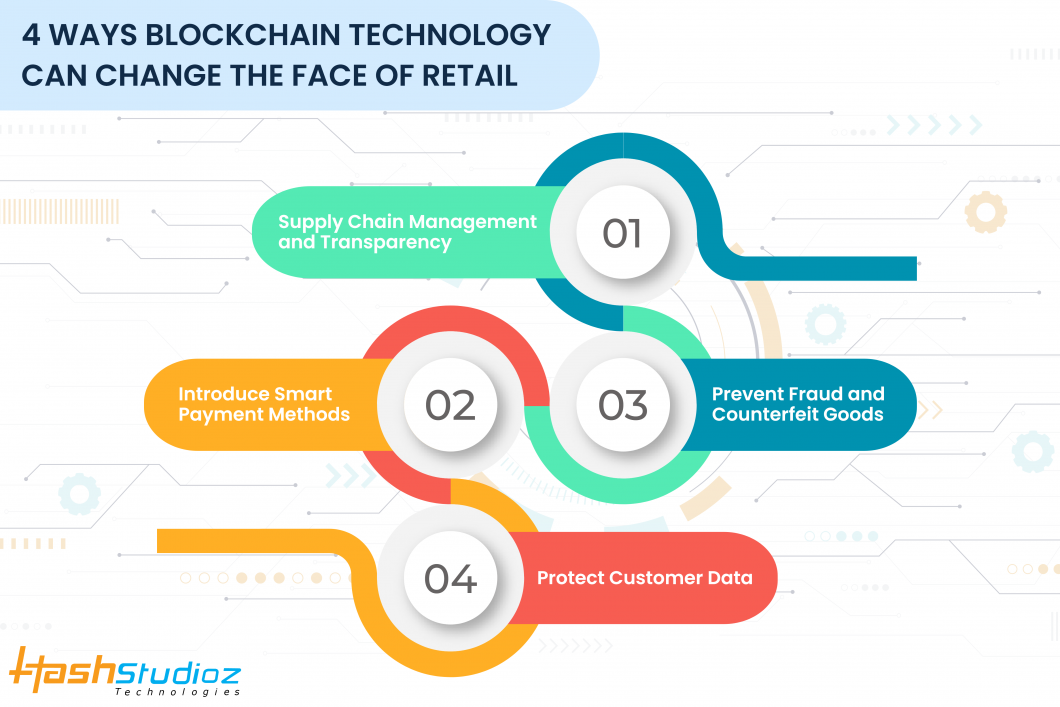
1. Improves Supply Chain Transparency and Traceability
Retail supply chains often involve multiple suppliers, warehouses, distributors, and logistics partners. Tracking products across these stages can be difficult when data is stored in separate systems.
Blockchain creates a shared, tamper-resistant record of every product movement. This allows authorized stakeholders to verify a product’s origin, monitor its journey in real time, and identify issues quickly. Better traceability also helps retailers respond faster to recalls, improve compliance, and build customer trust.
2. Reduces Counterfeit Products and Fraud
Counterfeit goods continue to affect retailers worldwide, causing financial losses and damaging brand reputation. Blockchain assigns a unique digital record to each product, making it easier to verify authenticity throughout the supply chain.
Customers can also scan QR codes or digital product passports to confirm a product’s origin before purchasing, increasing confidence in the brand.
3. Automates Payments and Supplier Agreements
Blockchain supports smart contracts that automatically execute transactions when predefined conditions are met. For example, payments can be released once a shipment is delivered and verified.
This reduces paperwork, minimizes manual intervention, speeds up settlements, and improves collaboration between retailers and suppliers.
4. Protects Customer and Supply Chain Data
Retailers manage large volumes of customer, inventory, and supplier data. Blockchain secures this information using encryption and decentralized storage, making unauthorized changes extremely difficult.
Combined with access controls, it helps improve data integrity, strengthens cybersecurity, and supports compliance with privacy regulations.
Challenges in Modern Retail Supply Chain Management
Despite advances in digital technologies, many retail supply chains still struggle with visibility, collaboration, and product traceability. These challenges have accelerated the adoption of blockchain-powered supply chain solutions.
1. Limited End-to-End Visibility
Retail supply chains often involve multiple suppliers, logistics providers, warehouses, and retailers using different systems. This makes it difficult to track products in real time, resulting in delays, inventory mismatches, and slower decision-making.
2. Counterfeit Products and Fraud
Counterfeit goods continue to be a major challenge, especially in industries such as luxury retail, pharmaceuticals, and electronics. Without reliable product authentication, businesses risk financial losses, regulatory issues, and reduced customer trust.
3. Data Silos and Poor Collaboration
Many supply chain partners maintain separate databases, making information sharing slow and inconsistent. These data silos create communication gaps, duplicate records, and errors that affect overall supply chain efficiency.
4. Rising Customer Expectations
Today’s customers expect accurate inventory updates, fast deliveries, and complete product transparency. Meeting these expectations becomes difficult when businesses lack real-time visibility across the supply chain.
5. Regulatory and Sustainability Compliance
Retailers must comply with increasing regulations related to product safety, ethical sourcing, and environmental reporting. Collecting accurate and verifiable supply chain data remains a challenge without a shared digital record.
Real-World Blockchain Use Cases in Retail Supply Chains
As blockchain adoption grows, retailers are increasingly combining it with other digital technologies to build smarter and more connected supply chains.
1. Product Traceability and Recall Management
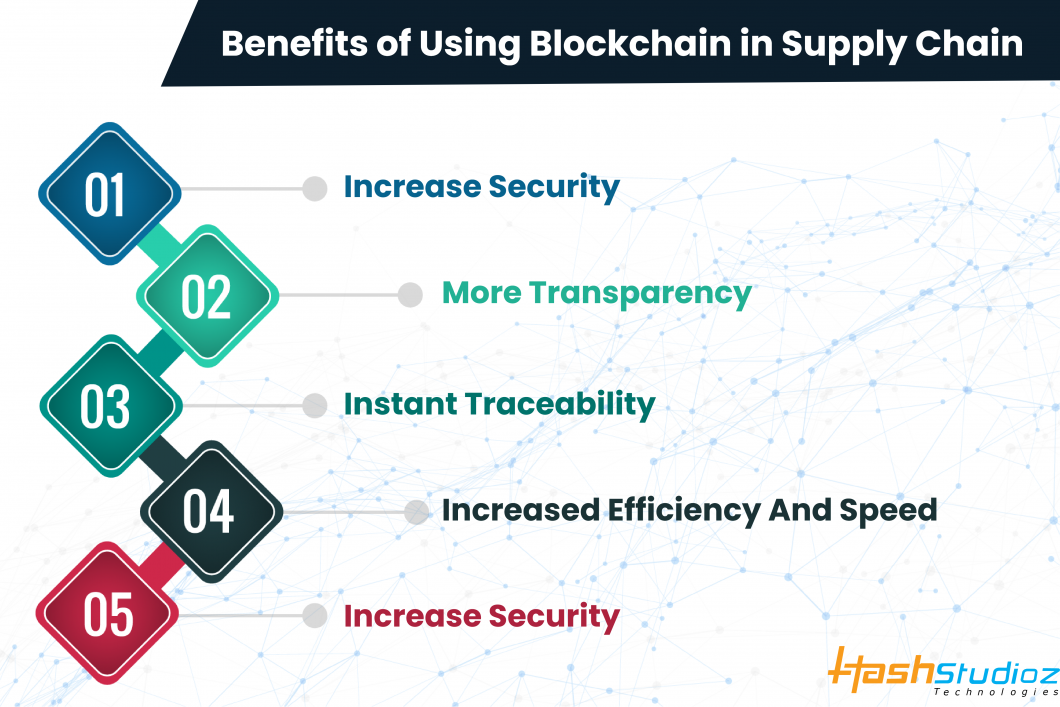
Blockchain enables retailers to track products from raw materials to store shelves. If a defective or contaminated product is identified, businesses can trace its source within minutes, allowing faster recalls and reducing financial losses.
2. Counterfeit Product Prevention
Retailers can assign a unique digital identity to every product using blockchain. Customers and supply chain partners can verify a product’s authenticity through QR codes or digital product passports, reducing counterfeit goods and protecting brand reputation.
3. Smart Contracts for Supplier Payments
Smart contracts automatically execute payments once predefined conditions, such as shipment delivery or quality verification, are met. This reduces paperwork, minimizes payment disputes, and improves supplier relationships.
4. Inventory and Warehouse Management
Blockchain provides a shared record of inventory updates across warehouses, distribution centers, and retail stores. When integrated with RFID and IoT sensors, it helps improve inventory accuracy and reduces stock discrepancies.
5. Ethical Sourcing and Sustainability Tracking
Retailers can use blockchain to verify product origin, sourcing practices, and sustainability certifications. This helps businesses demonstrate compliance with environmental and ethical sourcing standards while increasing consumer confidence.
6. Cross-Border Retail Logistics
International retailers use blockchain to simplify customs documentation, shipment tracking, and trade compliance. A shared digital ledger reduces paperwork, improves visibility, and speeds up cross-border deliveries.
Blockchain + AI + IoT: Building Smarter Retail Supply Chains
Blockchain delivers the best results when combined with technologies like Artificial Intelligence (AI), the Internet of Things (IoT), RFID, and cloud platforms. Together, these technologies provide real-time visibility, automate operations, and help retailers make faster, data-driven decisions.
1. AI for Demand Forecasting and Fraud Detection: AI analyzes blockchain data to forecast demand, optimize inventory levels, and identify unusual transactions or supply chain risks before they affect operations.
2. IoT for Real-Time Product Monitoring: IoT sensors continuously collect data on product location, temperature, humidity, and handling conditions. Blockchain securely records this information, creating a trusted audit trail for every shipment.
3. RFID for Inventory Visibility: RFID tags automatically update inventory records as products move through warehouses and retail stores. Combined with blockchain, they improve inventory accuracy and reduce manual tracking.
4. Smart Contracts for Workflow Automation: Smart contracts automatically execute predefined actions, such as approving shipments, processing supplier payments, or triggering replenishment orders when specific conditions are met. This reduces manual work and improves operational efficiency.
The Future of Blockchain in Retail Supply Chains
Blockchain is expected to play a bigger role in retail supply chains as businesses continue to invest in automation, transparency, and data-driven operations. Rather than functioning as a standalone technology, it will increasingly work alongside AI, IoT, cloud computing, and advanced analytics to improve visibility and decision-making across the supply chain.
Several trends are expected to shape the future of blockchain in retail:
- Digital product passports will help customers verify a product’s origin, materials, and sustainability credentials.
- AI-powered analytics will use blockchain data to improve demand forecasting and inventory planning.
- Smart contracts will automate supplier payments, compliance checks, and procurement processes.
- Greater focus on sustainability will encourage retailers to use blockchain for ethical sourcing and ESG reporting.
- Interoperable blockchain networks will enable secure data sharing between suppliers, logistics providers, and retailers.
As adoption continues to grow, blockchain is expected to become a key technology for building secure, transparent, and resilient retail supply chains that can quickly adapt to changing customer demands and market conditions.
Conclusion
Blockchain is transforming retail supply chains by improving transparency, product traceability, security, and collaboration across every stage of the product lifecycle. When integrated with technologies such as AI, IoT, RFID, and smart contracts, it enables retailers to automate processes, reduce fraud, optimize inventory, and make faster, data-driven decisions.
Although implementation requires careful planning and collaboration, the long-term benefits outweigh the challenges. As retail supply chains become more digital and interconnected, blockchain will continue to play a key role in building resilient, efficient, and customer-centric operations.
If you’re planning to modernize your retail supply chain, partnering with an experienced blockchain development company can help you implement scalable and secure solutions tailored to your business needs.
Ready to Build a Smarter Retail Supply Chain?
Whether you want to improve product traceability, automate supply chain processes, or develop a secure blockchain solution, our blockchain experts can help.
Explore our Blockchain Development Services or contact our team to discuss your project requirements.
FAQs
1. How does blockchain improve product traceability in retail supply chains?
Blockchain creates a permanent, tamper-resistant record of every product movement, from manufacturing to delivery. This allows retailers to quickly verify product origins, improve recall management, and provide customers with transparent product information.
2. Can blockchain reduce counterfeit products in the retail industry?
Yes. Blockchain assigns each product a unique digital identity that can be verified throughout the supply chain. Combined with QR codes or digital product passports, it helps retailers and customers confirm product authenticity and reduce counterfeit goods.
3. How do AI and IoT enhance blockchain-based retail supply chains?
AI analyzes blockchain data to improve demand forecasting, inventory planning, and fraud detection, while IoT sensors provide real-time information on product location and storage conditions. Together, these technologies create a more connected and intelligent supply chain.
4. What challenges should retailers consider before implementing blockchain?
Retailers should evaluate implementation costs, integration with existing ERP and warehouse management systems, data standardization, scalability, and collaboration among supply chain partners before adopting blockchain solutions.
5. Which retail industries benefit the most from blockchain technology?
Blockchain delivers significant value across industries that require product authenticity and traceability, including food and beverages, pharmaceuticals, luxury goods, fashion, electronics, and e-commerce. It helps improve transparency, strengthen compliance, and build customer trust.