


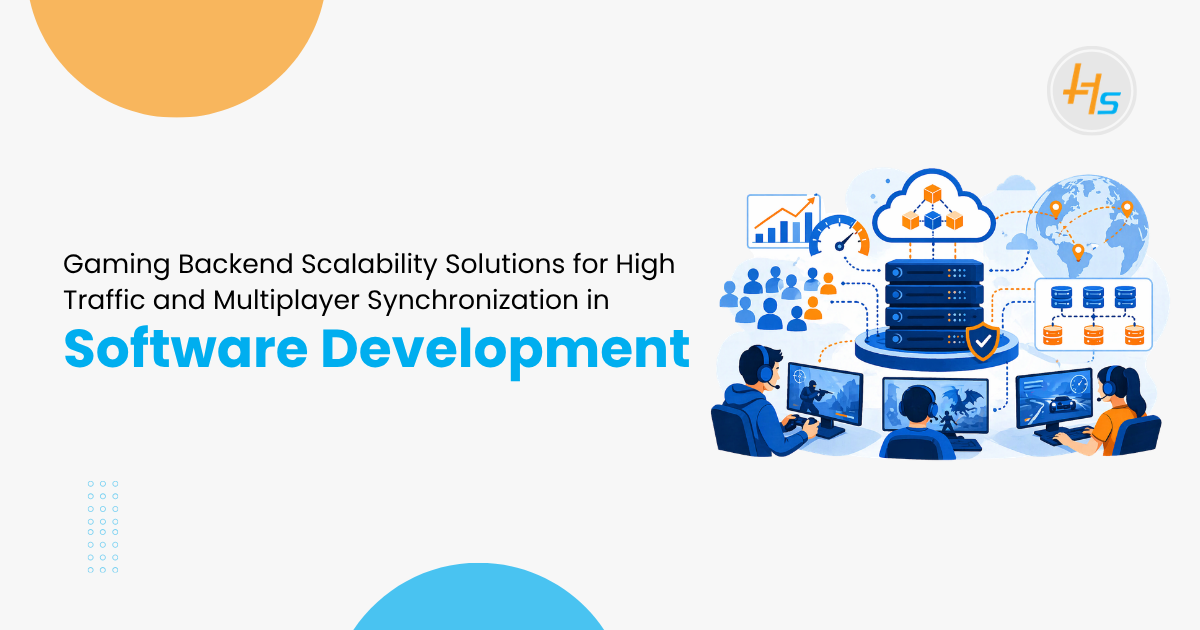
The gaming industry has grown at a massive scale in recent years. Online multiplayer games now attract millions of users at the same time. This growth creates serious challenges for backend systems. According to Statista, the global gaming market generated over $184 billion in 2023. Another report shows that over 3.3 billion people play games worldwide. Popular multiplayer games can handle millions of concurrent users during peak hours.
A study by Newzoo states that server downtime and latency issues lead to user drop rates of up to 30%. Even a few seconds of lag can affect player experience. These issues highlight the importance of scalable backend systems. A Software Development Company builds robust backend systems for games. A Custom Software Development Company designs tailored solutions for high traffic and
Table of Contents
Understanding Gaming Backend Systems
A gaming backend manages game logic, player data, and communication between clients. It ensures that players interact in real time without delays.
Core Functions
- Handle player authentication
- Manage game sessions
- Process real-time interactions
- Store player data
- Synchronize multiplayer actions
These functions must operate without interruption.
Challenges in Gaming Backend Scalability
Modern online games often serve thousands or even millions of players across different regions. As player demand grows, backend systems must scale without affecting performance. Gaming platforms process live actions, player data, purchases, rankings, and multiplayer sessions every second. This creates several technical challenges that developers must solve carefully.
1. High Concurrent Users
One of the biggest challenges in gaming backend scalability is handling a large number of users at the same time. Popular games can experience sudden traffic spikes after updates, tournaments, new season launches, or marketing campaigns.
2. Low Latency Requirements
Online games require very fast response times. Latency means the delay between a player action and the server response. Even a small delay can hurt gameplay quality.
3. Multiplayer Synchronization
In multiplayer games, all players must see the same game state in real time. This includes player movement, scores, attacks, item pickups, and environmental changes.
For example, one player may see a hit land, while another player sees it miss. This creates a poor user experience.
4. Data Consistency
Gaming platforms store huge amounts of player data such as:
- User profiles
- Inventory items
- Game progress
- Purchases
- Currency balances
- Rankings
When data moves across multiple servers, consistency becomes a challenge. If systems fail to sync properly, players may face:
- Missing rewards
- Lost purchases
- Incorrect levels
- Duplicate items
- Broken leaderboards
5. Server Downtime
Downtime is one of the most costly problems in gaming infrastructure. If servers go offline, players cannot log in, join matches, or make purchases.
Downtime may result from:
- Traffic overload
- Cloud outages
- Software bugs
- Database failure
- Cyberattacks
- Poor deployment planning
Why Custom Backend Solutions are Important
Off-the-shelf backend systems cannot meet all gaming requirements. Each game has unique mechanics and traffic patterns.
A Custom Software Development Company builds backend systems tailored to specific game needs.
Key Benefits
- Scalable infrastructure
- Real-time synchronization
- Optimized performance
- Better resource management
- Flexible architecture
Custom solutions adapt to game growth.
Role of a Software Development Company
A Software Development Company develops and maintains gaming backend systems.
Core Responsibilities
- Design scalable architecture
- Implement networking protocols
- Optimize server performance
- Ensure data security
- Provide continuous updates
These steps ensure smooth gameplay.
Key Components of Scalable Gaming Backend
Modern backend systems include several components.
1. Load Balancers
Load balancers distribute traffic across servers.
- Prevent server overload
- Improve response time
- Ensure availability
2. Game Servers
Game servers handle real-time gameplay.
- Process player actions
- Maintain game state
- Manage sessions
3. Database Systems
Databases store player data.
- Use distributed databases
- Ensure fast read and write operations
- Maintain data consistency
4. Caching Systems
Caching improves performance.
- Store frequently accessed data
- Reduce database load
- Improve response time
5. Content Delivery Network (CDN)
CDNs deliver game assets quickly.
- Reduce latency
- Improve global performance
Handling High Traffic with Scalable Architecture
Scalability ensures that systems handle increasing demand.
1. Horizontal Scaling
Add more servers to handle traffic.
- Distribute workload
- Improve system capacity
2. Vertical Scaling
Increase server capacity.
- Upgrade CPU and memory
- Improve performance
3. Auto-Scaling
Auto-scaling adjusts resources based on demand.
- Handle traffic spikes
- Reduce operational cost
4. Cloud Infrastructure
Cloud platforms support scalability.
- Provide flexible resources
- Ensure high availability
Multiplayer Synchronization Techniques
Synchronization ensures consistent gameplay for all players.
1. Client-Server Model
The server controls the game state.
- Clients send actions
- Server updates state
- Ensures consistency
2. State Synchronization
The system updates player states in real time.
- Send periodic updates
- Maintain consistency
3. Event-Based Synchronization
The system sends events instead of full states.
- Reduce bandwidth usage
- Improve performance
4. Lag Compensation Techniques
Lag compensation improves fairness.
- Predict player actions
- Adjust for network delays
Real-Time Communication Protocols
Communication protocols play a key role in multiplayer games.
Common Protocols
- WebSocket
- UDP (User Datagram Protocol)
- TCP (Transmission Control Protocol)
Key Considerations
- Low latency
- Reliability
- Data integrity
A Custom Software Development Company selects protocols based on game requirements.
Data Management in Gaming Backend
Data management ensures performance and consistency.
Key Strategies
- Use NoSQL databases for scalability
- Apply sharding for data distribution
- Use replication for reliability
Benefits
- Faster data access
- Improved system performance
- High availability
Real-World Example
A multiplayer game faced performance issues during peak hours. The backend could not handle high traffic.
The company partnered with a Custom Software Development Company.
Solution
- Implemented cloud-based infrastructure
- Added load balancing
- Used distributed databases
- Optimized synchronization methods
Results
- Supported millions of concurrent users
- Reduced latency significantly
- Improved player retention
This example shows the importance of scalable backend systems.
Ensuring Security in Gaming Backend
Security is critical in online games.
Security Measures
- Data encryption
- Secure authentication
- Anti-cheat mechanisms
- DDoS protection
A Software Development Company ensures secure backend systems.
Logistics Delivery Optimization Custom Software Handling Route Planning and Tracking Delays
Integration with Advanced Technologies
Modern gaming systems use advanced technologies.
1. Artificial Intelligence (AI)
AI improves gameplay and performance.
- Detect cheating behavior
- Optimize matchmaking
2. Machine Learning (ML)
ML improves system efficiency.
- Predict traffic patterns
- Optimize server allocation
3. Edge Computing
Edge computing reduces latency.
- Process data closer to players
- Improve response time
Best Practices for Scalable Gaming Backend
Modern games need powerful backend systems to support millions of players, real-time gameplay, secure transactions, and stable performance. If the backend is weak, players may face lag, login issues, crashes, and poor matchmaking. Developers must follow best practices to build gaming systems that can grow with user demand.
Development Practices
Strong technical planning helps create a stable and scalable backend.
1. Use Microservices Architecture
Microservices divide the backend into smaller independent services. Each service handles a specific function.
Examples include:
- User login service
- Matchmaking service
- Chat service
- Leaderboard service
- Payment service
- Notification service
Benefits of microservices:
- Easier scaling of busy modules
- Faster deployment cycles
- Better fault isolation
- Easier maintenance
For example, if chat traffic increases during an event, only the chat service needs extra resources.
2. Optimize Code Performance
Efficient code improves response time and reduces server load. Poor code can slow gameplay and increase infrastructure costs.
Optimization areas include:
- Fast API responses
- Efficient memory usage
- Reduced database calls
- Query indexing
- Smart caching systems
- Lightweight data transfer
Even a small delay can impact competitive multiplayer games.
3. Conduct Load Testing
Load testing checks how the backend performs during high traffic. It helps teams identify problems before release.
Common test scenarios:
- Massive login spikes after updates
- Weekend peak traffic
- Tournament launches
- In-game store promotions
- Global event traffic surges
Load testing helps avoid server crashes and login failures.
4. Build Scalable Databases
Gaming systems store huge amounts of data such as player profiles, purchases, rankings, and game progress.
Best practices include:
- Database sharding
- Read replicas
- Query optimization
- Backup automation
- Session caching
This improves speed and supports large player volumes.
5. Secure the Backend
Gaming platforms often face attacks. Security must be part of development.
Use:
- Encryption
- Multi-factor authentication
- Anti-cheat systems
- Secure payment APIs
- DDoS protection
- Role-based admin access
Operational Practices
A strong operations strategy keeps systems stable after launch.
1. Monitor System Performance
Continuous monitoring helps teams detect issues quickly.
Track:
- CPU usage
- Memory load
- Active users
- API response time
- Error rate
- Matchmaking speed
- Server uptime
Real-time alerts help reduce downtime.
2. Use Logging and Analytics
Logs help developers investigate technical problems. Analytics help improve gameplay and retention.
Useful logs include:
- Failed logins
- Payment issues
- Server errors
- Disconnect events
- Chat abuse reports
Useful analytics include:
- Session length
- Daily active users
- Retention rate
- Purchase behavior
- Churn trends
3. Perform Regular Updates
Gaming backend systems need regular maintenance.
Updates may include:
- Bug fixes
- Security patches
- Performance tuning
- New APIs
- Database upgrades
Regular updates keep systems reliable.
4. Create Disaster Recovery Plans
Unexpected outages can happen. Recovery planning reduces impact.
Use:
- Automated backups
- Multi-region hosting
- Failover servers
- Rollback systems
- Recovery drills
Challenges in Building Scalable Backend Systems
Gaming backend development can be complex. Teams often face several technical and operational challenges.
1. High Infrastructure Cost
Large games require significant resources.
Common costs include:
- Cloud servers
- Databases
- CDN services
- Monitoring tools
- Security systems
- Backup storage
Traffic spikes can increase costs quickly.
2. Complex Architecture Design
Modern games need many systems working together.
Examples include:
- Multiplayer networking
- Voice or text chat
- Payment gateway
- Leaderboards
- Live events
- Anti-cheat systems
Designing a stable architecture for all modules is challenging.
3. Managing Real-Time Data
Games process live data every second.
Examples:
- Player movement
- Match scores
- Live chat messages
- Team actions
- Item trades
The backend must process and sync this data instantly.
4. Ensuring Low Latency
Low latency is critical for multiplayer games. Slow response time harms player experience.
High latency can cause:
- Delayed actions
- Poor hit detection
- Sync issues
- Frustrated players
- Lower ratings
Using regional servers and edge nodes helps reduce delay.
5. Security Threats
Gaming systems face many cyber risks.
Common threats include:
- Account theft
- DDoS attacks
- Bot traffic
- Payment fraud
- Data leaks
Security must remain a constant priority.
Future Trends in Gaming Backend Technology
Gaming backend technology continues to grow as user expectations rise.
1. Cloud-Native Gaming Platforms
Cloud-native systems support flexible scaling and global deployment.
Benefits include:
- Auto scaling
- Faster updates
- Lower hardware dependence
- Better reliability
Many studios now prefer cloud-first infrastructure.
2. Real-Time Analytics
Live analytics help studios make quick decisions.
Use cases:
- Detect churn risks
- Track server load
- Balance game economy
- Measure event success
- Improve player retention
3. AI-Driven Optimization
AI tools now support backend operations.
Examples:
- Smart matchmaking
- Traffic prediction
- Fraud detection
- Personalized offers
- Dynamic resource scaling
AI helps improve both performance and revenue.
4. Increased Use of Edge Computing
Edge computing places processing closer to players.
Benefits include:
- Lower latency
- Faster multiplayer response
- Better regional performance
- Reduced central server load
A Software Development Company must adapt to these trends to stay competitive.
Choosing the Right Development Partner
Selecting the right partner is important for long-term gaming success.
1. Experience in Gaming Backend Development
Choose a company with proven gaming industry experience. They should understand:
- Multiplayer systems
- Matchmaking logic
- Live operations
- In-game monetization
- Cross-platform support
2. Strong Technical Expertise
Your partner should have skills in:
- Cloud hosting
- Microservices
- DevOps automation
- Database scaling
- Security engineering
- API development
3. Ability to Build Scalable Systems
The backend should grow with player demand.
Look for experience in:
- High concurrent users
- Event traffic spikes
- Global launches
- Multi-region deployment
4. Proven Track Record
Review:
- Past gaming projects
- Client feedback
- Stability results
- Delivery timelines
- Technical case studies
5. Ongoing Support Services
Gaming platforms need support after launch.
Important services include:
- 24/7 monitoring
- Bug fixes
- Security updates
- Capacity planning
- Feature upgrades
A reliable Custom Software Development Company ensures long-term success by building secure, scalable, and high-performance gaming backend systems.
Transform Your Gaming Platform with Scalable Backend Solutions
Choosing the right custom software partner is important for gaming businesses that need stable performance, low latency, and smooth multiplayer experiences. From handling high player traffic and real-time synchronization to reducing downtime and improving backend speed, businesses need a reliable solution built for long-term growth.
At HashStudioz, we help gaming companies build advanced backend systems that support millions of users, deliver fast gameplay responses, and maintain secure operations. Our team creates scalable, high-performance platforms that improve matchmaking speed, increase server reliability, and provide seamless player experiences.
Partner with our experienced team to build a powerful gaming backend that improves performance, reduces technical challenges, and supports business growth with confidence.
Conclusion
Gaming backend scalability is critical for modern multiplayer games. High traffic and synchronization challenges require advanced solutions. Custom backend systems provide a strong solution. They handle large user loads and ensure real-time synchronization. A Software Development Company builds robust systems. A Custom Software Development Company delivers tailored solutions based on game requirements.
Gaming companies that invest in scalable backend systems improve performance and user experience. Advanced technologies will continue to shape the future of online gaming.