



The travel industry is rapidly embracing immersive technologies to improve customer experiences before, during, and after a trip. Virtual reality (VR), augmented reality (AR), artificial intelligence (AI), and spatial computing are changing how travelers explore destinations, compare hotels, attend events, and plan vacations. As these technologies evolve, the metaverse is becoming an important part of digital travel experiences rather than a replacement for physical tourism.
The shift is backed by strong market growth. The global virtual tourism market continues to expand as travel companies invest in immersive destination previews, virtual experiences, and interactive booking journeys. At the same time, consumer adoption of VR and AR devices is increasing, encouraging airlines, hotels, tourism boards, museums, and theme parks to develop more engaging digital experiences.
While the metaverse will not replace real-world travel, it is transforming how travelers discover destinations, make booking decisions, and interact with travel brands. Businesses are using immersive virtual environments to showcase hotels, recreate historical landmarks, offer virtual tours, train employees, and create new digital revenue opportunities.
Table of Contents
How is the Metaverse Changing the Travel Industry?
The metaverse is changing how travel businesses engage customers by combining immersive technologies with digital experiences. Instead of relying only on photos and videos, travelers can now explore destinations, hotel rooms, museums, cruise ships, and attractions through interactive 3D environments before making a booking decision.
For travel companies, the metaverse creates new ways to attract customers, improve engagement, and generate revenue. Hotels can offer virtual property tours, tourism boards can showcase destinations through immersive experiences, and airlines can use virtual environments for customer engagement and staff training. These experiences help travelers make more informed decisions while reducing uncertainty during the booking process.
The metaverse also works alongside other emerging technologies. Artificial intelligence personalizes recommendations, augmented reality adds real-time information during trips, digital twins recreate airports and destinations, and blockchain supports secure digital identities and ticketing. Together, these technologies are creating more connected and interactive travel experiences.
Although physical travel remains the preferred choice for most people, immersive digital experiences are becoming an important part of the customer journey. From destination discovery and itinerary planning to virtual events and employee training, the metaverse is helping travel businesses deliver better experiences while opening new opportunities for innovation and growth.
Read More: What Is Metaverse: Use Cases And Benefits
What is the Tourism Industry?

The tourism industry includes all businesses and services that support people traveling for leisure, business, education, healthcare, or cultural experiences. It covers airlines, hotels, travel agencies, tour operators, cruise lines, local attractions, transportation providers, restaurants, museums, entertainment venues, and destination management organizations.
Unlike the broader travel industry, which focuses on moving people from one location to another, the tourism industry centers on the complete visitor experience after travelers choose a destination. It aims to create memorable experiences while supporting local economies and promoting cultural exchange.
Today, tourism is becoming increasingly digital. Travelers research destinations online, compare hotels using virtual tours, receive AI-powered recommendations, and complete bookings through mobile apps. Many tourism businesses now use immersive technologies such as virtual reality (VR), augmented reality (AR), digital twins, and AI to improve customer engagement before, during, and after a trip.
Potential Benefits for Travel in the Metaverse
The metaverse gives travel businesses new ways to engage customers beyond traditional websites and mobile apps. By combining VR, AR, AI, digital twins, and spatial computing, companies can improve trip planning, personalize experiences, reduce booking uncertainty, and create additional revenue opportunities. Here are the major benefits driving adoption across the travel industry.
1. Virtual Destination Previews Improve Booking Confidence
Travelers often hesitate to book unfamiliar destinations or expensive accommodations based only on photos. The metaverse allows them to explore hotels, resorts, cruise ships, museums, and tourist attractions through immersive 3D experiences before making a reservation.
These virtual previews help travelers set realistic expectations, compare options more effectively, and make informed booking decisions. For travel providers, this can increase customer confidence, improve conversion rates, and reduce booking cancellations.
2. More Personalized Travel Experiences
Artificial intelligence integrated with metaverse platforms can recommend destinations, activities, accommodations, and travel packages based on a user’s interests, budget, and previous trips. Instead of browsing hundreds of listings, travelers receive customized suggestions inside interactive virtual environments.
Hotels and tourism companies can also offer virtual concierge services that answer questions, recommend attractions, and guide visitors throughout their planning journey.
3. Better Customer Engagement Before and After Travel
The relationship between travelers and brands no longer ends after a booking. Tourism organizations can use virtual experiences to keep customers engaged before departure and after returning home.
Examples include virtual cultural festivals, destination previews, interactive museums, and exclusive online events that strengthen customer relationships and encourage repeat bookings.
4. New Revenue Opportunities for Travel Businesses
The metaverse introduces digital products and services that complement traditional tourism offerings. Travel companies can monetize virtual experiences through paid destination tours, premium historical recreations, educational programs, digital event tickets, and branded virtual spaces.
These additional revenue streams allow businesses to engage customers even when physical travel demand slows due to seasonal trends or external disruptions.
5. More Effective Employee Training
Airlines, hotels, airports, and tour operators can use immersive simulations to train employees in realistic environments without disrupting daily operations.
Staff can practice emergency response procedures, customer service interactions, airport operations, hotel management, and equipment maintenance in virtual settings. This improves learning outcomes while reducing training costs and operational risks.
6. Greater Accessibility for Global Travelers
Not everyone has the ability to travel because of physical limitations, financial constraints, or geographical barriers. The metaverse makes cultural landmarks, museums, heritage sites, and tourist destinations accessible to a wider audience through immersive virtual experiences.
Educational institutions, senior citizens, and people with disabilities can explore destinations that may otherwise remain inaccessible, making tourism more inclusive.
7. Supports More Sustainable Tourism
Virtual experiences can reduce the need for exploratory business trips, promotional events, and destination inspections. Tourism boards can showcase attractions digitally before visitors travel, helping travelers make informed choices while reducing unnecessary travel-related emissions.
Although the metaverse cannot replace physical tourism, it supports more sustainable destination marketing and responsible travel planning.
Key Benefits at a Glance
| Benefit | Business Impact |
|---|---|
| Virtual destination previews | Higher booking confidence and fewer cancellations |
| Personalized recommendations | Better customer experience and higher engagement |
| Immersive customer interaction | Stronger brand loyalty and repeat bookings |
| Digital revenue streams | New monetization opportunities |
| Virtual employee training | Lower training costs and improved operational readiness |
| Accessible tourism | Reaches travelers who cannot visit physically |
| Sustainable travel support | Promotes responsible tourism and reduces unnecessary |
Real-World Applications of the Metaverse in the Travel Industry
The metaverse is no longer a futuristic concept for the travel industry. Hotels, airlines, tourism boards, museums, and entertainment companies are already using virtual reality, augmented reality, AI, and digital twins to improve customer experiences and business operations. While adoption varies across regions, these technologies are helping travel businesses attract customers, optimize operations, and create new digital experiences.
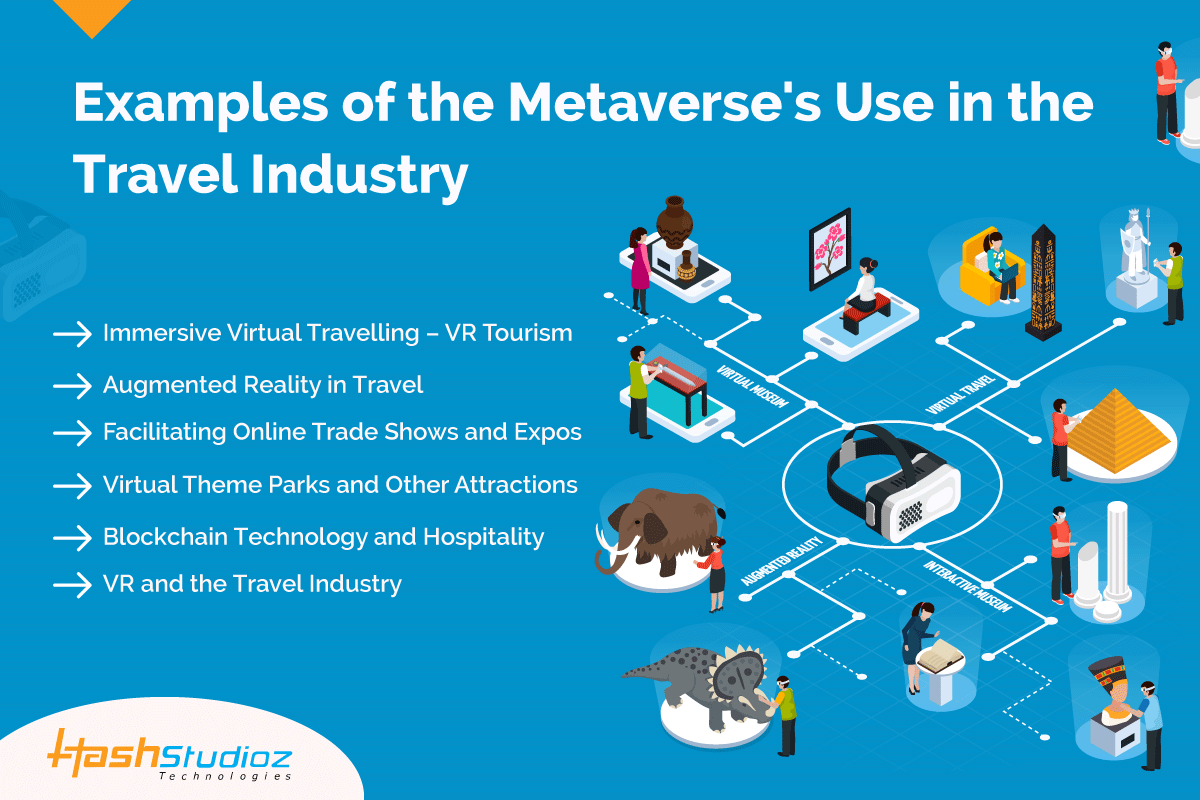
1. Virtual Destination Tours
Virtual reality allows travelers to explore destinations before making a booking. Instead of relying only on photos or videos, users can walk through hotels, beaches, museums, national parks, and historical sites using immersive 3D experiences.
These virtual tours help travelers compare destinations, reduce uncertainty, and make informed decisions. Tourism boards also use virtual experiences to promote destinations to international audiences who may later become physical visitors.
2. Hotel and Resort Virtual Walkthroughs
Hotels increasingly use immersive property tours to showcase rooms, conference spaces, restaurants, spas, and recreational facilities.
Potential guests can explore accommodations from different angles, compare room categories, and experience amenities before making reservations. This transparency improves customer confidence and can reduce booking cancellations caused by unmet expectations.
3. Augmented Reality Travel Experiences
Augmented reality enhances physical travel by overlaying digital information onto real-world environments.
Travelers can point their smartphones or AR glasses at monuments, museums, restaurants, or streets to receive historical facts, navigation assistance, multilingual translations, and nearby recommendations in real time.
These experiences improve visitor engagement while helping destinations deliver richer cultural and educational experiences.
4. Virtual Events, Museums, and Cultural Experiences
Museums, galleries, heritage sites, and tourism organizations increasingly offer virtual exhibitions and cultural experiences that visitors can access from anywhere.
Virtual concerts, festivals, historical recreations, and interactive exhibitions allow global audiences to participate without traveling. These experiences also create new revenue opportunities through paid virtual tickets and premium digital content.
5. Digital Twins for Airports and Smart Destinations
Digital twins create virtual replicas of airports, hotels, cities, and tourist destinations using real-time operational data.
Airport operators can monitor passenger movement, optimize security checkpoints, improve baggage handling, and simulate emergency scenarios. Smart tourism destinations use digital twins to manage visitor flows, transportation systems, and infrastructure more efficiently.
6. Employee Training Through Virtual Simulations
Travel organizations use immersive simulations to train employees without interrupting daily operations.
Cabin crew, hotel staff, airport personnel, and tour guides can practice customer interactions, emergency procedures, equipment handling, and operational workflows in realistic virtual environments. This improves training consistency while reducing costs.
7. AI-Powered Virtual Travel Assistants
Artificial intelligence combined with immersive environments creates virtual travel assistants that guide customers throughout their journey.
These assistants can recommend destinations, build personalized itineraries, answer booking questions, provide multilingual support, and offer real-time travel updates. AI-powered assistants improve customer service while reducing the workload on human support teams.
8. Virtual Theme Parks and Entertainment
Theme parks and entertainment providers are expanding beyond physical locations by offering virtual attractions and interactive experiences.
Visitors can experience selected rides, participate in digital events, explore themed environments, and interact with characters online. These experiences help brands engage global audiences and maintain customer interest between physical visits.
Read More: How To Choose The Best Fit Travel Portal Development Company
The Future of the Metaverse in the Travel Industry
The metaverse is expected to become a valuable extension of the travel ecosystem rather than a replacement for physical tourism. As virtual reality (VR), augmented reality (AR), artificial intelligence (AI), spatial computing, and digital twins continue to mature, travel companies will create more connected, personalized, and data-driven experiences across the customer journey.
Industry analysts expect immersive technologies to become more practical as VR headsets become lighter, AR glasses gain wider adoption, and AI improves real-time personalization. These advancements will help travelers explore destinations, compare accommodations, attend virtual events, and receive customized recommendations before making booking decisions.
The future also points toward smarter tourism operations. Hotels, airports, and tourism boards are expected to expand the use of digital twins to monitor visitor flows, optimize resources, and improve operational efficiency. AI-powered virtual assistants will handle more customer interactions, while immersive training environments will help travel organizations prepare employees for real-world scenarios.
How HashStudioz Will Help You With Metaverse in the Tourism Industry?
Since the internet, the metaverse is believed to be the most important technological advancement. This will have long-term effects on tourism as well as how people live, connect, and operate a business. To suit the new virtual global order, brands will need to reconsider their marketing and communication plans. Ultimately, the metaverse will help companies better understand their clients and engage in fruitful interactions with them.
If you want to use the metaverse in the tourism industry, get in touch with an AR VR app development company. Contact us With the help of HashStudioz, you can easily find the metaverse and fulfilled what you need to know about it for business.
FAQs
Q.1 Why is the metaverse the future?
The metaverse is the future because it has the potential to revolutionize the way we interact with the internet and with each other. It offers a more immersive and interactive experience than traditional online platforms, and it has the potential to create new forms of social connection and collaboration.
Here are some of the reasons why the metaverse is the future:
- It is more immersive and interactive. The metaverse allows users to interact with each other and with the world around them in a more immersive and interactive way than traditional online platforms. This is because the metaverse uses virtual reality and augmented reality headsets to create a more realistic and engaging experience.
- It has the potential to create new forms of social connection and collaboration. The metaverse can be used to create new forms of social connection and collaboration. For example, people can use the metaverse to attend virtual events, collaborate on projects, or even just hang out with friends.
- It can be used for education and training. The metaverse can be used for education and training. For example, students can use the metaverse to explore virtual worlds, learn about different cultures, or even practice skills in a safe and simulated environment.
- It can be used for entertainment. The metaverse can be used for entertainment. For example, people can use the metaverse to play games, watch movies, or even attend concerts.
Q.2 Why is the metaverse important?
The metaverse is important because it has the potential to change the way we live, work, and play. It can enhance our education, entertainment, and social interactions, while also creating new businesses and opportunities.
Q.3 Will the metaverse replace the internet?
It is unlikely that the metaverse will replace the internet. However, it is possible that the metaverse will become a major part of the internet. It could become the platform for new forms of communication, collaboration, and entertainment.
Q.4 Which companies are Using the metaverse?
Many companies are already using the metaverse or are planning to use it in the near future. Some of the most notable companies using the metaverse include:
- Meta
- NVIDIA
- Epic Games
- Microsoft
- Apple
- Decentraland
- Roblox Corporation
- Unity Software and many more.