


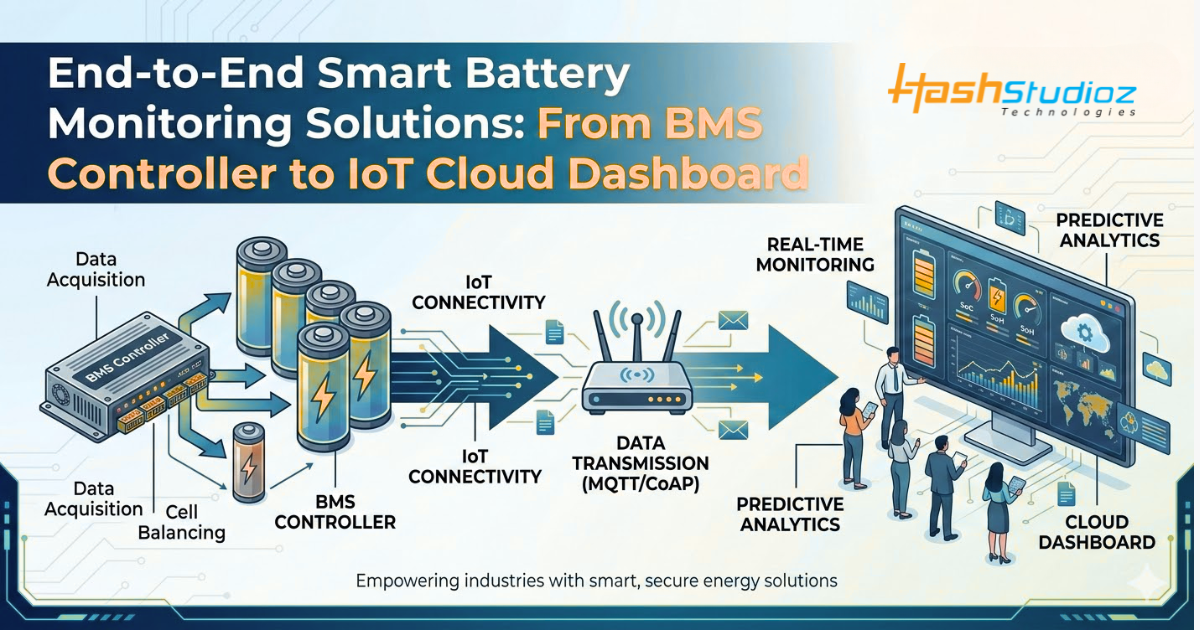
Battery-powered systems now support critical infrastructure across industries such as electric mobility, renewable energy storage, telecom networks, and industrial automation. As battery deployments expand, organizations must monitor battery performance, safety, and lifecycle health more closely. This growing need has accelerated the adoption of Smart Battery Monitoring Solutions that combine embedded electronics, connectivity, and cloud-based analytics.
Recent industry data highlights the rapid growth of battery technologies. According to the International Energy Agency (IEA), global battery storage capacity in the power sector surpassed 85 GW in 2023, reflecting strong growth in renewable energy and grid storage. BloombergNEF projects that global lithium-ion battery demand could exceed 5 TWh annually by 2030, driven largely by electric vehicles and energy storage systems. In addition, MarketsandMarkets estimates that the Battery Management System (BMS) market may surpass $25 billion by 2028, signaling increasing demand for advanced battery monitoring infrastructure.
These trends highlight the importance of integrated systems that connect a BMS Controller, communication networks, and IoT cloud dashboards to manage battery performance at scale.
Table of Contents
Global Energy Storage Capacity Growth (2022–2030)
Projected global energy storage capacity is expected to reach nearly 650 GW by 2030, driven by increasing renewable energy deployment and demand for large-scale battery systems.
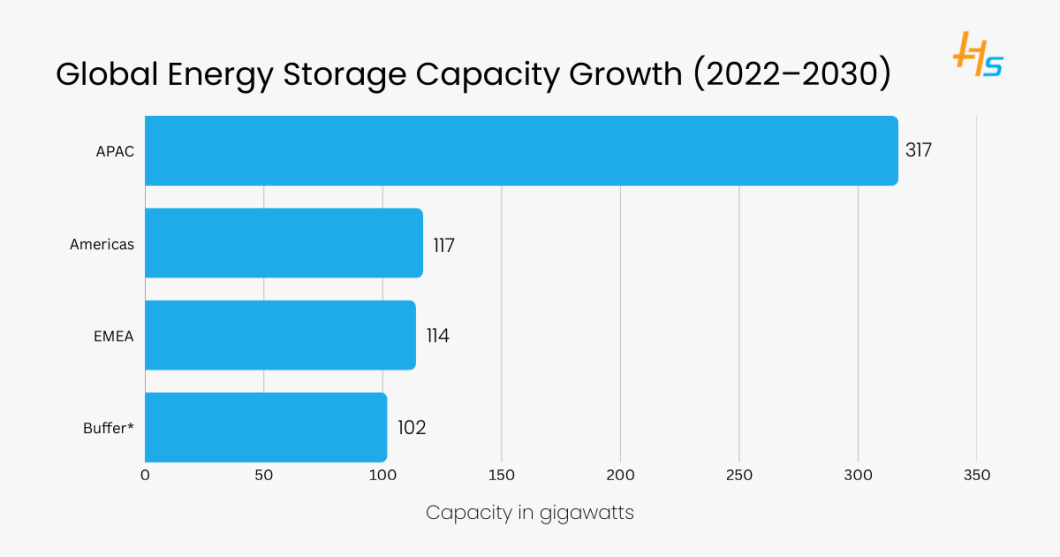
The growth of global energy storage capacity is supporting the adoption of Smart Battery Monitoring Solutions and advanced BMS Controller technologies.
The Growing Importance of Battery Monitoring
Battery systems operate in complex environments. Temperature changes, charging cycles, load fluctuations, and aging affect battery performance over time. Without proper monitoring, organizations face several operational risks:
- Unexpected battery failures
- Reduced battery lifespan
- Safety hazards such as overheating
- Inefficient energy usage
- High maintenance costs
Traditional battery monitoring methods rely on manual inspections or basic voltage measurements. These methods provide limited insight into battery health and performance.
Smart battery monitoring systems address this limitation by collecting detailed operational data from battery packs and transmitting it to centralized platforms for analysis.
Core Components of Smart Battery Monitoring Solutions
End-to-end Smart Battery Monitoring Solutions typically consist of three major layers:
- Embedded battery management hardware
- Connectivity and communication infrastructure
- IoT-based monitoring and analytics platforms
Each layer plays a specific role in ensuring reliable battery monitoring.
The Role of the BMS Controller
The BMS Controller acts as the core intelligence inside a battery pack. It continuously measures battery parameters and ensures safe operation.
A typical BMS controller performs the following tasks:
- Monitoring individual cell voltage
- Measuring battery current and temperature
- Managing charge and discharge cycles
- Balancing cells within the battery pack
- Detecting faults and safety risks
Lithium-ion batteries require precise control to prevent issues such as overcharging, deep discharge, or thermal runaway. The BMS controller uses embedded algorithms to maintain safe operating conditions.
Key Parameters Monitored by BMS Controllers
Battery monitoring systems track multiple parameters in real time:
- Voltage: Ensures each cell remains within safe limits
- Current: Detects abnormal charging or discharge rates
- Temperature: Prevents overheating and thermal damage
- State of Charge (SOC): Indicates remaining battery capacity
- State of Health (SOH): Measures battery degradation over time
These measurements provide the foundation for higher-level analytics in cloud monitoring platforms.
Communication Layer: Connecting Batteries to the Cloud
The next layer in Smart Battery Monitoring Solutions involves transferring data from the battery pack to remote monitoring systems.
Modern battery monitoring systems use multiple communication technologies depending on the deployment environment:
- CAN Bus for automotive and industrial battery systems
- Modbus for energy storage systems
- LoRaWAN for long-range battery monitoring
- NB-IoT or LTE-M for cellular connectivity
- Wi-Fi or Ethernet for facility-based deployments
The communication module aggregates data from the BMS controller and sends it securely to cloud platforms.
Edge computing capabilities often process some data locally before transmission. This approach reduces network load and enables faster fault detection.
IoT Cloud Dashboard for Battery Monitoring
Once battery data reaches the cloud, analytics platforms convert raw measurements into actionable insights.
An IoT dashboard provides a centralized interface for monitoring large battery deployments across multiple locations.
Typical features include:
- Real-time battery performance visualization
- Alerts for abnormal voltage or temperature levels
- Predictive maintenance indicators
- Historical performance analysis
- Fleet-level battery monitoring
Operators can view battery performance metrics through interactive dashboards that present data in graphs, charts, and alerts.
This visibility enables faster decision-making and reduces operational risks.
Advanced Analytics in Smart Battery Monitoring
Cloud platforms enhance Smart Battery Monitoring Solutions through advanced data analysis.
1. Predictive Maintenance
Predictive algorithms analyze historical battery data to detect early signs of degradation. These models identify patterns associated with battery failure.
Maintenance teams receive alerts before a failure occurs.
2. Battery Performance Optimization
Analytics systems evaluate charging patterns and operating conditions. Operators can adjust these parameters to improve battery lifespan.
3. Energy Efficiency Monitoring
Battery analytics tools also measure energy efficiency across storage systems or battery fleets. Organizations use these insights to optimize energy consumption.

Real-World Industrial Example: Telecom Battery Monitoring
Telecom infrastructure is a strong example of large-scale battery-monitoring requirements. Base stations rely on backup batteries to maintain network availability during power outages.
A telecom operator managing thousands of remote towers deployed an IoT-based battery monitoring system to track battery health across its infrastructure.
Each tower included a BMS Controller connected to a communication gateway. The gateway transmitted battery data to a cloud monitoring platform.
The monitoring system provided:
- Real-time visibility into battery voltage and temperature
- Automated alerts for battery degradation
- Centralized dashboards for remote monitoring
Within one year, the telecom operator reduced battery-related service interruptions by 30%. Maintenance teams also replaced failing batteries earlier, preventing unexpected outages.
This example demonstrates how integrated monitoring systems improve reliability in critical infrastructure.
Security Considerations in Battery Monitoring Systems
Battery monitoring systems handle sensitive operational data. Security measures must protect communication channels and cloud platforms.
Key security practices include:
- Device authentication and encryption
- Secure firmware updates for BMS controllers
- Network-level security for IoT gateways
- Role-based access control for cloud dashboards
These measures ensure safe and reliable battery monitoring operations.
Business Impact and ROI of Smart Battery Monitoring
Organizations that deploy Smart Battery Monitoring Solutions often see measurable operational improvements.
1. Reduced Maintenance Costs
Predictive monitoring reduces emergency repairs and unnecessary battery replacements.
2. Extended Battery Lifespan
Optimized charging cycles and early fault detection help extend battery life.
3. Improved Operational Reliability
Real-time monitoring prevents unexpected system failures in critical infrastructure.
Industry deployments commonly report:
- 20–30% reduction in battery maintenance costs
- 15–25% improvement in battery lifespan
- Lower operational downtime across distributed systems
These measurable benefits make battery monitoring a strategic investment for industries that depend on energy storage.
Challenges in Deploying Battery Monitoring Systems
Despite clear benefits, organizations face several challenges during implementation.
1. Integration with Legacy Systems
Many existing battery installations lack digital monitoring capabilities. Integrating modern sensors and controllers requires infrastructure upgrades.
2. Data Management
Large battery fleets generate significant data volumes. Organizations must deploy scalable cloud platforms to process and analyze this data effectively.
3. Hardware Reliability
BMS controllers and communication modules must operate in harsh environments, including telecom towers, solar plants, and industrial facilities.
Careful system design and testing ensure reliable operation under these conditions.
HashStudioz Expertise in Smart Battery Monitoring
At HashStudioz, we design and develop end-to-end IoT solutions for industrial monitoring systems, including Smart Battery Monitoring Solutions. Our engineering teams build integrated platforms that connect embedded hardware, communication networks, and cloud analytics dashboards.
Our capabilities include:
- BMS Controller firmware development
- IoT gateway integration
- Real-time monitoring dashboards
- Battery data analytics and predictive insights
- Scalable cloud infrastructure for battery fleets
These solutions help enterprises monitor battery performance, improve system reliability, and reduce operational risks across distributed infrastructure.
Future Trends in Battery Monitoring Technology
Battery monitoring systems continue to evolve alongside advances in energy storage technology.
Several trends are shaping future Smart Battery Monitoring Solutions:
- AI-based battery health prediction models
- Integration with renewable energy management systems
- Digital twin technology for battery simulation
- Edge analytics for faster decision-making
- Integration with electric vehicle charging infrastructure
These innovations will improve the accuracy and efficiency of battery monitoring systems.
Conclusion
Battery systems play a vital role in modern energy infrastructure. As battery deployments expand across industries, monitoring battery health and performance becomes increasingly important.
End-to-end Smart Battery Monitoring Solutions provide the visibility required to manage battery fleets efficiently. By integrating a reliable BMS Controller, secure connectivity, and IoT cloud dashboards, organizations can monitor batteries in real time and detect issues before failures occur.
Advanced monitoring systems reduce operational risks, extend battery lifespan, and improve the reliability of energy storage infrastructure. As battery technology continues to evolve, intelligent monitoring platforms will remain essential for sustainable and efficient energy management.
FAQs
1. What are Smart Battery Monitoring Solutions?
Smart Battery Monitoring Solutions combine BMS controllers, communication modules, and cloud platforms to track battery performance, health, and safety in real time.
2. What is the function of a BMS Controller?
A BMS Controller monitors voltage, current, temperature, and charging cycles within a battery pack. It ensures safe operation and prevents issues such as overcharging or overheating.
3. Why is cloud monitoring important for battery systems?
Cloud platforms allow centralized monitoring of battery performance across multiple locations. Operators can detect issues early and analyze long-term battery trends.
4. Which industries benefit from battery monitoring systems?
Industries such as electric vehicles, renewable energy storage, telecom infrastructure, logistics, and industrial automation rely heavily on battery monitoring technologies.
5. Can battery monitoring systems improve battery lifespan?
Yes. Continuous monitoring helps identify harmful charging patterns and operating conditions, allowing operators to adjust parameters and extend battery lifespan.