

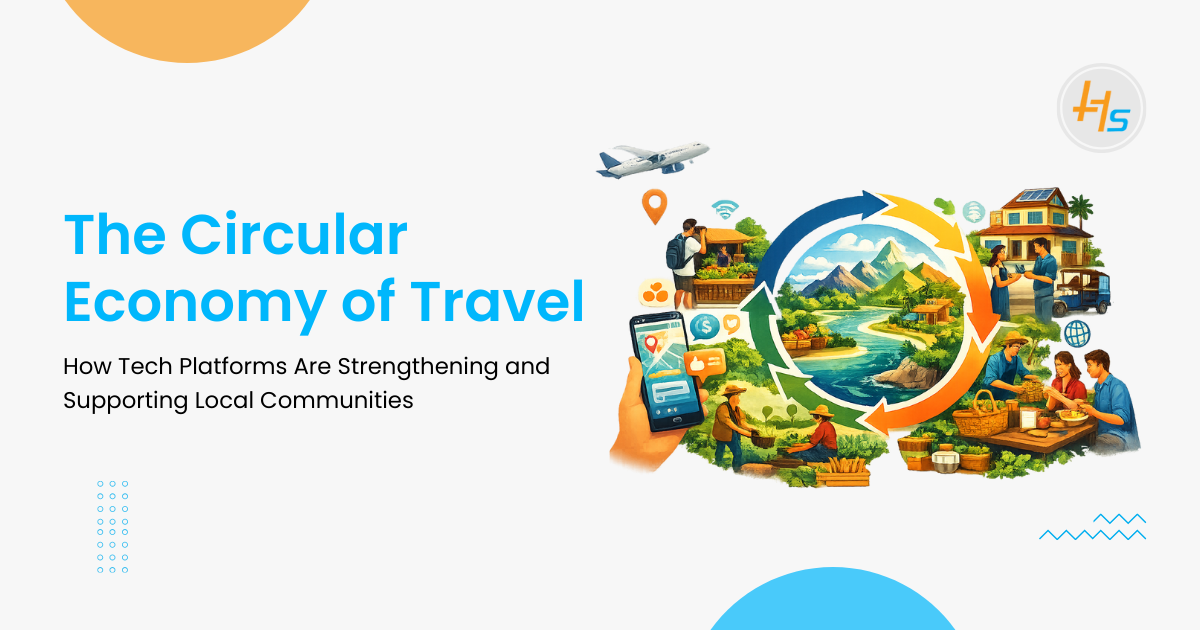
The global travel industry is growing at a fast pace. According to the World Travel and Tourism Council, travel contributed 9.2 trillion USD to the global economy in 2023. That figure equals 9.1% of global GDP. The United Nations reports that tourism supports one in ten jobs worldwide. Yet, many destinations still struggle to keep value within local communities.
Traditional travel systems often send profits to large intermediaries. Local hosts, guides, and service providers receive a small share. This gap creates economic pressure and social imbalance. A circular economy model offers a better approach. It focuses on reuse, redistribution, and local value creation.
A modern Travel Technology Company plays a key role in this shift. Digital platforms now connect travelers directly with local suppliers.
Table of Contents
What Is the Circular Economy in Travel?
The circular economy in travel focuses on how value moves within a destination. It explains how technology helps local businesses remain active participants instead of passive suppliers.
1. What the Circular Economy Means
- The circular economy reduces waste and improves resource use. It focuses on reuse, sharing, and local reinvestment. In travel, this model keeps money inside destinations.
- Local hotels, transport operators, and guides benefit directly. Technology helps track and distribute value fairly.
2. Linear vs Circular Travel Models
- Traditional travel follows a linear model. Money flows from travelers to global platforms. Only a fraction reaches locals.
- A circular model changes this flow. Technology enables direct bookings. It supports local supply chains.
The Role of a Travel Technology Company
The role of a Travel Technology Company goes beyond software delivery. It builds the technical backbone that connects travelers, suppliers, and local service providers.
1. Digital Infrastructure as the Core
A Travel Technology Company builds digital systems that support travel operations. These systems include:
- Booking engines
- Payment gateways
- Inventory management tools
- Data analytics platforms
Each component supports local service integration.
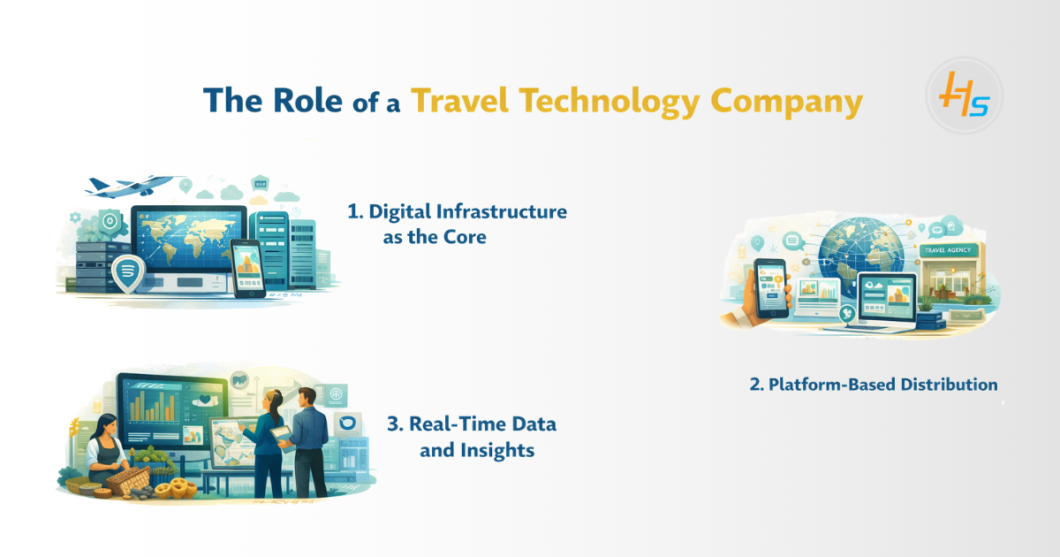
2. Platform-Based Distribution
Modern platforms allow local providers to list services directly. Small hotels and guides can reach global audiences. They no longer depend on costly intermediaries.
APIs connect local inventory with global travel portals. This integration increases visibility and revenue.
3. Real-Time Data and Insights
Travel Technology Companies offer immediate access to data for both travelers and local providers. Information on bookings, occupancy, and demand trends helps businesses plan more effectively.
Using this data, providers can adjust rates, manage resources, and improve their services. Travelers gain up-to-date availability and relevant suggestions, making the overall experience smoother while supporting local communities.
Travel Technology Solutions Supporting Local Economies
Travel Technology Solutions provides tools that help local businesses manage their services efficiently. These solutions help local providers in multiple ways, such as:
1. Smart Booking Systems
Booking systems now support local pricing models. They adjust prices based on demand and season. Local providers gain control over rates. They can plan revenue better.
These systems also provide analytics on booking trends and guest preferences. This helps providers make informed decisions about promotions, inventory, and service improvements.
2. Local Payment Integration
Digital wallets and regional payment gateways lowers the transaction costs. Providers receive funds faster. According to McKinsey, digital payments reduce processing costs by 30% in emerging markets.
Payment systems can also support multiple currencies and payment methods, making it easier for international travelers to book local services. Efficient payment systems build confidence and trust between guests and service providers.
3. Tax and Compliance Automation
Platforms now handle local tax rules. Automated systems calculate tourism taxes accurately. Local governments receive proper revenue. Compliance improves trust.
These systems also generate reports for providers, simplifying accounting and audits. By reducing manual work, businesses can focus more on customer service and operations.
Data-Driven Community Impact
Data plays a key role in helping local communities benefit from tourism. By collecting and analyzing local travel patterns, providers and planners can make smarter decisions. Several key ways show how data supports community growth and efficiency.
1. Data Collection at the Local Level: Platforms collect booking and usage data. This data shows travel patterns and demand peaks. Local authorities use this data for planning.
2. Demand Forecasting: AI-based forecasting helps avoid overcrowding. Systems spread demand across seasons. This approach protects local resources and infrastructure.
3. Performance Metrics for Local Providers: Dashboards show revenue, occupancy, and guest feedback. Providers improve services using insights.
Sustainable Supply Chains in Travel
Platforms now promote local transport, food, and experiences, using algorithms to highlight nearby services. This ensures travelers see local options first, supporting community businesses directly. At the same time, smart energy and water systems connect with hotel platforms to track usage efficiently. According to the International Energy Agency, these smart systems can reduce hotel energy use by 15%, helping both providers and the environment.
Community-Based Experiences Enabled by Tech
Experience platforms allow locals to offer cultural activities, including cooking classes and heritage walks, while technology handles scheduling and payments. Identity verification tools build trust, and reviews and ratings ensure quality, which helps travelers feel confident in choosing authentic experiences. Local experience hosts keep most of their earnings, and platform fees remain transparent, allowing communities to benefit directly from tourism.
Case Example: Smart Destination Platforms
Many cities now use digital destination platforms that integrate hotels, transport, and attractions. For example, Barcelona uses such systems to manage visitor flow more effectively. As a result, the city reported reduced congestion in peak areas, while visitor spending spread across different neighborhoods. Local businesses also saw increased foot traffic, showing how technology can benefit both travelers and communities.
The Technical Architecture Behind Circular Travel
A strong technical foundation is essential for circular travel platforms to work efficiently. Key components of this architecture include:
- Cloud-Based Platforms: Cloud infrastructure supports scalability and allows local providers to join platforms easily. Using cloud tools also reduces IT costs for smaller businesses, making the technology accessible to more communities.
- API Ecosystems: APIs connect airlines, hotels, and local services, enabling real-time updates. Developers can use these APIs to build apps that support local businesses and integrate services seamlessly.
- Security and Privacy: Platforms follow strict data protection rules, with encryption safeguarding user information. Ensuring security builds trust among travelers and providers, which encourages wider adoption of these systems.
Benefits for Local Communities
Tourism technology can help local communities earn more and improve services.
1. Economic Stability: Local businesses gain steady income. Seasonal income gaps are reducing. According to UN Tourism, community-based tourism increases local income by 20%.
2. Skill Development: Platforms offer digital tools and training. Locals learn pricing, marketing, and service management. Digital skills improve long-term prospects.
3. Cultural Preservation: Technology promotes local traditions. Cultural experiences gain global exposure. Communities protect heritage.
Challenges in Circular Travel Technology
1. Digital Access Gaps
Many local communities and small travel providers lack reliable internet access or digital skills. This limits their ability to use travel platforms effectively. As a result, they miss opportunities to reach global travelers and participate in circular travel ecosystems.
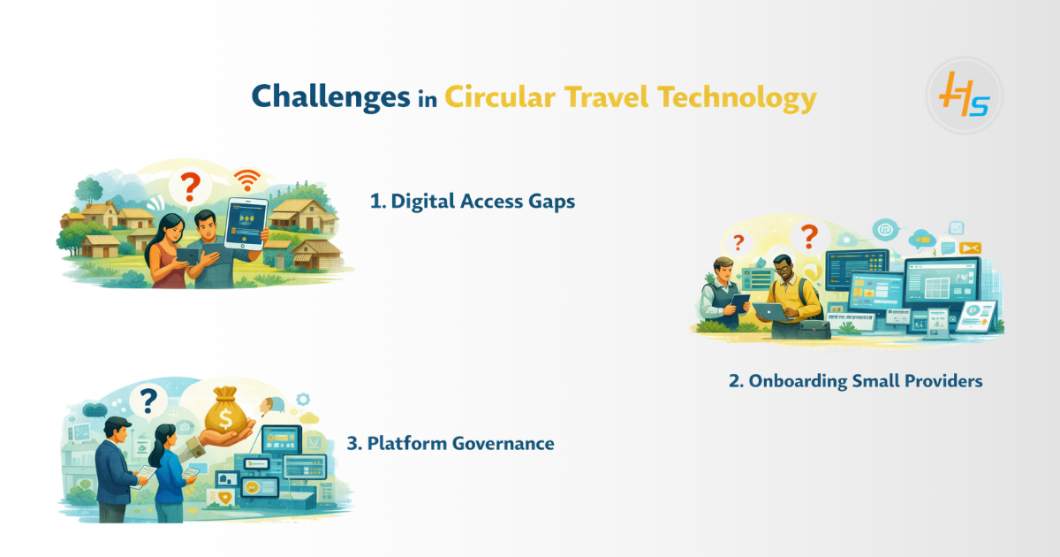
2. Onboarding Small Providers
Small hotels, homestays, guides, and transport operators often struggle with onboarding processes. Limited technical knowledge, language barriers, and complex platform requirements slow adoption. Without proper support, these providers remain outside major travel networks.
3. Platform Governance
Managing fairness, transparency, and data ownership is a major challenge. Large platforms may prioritize profits over community benefits. Poor governance can lead to unequal revenue distribution, misuse of local data, and reduced trust among stakeholders.
Government and Policy Support
Governments now support smart tourism initiatives through grants and data-sharing programs, and public-private partnerships are becoming more common. Open data also encourages innovation, allowing local startups to build tools using shared information. This approach strengthens local ecosystems and helps communities sustainably benefit from tourism..
Future of Circular Travel Technology
IoT devices can monitor energy use and crowd levels, feeding this data into travel platforms. This allows real-time control, which helps destinations operate more sustainably. Blockchain-based booking systems reduce the need for intermediaries, and smart contracts make payments fair and transparent, improving accountability. Some destinations are also exploring cooperative platforms where locals own and manage the systems, with technology supporting shared governance.
Why Travel Technology Solutions Matter
A strong Travel Technology Company does more than enable bookings. It builds systems that support fair value flow and long-term sustainability. Travel Technology Solutions connect travelers directly with local economies, helping destinations retain value, protect culture, and grow responsibly.
At HashStudioz, we specialize in building scalable, secure, and data-driven Travel Technology Solutions that support circular travel models. From API-driven booking platforms to local payment integrations and smart analytics, our solutions are designed to keep communities at the center of tourism growth.
We work closely with travel businesses, destination managers, and startups to design platforms that prioritize local reinvestment, transparency, and operational efficiency—turning technology into a bridge between global travelers and local hosts.
How HashStudioz Supports Circular Travel
HashStudioz helps travel companies and destinations implement circular economy principles through:
- Custom Travel Platforms that enable direct bookings between travelers and local providers
- Smart Booking & Inventory Systems that give local businesses control over pricing and availability
- Secure Payment Integrations supporting local gateways, multi-currency transactions, and faster settlements
- Data & Analytics Solutions that help providers and authorities forecast demand, reduce overcrowding, and improve resource use
- API Ecosystems & Cloud Infrastructure that make it easy for small providers to join global travel networks

Conclusion
The circular economy of travel depends on smart technology. Digital platforms reshape how value moves across destinations. A Travel Technology Company provides the technical foundation for this shift. Through APIs, data systems, and automation, Travel Technology Solutions strengthens local communities.
As travel demand grows, this model becomes essential. Circular travel creates balanced growth. Technology makes it possible.
 Nikhil Saini