

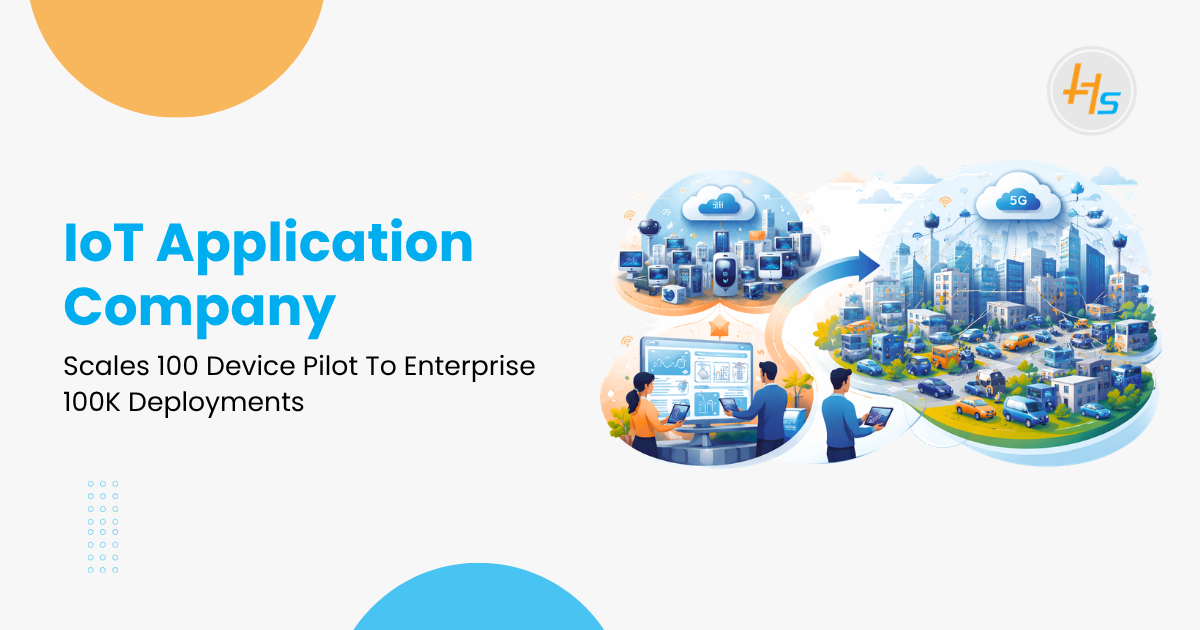
The Internet of Things (IoT) is growing at a rapid pace. Reports show the global IoT market may reach $1.5 trillion by 2030. More than 75 billion connected devices are expected worldwide. Around 60% of enterprises now invest in IoT projects to improve operations and reduce costs. Most businesses begin with a small pilot of 50–100 devices. This stage helps test ideas and reduce risk. However, the real value comes when companies scale to tens of thousands of devices. This shift from pilot to enterprise deployment creates technical and operational challenges.
An experienced IoT Application Development Company helps businesses manage this transition. With strong IoT App Development Services, companies can build systems that support growth, ensure security, and handle large-scale data.
Table of Contents
What is an IoT Pilot Project?
Understanding the 100 Device Pilot
A pilot project is a small-scale implementation of an IoT system. It tests the concept before full deployment.
In most cases, a pilot includes:
- 50 to 100 connected devices
- Limited geographic area
- Basic data collection system
- Simple dashboards for monitoring
This stage focuses on validation rather than performance at scale.
Key Objectives of the Pilot
The pilot phase helps businesses answer critical questions:
- Does the device perform well in real conditions?
- Is the network stable and reliable?
- Is the collected data accurate and useful?
- Can the system support future growth?
Benefits of Starting with a Pilot
- Reduces financial risk
- Identifies technical issues early
- Helps refine business goals
- Builds confidence for large investment
Why Scaling IoT is Challenging
Moving from 100 devices to 100,000 devices is not a simple upgrade. It requires a complete system redesign in many cases.
1. Device Management at Scale
Managing a small number of devices is easy. At scale, it becomes complex.
Challenges include:
- Tracking device health in real time
- Managing firmware updates remotely
- Handling device failures quickly
Without automation, manual management becomes impossible.
2. Data Explosion
Each device generates data continuously. With 100,000 devices, data grows rapidly.
Key issues:
- Storage capacity increases
- Data processing becomes heavy
- Real-time insights become difficult
Businesses must build systems that filter and process only useful data.
3. Network Reliability
Large deployments depend on stable connectivity.
Common problems include:
- Signal loss in remote areas
- Network congestion
- Latency affecting real-time actions
Choosing the right communication technology is critical.
4. Security Risks
Every connected device is a potential entry point for attackers.
Risks include:
- Unauthorized access
- Data breaches
- Device hijacking
Security must be built into every layer of the system.
5. Integration Complexity
IoT systems do not work alone. They must connect with enterprise tools.
Examples include:
- ERP systems
- CRM platforms
- Supply chain systems
Integration becomes more complex as the system grows.
Role of an IoT Application Development Company
An experienced IoT Application Development Company plays a key role in scaling IoT solutions.
What They Do
- Design scalable system architecture
- Select suitable hardware and connectivity
- Develop cloud-based applications
- Ensure secure communication
- Integrate IoT with enterprise systems
Why Expertise Matters
Without expert guidance, businesses face:
- System failures at scale
- Increased costs
- Security risks
- Poor performance
Professional IoT App Development Services ensure smooth scaling and long-term success.
Architecture for Large-Scale IoT Systems
A strong architecture supports growth from pilot to enterprise level.
1. Device Layer
This layer includes all physical devices such as sensors and actuators.
Key requirements:
- Low power consumption
- Remote firmware updates
- High durability
Devices must support long-term use in real environments.
2. Connectivity Layer
This layer connects devices to the cloud.
Common options:
- Wi-Fi – Suitable for short range
- Cellular (4G/5G) – Ideal for wide coverage
- LPWAN (LoRaWAN, NB-IoT) – Best for low power and long range
The choice depends on use case and cost.
3. Data Processing Layer
This layer handles data flow and processing.
Two main approaches:
- Edge Computing – Processes data near the device
- Cloud Computing – Handles large-scale analytics
A hybrid approach often gives the best results.
4. Application Layer
This layer provides user interaction.
It includes:
- Web dashboards
- Mobile applications
- Alerts and reporting tools
This layer helps businesses make decisions based on data.
Step-by-Step Process to Scale IoT Systems
Step 1: Build a Scalable Backend
Start with a system that supports growth.
Key actions:
- Use cloud-native architecture
- Implement microservices
- Enable auto-scaling features
This ensures the system can handle increasing load.
Step 2: Implement Device Management Platform
A device management system is essential for large deployments.
Features include:
- Device registration
- Remote monitoring
- Firmware updates
- Fault detection
Automation reduces manual effort and errors.
Step 3: Optimize Data Management
Efficient data handling reduces cost and improves performance.
Best practices:
- Filter unnecessary data
- Use data compression
- Store only critical information
This helps maintain system efficiency.
Step 4: Strengthen Security
Security must be a top priority.
Important measures:
- Device authentication
- Data encryption
- Secure APIs
- Continuous monitoring
A secure system protects both data and devices.
Step 5: Enable Real-Time Monitoring
Real-time insights improve decision-making.
Tools include:
- Live dashboards
- Alert systems
- Performance tracking
This helps detect issues early and reduce downtime.
Real-World Example: Smart Manufacturing
A manufacturing company starts with 100 IoT sensors. These sensors monitor machine performance.
1. Pilot Phase Results
- Identified machine faults early
- Reduced downtime by 15%
- Improved maintenance planning
2. Scaling Strategy
The company expands to multiple factories.
Actions taken:
- Installed sensors across all machines
- Connected devices to a central cloud platform
- Used analytics for predictive maintenance
3. Final Outcome
- Downtime reduced by 40%
- Maintenance costs decreased
- Production efficiency improved
This example shows how IoT scaling delivers real business value.
Importance of Cloud in IoT Scaling
Cloud platforms play a major role in large deployments.
Benefits of Cloud
- Flexible storage capacity
- High processing power
- Easy system integration
- Global accessibility
Cloud enables businesses to scale without heavy infrastructure investment.
Data Analytics in Large Deployments
Data analytics plays a key role in large-scale IoT deployments. IoT systems generate massive amounts of data from sensors, devices, and user interactions. This raw data has little value on its own. Analytics converts it into meaningful insights that support better decisions.
In large deployments, analytics helps businesses understand system performance, detect patterns, and improve operations. It also supports real-time decision-making, which is critical in industries like manufacturing, logistics, and energy.
Descriptive Analytics – Shows Past Data
Descriptive analytics focuses on historical data. It answers questions like “What happened?” and “How did the system perform?”
Dashboards and reports display key metrics such as device uptime, usage trends, and system errors. This helps teams understand past performance and identify areas for improvement.
Predictive Analytics – Forecasts Future Events
Predictive analytics uses historical data and algorithms to forecast future outcomes. It answers questions like “What is likely to happen next?”
For example, it can predict device failures based on usage patterns. This allows businesses to take action before issues occur, reducing downtime and costs.
Prescriptive Analytics – Suggests Actions
Prescriptive analytics goes a step further. It not only predicts outcomes but also recommends actions.
It answers questions like “What should we do?”
For instance, it can suggest optimal maintenance schedules or recommend changes in operations to improve efficiency.
Business Use Cases
1. Predict Equipment Failure
Analytics can detect early signs of equipment failure. Sensors collect performance data, and predictive models identify unusual patterns. This enables proactive maintenance and reduces unexpected breakdowns.
2. Optimize Energy Usage
IoT analytics helps monitor energy consumption across systems. Businesses can identify waste and adjust usage patterns. This leads to lower energy costs and improved sustainability.
3. Improve Supply Chain Efficiency
Analytics provides visibility into supply chain operations. It tracks inventory levels, shipment status, and delivery times. Businesses can optimize routes, reduce delays, and improve overall efficiency.
Data analytics helps organizations make informed decisions. It improves performance, reduces risks, and increases operational efficiency.
Security Best Practices for IoT
Security is a critical factor in large-scale IoT deployments. IoT systems connect many devices, networks, and platforms. This increases the risk of cyber threats. A single vulnerability can impact the entire system.
Strong security practices protect data, devices, and users. They also help maintain trust and ensure compliance with regulations.
Key Practices
1. Use Strong Device Identity
Each device should have a unique identity. Authentication mechanisms ensure that only trusted devices can connect to the system. This prevents unauthorized access and reduces security risks.
2. Enable End-to-End Encryption
Encryption protects data during transmission. It ensures that data remains secure from the device to the cloud. Even if data is intercepted, it cannot be read without proper authorization.
3. Perform Regular Updates
Regular software and firmware updates fix vulnerabilities and improve system security. Over-the-air updates allow businesses to manage large numbers of devices efficiently.
4. Monitor System Activity
Continuous monitoring helps detect unusual behavior. Security systems can identify threats such as unauthorized access or abnormal data patterns. Early detection allows quick response and minimizes damage.
Ignoring security can lead to serious consequences. These include data breaches, financial losses, and damage to brand reputation.
Cost Management in IoT Scaling
Scaling IoT systems involves significant investment. As the number of devices grows, costs increase across multiple areas. Proper planning and management help control these expenses and ensure long-term sustainability.
Main Cost Factors
1. Hardware Devices
Devices such as sensors, gateways, and controllers form the foundation of IoT systems. Large deployments require thousands of devices, which increases upfront costs.
2. Network Connectivity
IoT devices rely on network connectivity to send and receive data. Costs vary based on the type of network used, such as cellular, Wi-Fi, or LPWAN. High data usage can increase expenses.
3. Cloud Services
Cloud platforms store and process IoT data. Costs depend on storage, computing power, and data transfer. As data volume grows, cloud expenses also rise.
4. Maintenance
Ongoing maintenance includes device management, software updates, and technical support. These costs continue throughout the system lifecycle.
Cost Optimization Tips
1. Use Efficient Data Storage
Store only necessary data. Use data compression and retention policies to reduce storage costs. Archiving old data can also help manage expenses.
2. Reduce Unnecessary Data Transfer
Sending large amounts of data increases network and cloud costs. Edge computing can process data locally and send only important information to the cloud.
3. Choose Cost-Effective Networks
Select networks based on use case and data needs. Low-power networks can reduce costs for applications that do not require high bandwidth.
Testing and Quality Assurance
Testing and Quality Assurance (QA) play a critical role in IoT system success. A well-tested system performs reliably, even under high load and complex conditions. IoT environments include multiple devices, networks, and data flows. This complexity makes testing essential at every stage.
Testing helps identify issues before they impact users. It also ensures smooth performance, strong security, and consistent data accuracy. Teams must test both hardware and software components to achieve full system reliability.
1. Device Testing
Device testing checks the performance of IoT hardware. Each sensor, gateway, and connected device must work correctly. Teams verify data collection accuracy, battery performance, and device response time. Testing also ensures devices can operate in different environments like heat, dust, or moisture.
2. Network Testing
Network testing focuses on communication between devices and servers. IoT systems rely on stable connectivity. Teams test different network conditions such as low bandwidth, high latency, and signal interruptions. This helps ensure data transfers without loss or delay.
3. Load Testing
Load testing evaluates how the system performs under heavy usage. IoT platforms often handle thousands or millions of devices at once. Teams simulate high traffic to check system stability. This process helps identify bottlenecks and ensures the system scales effectively.
4. Security Testing
Security testing protects IoT systems from cyber threats. Teams test for vulnerabilities such as unauthorized access, data leaks, and weak authentication. Encryption, secure APIs, and device authentication methods are verified. Strong security builds trust and protects sensitive data.
Testing should not stop after deployment. Continuous testing helps detect new issues as the system grows and evolves.
Continuous Monitoring and Maintenance
IoT systems require constant monitoring and regular maintenance. Devices operate in real-world environments where conditions change frequently. Without proper support, performance can degrade over time.
Continuous monitoring ensures the system remains stable, secure, and efficient.
1. Monitor Device Health
Teams track device status, battery levels, and performance metrics. Early detection of faults helps prevent system failures. Alerts notify teams when devices go offline or behave abnormally.
2. Track Network Performance
Network monitoring ensures smooth communication across the system. Teams analyze latency, bandwidth usage, and connection reliability. This helps maintain consistent data flow and reduces downtime.
3. Update Software Regularly
Regular updates improve system performance and fix bugs. Firmware and software updates also address security vulnerabilities. Over-the-air (OTA) updates make it easier to manage large device networks.
4. Fix Issues Quickly
Quick issue resolution minimizes disruption. Support teams must respond to alerts and resolve problems in real time. Fast action helps maintain user trust and system reliability.
Continuous maintenance ensures long-term stability and better system performance.
Future Trends in IoT Scaling
IoT technology continues to grow with new advancements. Businesses must adopt modern solutions to stay competitive and improve efficiency.
1. 5G Networks Improve Connectivity Speed
5G offers faster data transfer and lower latency. It supports a large number of connected devices. This makes it ideal for large-scale IoT deployments.
2. AI Integration Enhances Data Analysis
Artificial Intelligence improves data processing and decision-making. AI can detect patterns, predict failures, and automate responses. This leads to smarter and more efficient IoT systems.
3. Edge Computing Reduces Latency
Edge computing processes data closer to the source. This reduces the need to send data to central servers. Faster processing improves real-time decision-making and reduces network load.
4. Digital Twins Improve Monitoring
Digital twins create virtual models of physical devices. These models help monitor performance and predict issues. Businesses can test changes in a virtual environment before applying them in real systems.
Transform Your IoT Deployment from Pilot to Enterprise
Choosing the right IoT application development company is critical for businesses aiming to scale from a small pilot to a large enterprise deployment. From managing thousands of connected devices and ensuring real-time data flow to maintaining system security and performance, businesses need a robust and scalable IoT solution that supports long-term growth.
At HashStudioz, we help businesses design and scale IoT solutions from 100-device pilots to 100K+ deployments with ease. Our team focuses on building secure, high-performance systems that deliver real-time insights, improve operational efficiency, and simplify complex device management.
Partner with our experienced team to build a scalable IoT ecosystem that supports rapid growth, reduces operational challenges, and ensures seamless performance across large-scale deployments.
Conclusion
Scaling from a 100 device pilot to 100K deployments requires strong planning and execution. Businesses must focus on architecture, security, and data management. An experienced IoT Application Development Company provides the expertise needed for this journey. With reliable IoT App Development Services, companies can build scalable, secure, and efficient IoT systems. Organizations that scale IoT successfully gain better efficiency, lower costs, and improved decision-making. The transition from pilot to enterprise is complex, but with the right approach, it delivers long-term value.