


The eCommerce industry has become more data-driven, automated, and customer-centric than ever before. As online retailers compete to deliver faster shipping, personalized experiences, and accurate inventory management, the Internet of Things (IoT) has emerged as a key technology driving this transformation.
IoT connects physical devices, sensors, inventory systems, warehouses, vehicles, and customer devices through the internet, enabling businesses to collect and analyze real-time data. According to industry estimates, the number of connected IoT devices worldwide is expected to exceed 30 billion by 2030, creating new opportunities for retailers to improve operational efficiency and customer satisfaction.
From smart inventory tracking and automated replenishment to predictive maintenance and personalized shopping experiences, IoT helps eCommerce businesses make faster decisions and reduce operational costs. Companies that successfully integrate IoT solutions can gain better visibility across their supply chain, improve delivery performance, and create more engaging customer experiences.
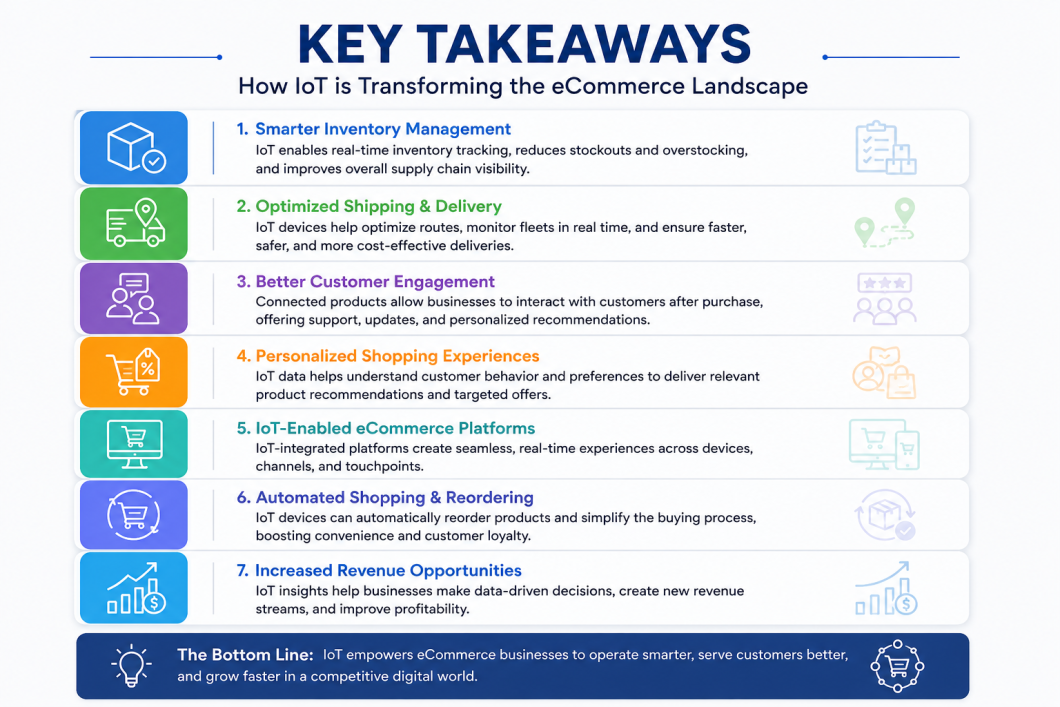
Table of Contents
Benefits of IoT in E-commerce Business
IoT enables eCommerce businesses to connect products, warehouses, delivery networks, and customer touchpoints through real-time data. This connectivity helps retailers improve operational efficiency, reduce costs, and deliver better customer experiences.
As customer expectations continue to rise, businesses are using IoT solutions to gain greater visibility into their supply chains, automate routine processes, and make data-driven decisions. The result is faster fulfillment, improved inventory accuracy, and more personalized shopping experiences.
Here are some of the most impactful ways IoT is transforming modern eCommerce operations.
1. Improved Logistics and Tracking
Modern eCommerce customers expect complete visibility into their orders. IoT helps businesses track products throughout the supply chain, from warehouse dispatch to final delivery.
Using technologies such as RFID tags, GPS trackers, and IoT sensors, retailers can monitor inventory movement, shipment locations, delivery conditions, and warehouse operations in real time. This level of visibility helps businesses identify delays early, reduce lost shipments, and improve delivery accuracy.
IoT-powered tracking also provides valuable operational insights. Retailers can analyze transportation routes, warehouse performance, and inventory flow to optimize logistics costs and improve fulfillment efficiency. For customers, this means more accurate delivery updates and a better overall shopping experience.
Beyond real-time tracking, IoT also helps businesses automate inventory management and improve delivery operations through intelligent monitoring and data-driven decision-making.
2. Shipping and Delivery Automation (by Optimizing Truck Routes)
Fast and reliable delivery has become a major competitive advantage in eCommerce. IoT helps businesses automate shipping operations by providing real-time visibility into vehicle locations, traffic conditions, weather patterns, and delivery performance.
Many IoT app development companies build logistics solutions that connect GPS trackers, telematics devices, and fleet management systems to provide actionable insights throughout the delivery process. These connected systems help businesses identify the most efficient routes, reduce fuel consumption, avoid traffic congestion, and improve delivery timelines.
IoT-enabled fleet monitoring also allows retailers to track vehicle performance, monitor driver behavior, and receive predictive maintenance alerts before issues disrupt deliveries. This helps reduce downtime and maintain consistent shipping operations.
3. Improved Customer-Manufacturer Interactions
IoT enables businesses to maintain ongoing relationships with customers even after a purchase is completed. Connected products can continuously exchange data, helping manufacturers better understand product usage, performance, and customer needs.
For example, smart devices can automatically notify users about maintenance requirements, software updates, or replacement parts. A connected printer may detect low ink levels and recommend cartridge replacements, while smart home devices can alert users when servicing is required.
This continuous connection creates opportunities for businesses to provide proactive support, personalized recommendations, and subscription-based services. Instead of relying solely on one-time purchases, companies can generate recurring revenue through maintenance plans, consumable replacements, and value-added digital services.
4. Personalized Shopping Experiences
Modern consumers expect relevant product recommendations, tailored offers, and seamless shopping journeys. IoT helps eCommerce businesses deliver these experiences by collecting real-time data from connected devices, applications, and customer interactions.
By analyzing customer behavior, purchase history, location data, and device usage patterns, businesses can better understand individual preferences and buying habits. This allows retailers to recommend relevant products, send personalized promotions, and create targeted marketing campaigns that resonate with specific customer segments.
For example, smart home devices, wearable technology, and connected vehicles can provide valuable insights that help brands deliver more context-aware recommendations. A customer using a fitness wearable may receive suggestions for health-related products, while smart appliances can recommend replenishment purchases based on usage patterns.
5. IoT-Enabled E-commerce Platforms
As the number of connected devices continues to grow, eCommerce platforms must be capable of handling data from multiple sources, including smartphones, wearables, smart home devices, connected vehicles, and voice assistants.
IoT-enabled eCommerce platforms collect and process real-time data from these devices to create more responsive and personalized shopping experiences. Businesses can use this information to track customer preferences, monitor product performance, and deliver relevant recommendations across multiple channels.
For example, a smart refrigerator can detect when household essentials are running low and prompt users to reorder products directly through an eCommerce platform. Similarly, voice-enabled devices can help customers search for products, place orders, and track deliveries using simple voice commands.
6. Automated Shopping and Reordering

One of the most practical applications of IoT in eCommerce is automated purchasing. Connected devices can monitor product usage, detect when supplies are running low, and automatically initiate reorders with minimal customer intervention.
Smart appliances, wearable devices, and connected household products can track consumption patterns and send reminders or place orders when replacement products are needed. For example, a smart printer can reorder ink cartridges automatically, while a connected coffee machine can notify users when coffee pods are running low.
Retailers are also using IoT-powered checkout systems to simplify the purchasing process. Technologies such as smart carts, cashier-less stores, and automated payment systems reduce friction during checkout and improve the overall customer experience.
In addition to improving customer convenience and operational efficiency, IoT also creates new opportunities for businesses to increase revenue and build scalable growth strategies.
7. Maximize Revenue Opportunities
IoT is helping eCommerce businesses move beyond traditional sales models by creating new revenue streams and improving operational performance. Through connected devices and real-time data, businesses can identify customer needs faster, improve product offerings, and deliver more personalized services.
IoT-generated insights enable retailers to make informed decisions about inventory planning, pricing strategies, demand forecasting, and customer engagement. This reduces operational inefficiencies while helping businesses maximize sales opportunities across multiple channels.
Connected products also open the door to subscription-based services, automatic replenishment programs, predictive maintenance plans, and premium support offerings. These recurring revenue models help businesses increase customer lifetime value and build stronger long-term relationships.
What to Consider Before Implementing IoT in E-commerce
IoT can help eCommerce businesses improve efficiency, customer experiences, and operational visibility. However, successful implementation requires careful planning to ensure security, scalability, and long-term value.
Choose the Right IoT Platform
Not all IoT solutions are designed for the same business needs. Companies should select platforms that integrate easily with their existing eCommerce systems, inventory management tools, ERP software, and logistics networks.
Prioritize Data Security and Privacy
IoT devices continuously collect and exchange data, making security a critical consideration. Businesses should implement strong encryption, secure authentication methods, and regular security updates to protect customer and business information from cyber threats.
Ensure Scalability
As an eCommerce business grows, the number of connected devices, transactions, and data points will increase. Choosing scalable IoT infrastructure helps businesses support future expansion without major system disruptions.
Integrate Data Across Systems
The true value of IoT comes from connected data. Businesses should ensure IoT devices can communicate effectively with CRM, ERP, analytics, and customer support platforms to create a unified view of operations and customer interactions.
Be Transparent About Data Usage
Customers are increasingly concerned about how their data is collected and used. Clearly communicating data collection practices and obtaining necessary consent helps build trust while ensuring compliance with privacy regulations.
Focus on Business Goals
Before investing in IoT solutions, businesses should define clear objectives such as improving inventory accuracy, reducing delivery costs, enhancing customer experiences, or increasing operational efficiency. Clear goals make it easier to measure ROI and long-term success.
By addressing these considerations early, businesses can build a strong foundation for successful IoT adoption and maximize the value of their connected commerce initiatives.
Conclusion
IoT is no longer an emerging technology for eCommerce businesses. It has become a practical tool for improving inventory management, logistics, customer engagement, and operational efficiency. By connecting devices, systems, and data in real time, businesses can make faster decisions, reduce costs, and deliver better shopping experiences.
As customer expectations continue to evolve, IoT will play an increasingly important role in creating smarter and more connected retail ecosystems. Businesses that adopt IoT solutions today can improve supply chain visibility, automate routine processes, and build stronger customer relationships.
Whether you’re launching a new eCommerce platform or enhancing an existing one, investing in the right IoT strategy can help you stay competitive and prepare for future growth. Partnering with an experienced IoT development company can ensure a secure, scalable, and successful implementation tailored to your business needs.
If you want to start an online shop for your business, you should talk with an experienced IoT Development Company that can understand your needs and provide the software on time.
FAQs
How is IoT used in eCommerce?
IoT is used in eCommerce to track inventory, monitor shipments, automate reordering, personalize customer experiences, and improve supply chain visibility through connected devices and real-time data.
What are the benefits of IoT in eCommerce?
The main benefits include improved inventory management, real-time logistics tracking, personalized shopping experiences, automated purchasing, lower operational costs, and better customer satisfaction.
Can IoT help reduce eCommerce delivery costs?
Yes. IoT-enabled GPS tracking, route optimization, and fleet monitoring help businesses reduce fuel consumption, improve delivery efficiency, and minimize transportation costs.
How does IoT improve inventory management?
IoT devices such as RFID tags and smart sensors provide real-time inventory visibility, helping businesses track stock levels, reduce inventory errors, and automate replenishment processes.
Is IoT secure for eCommerce businesses?
IoT can be secure when businesses implement data encryption, device authentication, regular software updates, and strong cybersecurity practices to protect customer and operational data.