


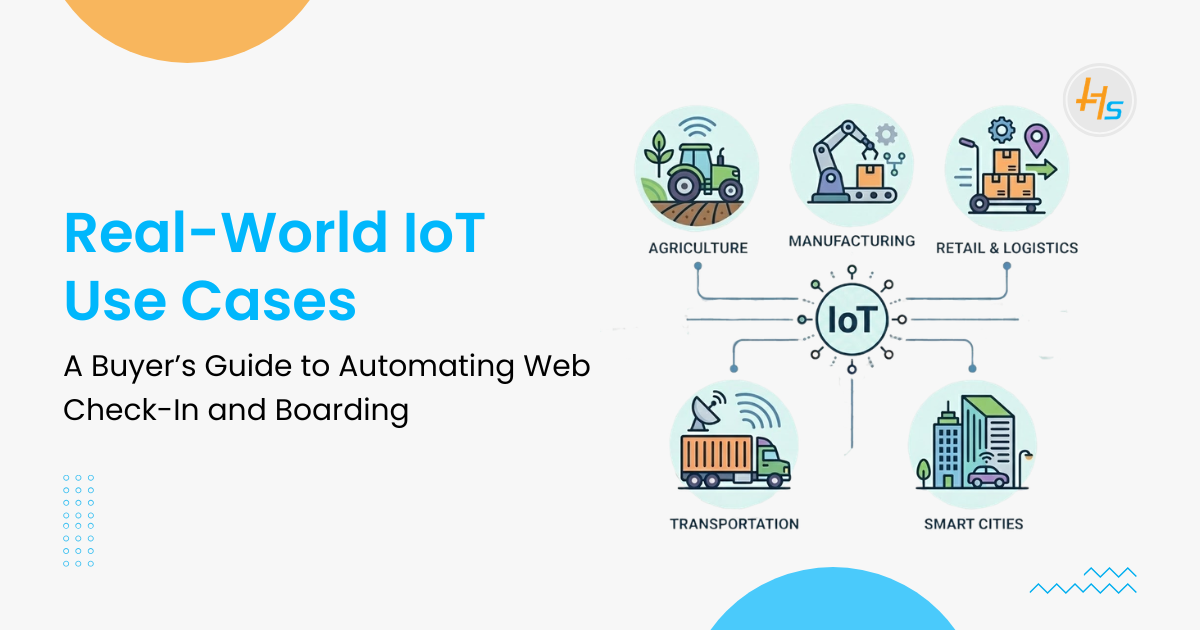
In 2026, IoT is transforming how industries operate, evolving from experimental deployments to core business infrastructure. Organizations now rely on IoT systems for real-time monitoring, automation, and data-driven decision-making.
Global adoption continues to accelerate, with over 21 billion connected devices in 2025, expected to grow to 22 billion by 2026. IoT spending is projected to surpass $1.1 trillion, with Industrial IoT accounting for nearly 40% of enterprise investments.
This rapid growth reflects a clear shift toward connected, intelligent systems. Businesses are increasingly relying on IoT to enhance efficiency, minimize delays, and enable predictive operations at scale.
As a result, many businesses partner with an experienced IoT development company to build scalable IoT solutions that connect devices, cloud platforms, and analytics into a unified ecosystem.
Table of Contents
What is IoT (Internet of Things)?
IoT refers to a network of physical devices embedded with sensors, software, and connectivity features that allow them to exchange data over the internet. These devices can include anything from smart thermostats and wearable devices to industrial machinery and autonomous vehicles.
What are IoT Use Cases?
IoT Use Cases are real-world applications in which connected devices collect data, transmit it over networks, and trigger automated or human-driven actions.
These systems combine:
- Sensors and smart devices
- Connectivity layers (Wi-Fi, 5G, LPWAN)
- Cloud and edge computing systems
- Analytics and automation software
They solve operational problems like monitoring, prediction, and automation across industries.
How IoT systems work
IoT systems work through a layered structure that moves data from devices to applications in real time. Each layer handles a specific function to ensure fast, reliable, and scalable data processing.
This IoT architecture collects data from connected devices, processes it through network and edge systems, and delivers insights through cloud-based applications. It enables real-time telemetry processing and low-latency decision-making.
Here are the key layers of an IoT system:
- Device layer: Sensors and smart devices collect raw data like temperature, motion, and machine activity.
- Connectivity layer: Data moves through protocols like MQTT, HTTP, and 5G to central systems.
- IoT Gateway layer: IoT gateways act as intermediaries between devices and cloud systems. They filter, aggregate, and translate data from multiple devices before sending it to edge or cloud platforms.
- Edge layer: Local devices process data instantly to reduce delay and enable quick actions.
- Cloud layer: Cloud systems store large data sets and run analytics for insights and predictions.
- Application layer: Dashboards and apps show data and help users monitor or control systems.
IoT systems collect data from devices, transmit it over networks, process it at the edge or in the cloud, and present insights through applications for real-time decision-making.
Why IoT matters in 2026 (Key drivers)
IoT matters in 2026 because industries now depend on real-time data, automated systems, and AI-driven decision-making to improve speed, accuracy, and operational efficiency.
1. Real-time operational visibility
Businesses use IoT systems to track machines, assets, and processes in real time. This improves decision-making and reduces operational delays.
2. Automation reduces manual errors
IoT enables automated workflows where devices trigger actions based on sensor data. This reduces human errors in industrial and enterprise systems.
3. Edge computing improves response time
Edge systems process data near devices instead of sending everything to the cloud. This reduces latency and supports instant decision-making in critical environments.
4. AI improves prediction accuracy
Modern IoT systems integrate AI models to analyze data patterns. This helps predict failures, demand changes, and system risks before they occur.
5. Cloud systems support large-scale IoT data
Cloud platforms manage massive IoT data generated from millions of connected devices. They enable long-term storage, analytics, and centralized monitoring.
6. Cost efficiency and operational optimization
Companies using IoT Solutions reduce operational costs through automation, predictive maintenance, and better resource utilization.
Top IoT Use Cases Transforming Industries in 2026
IoT use cases across industries are expanding rapidly in 2026, driving automation and real-time decision-making.
Below are the most impactful real-world IoT use cases transforming industries today.
1. Predictive Maintenance in Smart Manufacturing (Industrial IoT)
Smart manufacturing is the most mature IoT use case, driven by the need to reduce downtime and optimize production efficiency. Industrial machines are equipped with IoT sensors that continuously monitor vibration, temperature, pressure, and performance data. This data is processed at the edge for real-time anomaly detection. It is then analyzed in the cloud using AI models trained on historical machine behavior.
In 2026, predictive maintenance has evolved into AI-driven autonomous systems that calculate failure probability in advance, dynamically schedule maintenance, and trigger service workflows without manual intervention. These systems are often implemented through scalable IoT Solutions integrated with ERP and production platforms.
Impact:
- Reduced unplanned downtime
- Lower maintenance costs
- Increased production efficiency
2. Real-Time Supply Chain Intelligence & Automation
IoT is transforming supply chains into fully connected, real-time ecosystems. Sensors, GPS, and RFID technologies enable continuous tracking of goods, while environmental sensors monitor temperature and humidity in cold-chain logistics. Data is streamed to centralized systems for real-time visibility across the supply network.
In 2026, supply chains operate as event-driven systems where disruptions automatically trigger corrective actions. Delays initiate rerouting, temperature deviations generate alerts, and inventory thresholds activate restocking workflows. Many enterprises deploy these capabilities through advanced IoT Development Services integrated with logistics platforms.
Impact:
- End-to-end shipment visibility
- Reduced losses in transit
- Faster and more reliable delivery
3. Remote Patient Monitoring in Healthcare
Healthcare IoT enables continuous monitoring of patients outside traditional clinical settings. Wearable devices and connected sensors monitor vital parameters such as heart rate, oxygen levels, glucose, and blood pressure. The data is then sent to cloud-based healthcare platforms for analysis.
In 2026, this has evolved into AI-assisted remote care systems that detect anomalies in real time and generate early warnings for critical conditions. Healthcare providers now use hybrid models combining hospital care with continuous home monitoring, improving patient outcomes and reducing system load.
Impact:
- Early disease detection
- Reduced hospital readmissions
- Continuous remote patient care
4. Precision Agriculture (Smart Farming Systems)
IoT is enabling agriculture to become a fully data-driven operation. Sensors deployed across fields monitor soil moisture, nutrient levels, temperature, and weather conditions in real time. This data drives automated irrigation and fertilization systems.
In 2026, farms integrate AI-based predictive analytics, drones, and satellite data with IoT systems to optimize yield and resource usage. These integrated IoT Software Development ecosystems help farmers make precise, real-time decisions.
Impact:
- Optimized water and fertilizer use
- Higher crop yield
- Reduced environmental impact
Looking to Bring IoT into Your Operations?
Understand how to build a secure and scalable IoT system that delivers real-time insights and better control.
5. Smart Energy Grids & Consumption Management
Energy systems are becoming intelligent through IoT-enabled smart grids. Sensors and smart meters track real-time electricity consumption, grid load, and infrastructure health across networks.
In 2026, utilities use AI-powered load balancing systems to redistribute energy during peak demand and detect faults instantly. IoT Solutions enable these systems to integrate renewable energy sources and support scalable, responsive energy infrastructure.
Impact:
- Reduced energy wastage
- Faster outage response
- Improved grid stability
6. Smart Retail & Customer Behavior Analytics
Retail IoT systems track customer movement, product interaction, and inventory levels in real time. Sensors and smart shelves provide data on buying behavior and stock availability.
In 2026, retailers will use predictive demand intelligence to automate inventory management, personalize in-store experiences, and optimize store layouts. These capabilities are often powered by integrated IoT Development Services.
Impact:
- Reduced stockouts
- Improved customer experience
- Higher conversion rates
7. Smart Cities Infrastructure Management
IoT is transforming cities into connected ecosystems by integrating traffic systems, lighting, waste management, and public safety infrastructure. Sensors collect real-time data to improve urban operations.
In 2026, cities deploy AI orchestration layers that dynamically manage traffic signals, optimize energy usage, and predict congestion patterns. This enables more efficient and responsive urban management.
Impact:
- Reduced traffic congestion
- Lower energy consumption
- Improved public services
8. Smart Buildings & Facility Automation
IoT-enabled buildings automate HVAC, lighting, and security systems using real-time occupancy and environmental data. Sensors continuously monitor usage patterns to optimize building operations.
In 2026, buildings use occupancy-aware and AI-driven energy systems that automatically adjust climate, lighting, and access control based on real-time conditions. These systems are key components of modern IoT Solutions.
Impact:
- Lower operational costs
- Improved energy efficiency
- Enhanced occupant comfort
9. Connected Vehicles & Fleet Management
IoT enables real-time monitoring of vehicles through sensors that track engine health, fuel usage, location, and driver behavior. Fleet managers use this data to improve operational efficiency.
In 2026, fleets operate using AI-driven optimization systems that enable predictive maintenance, route optimization, and driver risk analysis. These systems are often built through advanced IoT Software Development platforms.
Impact:
- Reduced fuel consumption
- Improved delivery efficiency
- Enhanced safety
10. Industrial Safety & Workplace Monitoring
IoT improves safety in industrial environments through wearable devices and environmental sensors. These systems detect hazards such as gas leaks, extreme temperatures, and worker fatigue.
In 2026, safety systems use real-time AI risk detection to trigger alerts, automate emergency responses, and prevent accidents before they occur. These solutions are widely deployed in high-risk industries.
Impact:
- Improved worker safety
- Reduced workplace incidents
- Real-time hazard prevention
Additional High-Demand IoT Use Cases in 2026
Beyond core applications, emerging IoT use cases are rapidly expanding. Digital twins simulate real-world operations in manufacturing and smart cities, while asset tracking and smart warehousing improve inventory visibility.
Usage-based insurance (UBI) uses IoT data to enable personalized risk assessment. Environmental monitoring systems track air quality and climate data, while smart water solutions improve distribution and detect leaks. These evolving IoT Solutions extend capabilities into sustainability, predictive intelligence, and operational efficiency.
Challenges in IoT adoption
IoT adoption still faces technical challenges:
- Data security and privacy risks
- Device compatibility issues
- High initial infrastructure cost
- Network latency in remote areas
- Large-scale data management complexity
Companies solve these issues using secure IoT architecture and edge computing.
Future of IoT Use Cases (2026 and beyond)
IoT is evolving rapidly with the integration of advanced technologies and intelligent system design. Key emerging trends include:
- AIoT and Autonomous Systems: IoT systems are becoming self-operating. AI not only analyzes data but also makes and executes decisions without human input.
- Edge Computing as the Default Architecture: Data processing is shifting closer to devices, enabling real-time decision-making and reducing latency across critical applications.
- Digital Twins for Simulation and Optimization: Virtual replicas of physical systems are used to simulate operations, predict outcomes, and optimize performance in industries like manufacturing and smart cities.
- 5G-Enabled IoT Ecosystems: Faster and more reliable connectivity is enabling real-time automation, especially in industrial and remote environments.
- Security-First IoT Architecture: Security is becoming a core design element, with zero-trust models and built-in protection across devices and networks.
- Cloud–Edge Hybrid Intelligence: IoT systems are moving toward distributed architectures. In these systems, the edge handles real-time actions, while the cloud manages large-scale analytics and orchestration.
Why Businesses Choose HashStudioz for IoT Solutions
Building a successful IoT solution requires more than just connecting devices. It requires the right architecture, real-time data handling, and a clear understanding of how the system will perform in real-world conditions.
HashStudioz works on developing IoT solutions that are designed for reliability, scalability, and performance across industries such as manufacturing, logistics, and healthcare. From device integration to cloud connectivity and real-time dashboards, every component is built to support smooth and efficient operations.
With hands-on experience in AI-driven analytics, edge computing, and industrial automation, the focus is on creating systems that not only function correctly but also help businesses improve visibility, reduce downtime, and make better decisions.
Ready to Build a Scalable IoT System for Your Business?
Get expert guidance on the right architecture, devices, and implementation strategy based on your business needs.
Conclusion
Real-world IoT use cases in 2026 clearly show that IoT has moved from experimentation to a core business capability. Industries such as manufacturing, healthcare, logistics, energy, and smart cities now rely on connected systems for real-time visibility, automation, and predictive decision-making.
The biggest shift is the transition from data collection to intelligent, autonomous operations powered by AI, edge computing, and cloud integration. As IoT ecosystems continue to scale, businesses are investing in robust architectures that ensure performance, security, and long-term scalability.
Organizations increasingly adopt end-to-end IoT Solutions to streamline operations, reduce costs, and improve efficiency across complex environments.
FAQs
1. What are real-world examples of IoT use cases?
IoT use cases include predictive maintenance, smart supply chains, remote patient monitoring, smart energy grids, and connected vehicles.
2. How is IoT used across industries?
IoT is used to enable real-time monitoring, automate processes, optimize resource usage, and support data-driven decision-making across industries.
3. What are the latest trends in IoT use cases for 2026?
IoT trends include AIoT systems, edge computing, digital twins, and autonomous decision-making across industries.
4. Why is IoT important for businesses?
IoT helps businesses improve efficiency, reduce costs, enable predictive operations, and gain real-time visibility into processes.
5. What technologies power IoT systems?
IoT systems are powered by sensors, connectivity (5G, Wi-Fi), edge computing, cloud platforms, and AI-based analytics.