


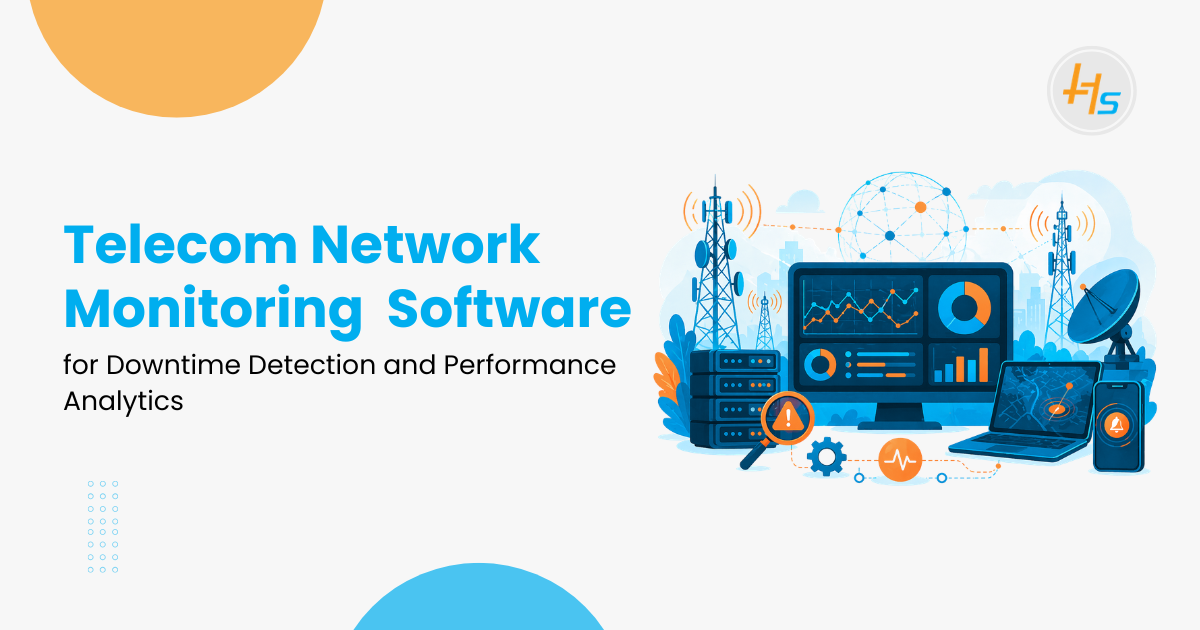
Telecom networks support global communication and digital services. Users expect high availability and fast connectivity at all times. Even a few minutes of downtime can cause major disruption. According to Statista, global mobile data traffic exceeded 130 exabytes per month in 2023. A report by Ericsson predicts that this number will grow rapidly in the coming years. Another study by Gartner states that network downtime costs businesses an average of $5,600 per minute. These numbers highlight the need for reliable monitoring systems.
Telecom providers must detect issues quickly and maintain consistent performance. Traditional monitoring tools often fail to meet modern network demands. A Software Development Company builds advanced monitoring systems. A Custom Software Development Company develops tailored solutions for telecom operations.
Table of Contents
Understanding Telecom Network Monitoring
Telecom network monitoring tracks the performance and health of network infrastructure. It ensures that all components operate efficiently.
Core Functions
- Monitor network devices
- Track data traffic
- Detect failures and downtime
- Analyze performance metrics
- Generate alerts and reports
These functions help maintain network reliability.
Key Challenges in Telecom Network Monitoring
Telecom networks face several technical challenges.
1. Network Complexity
Modern networks include multiple layers and devices. Managing them becomes difficult.
2. Downtime Detection Delays
Traditional systems may detect failures late. This increases service disruption.
3. High Data Volume
Networks generate large amounts of data. Processing this data requires advanced systems.
4. Lack of Real-Time Insights
Many systems fail to provide real-time monitoring.
5. Performance Bottlenecks
Network congestion affects speed and reliability.
Why Custom Monitoring Software is Important
Off-the-shelf tools cannot handle complex telecom environments. Each network has unique architecture and requirements.
A Custom Software Development Company builds solutions based on these needs.
Key Benefits
- Real-time monitoring
- Faster downtime detection
- Scalable architecture
- Better performance insights
- Integration with existing systems
Custom software adapts to network growth.
Role of a Software Development Company
A Software Development Company designs and develops monitoring systems.
Core Responsibilities
- Build monitoring dashboards
- Develop alert systems
- Implement data analytics tools
- Ensure system security
- Provide maintenance and updates
These steps ensure system reliability.
Key Features of Telecom Monitoring Software
Modern monitoring systems include advanced features.
1. Real-Time Network Monitoring
The system tracks network activity continuously.
- Monitor devices and connections
- Detect anomalies instantly
- Provide live updates
2. Downtime Detection and Alerts
The system detects failures quickly.
- Identify network outages
- Send instant alerts
- Reduce response time
3. Performance Analytics Dashboard
Dashboards provide insights into network performance.
- Track bandwidth usage
- Monitor latency and packet loss
- Analyze traffic patterns
4. Automated Issue Detection
The system identifies problems automatically.
- Detect unusual patterns
- Predict failures
- Reduce manual intervention
5. Multi-Device Monitoring
The system monitors various network devices.
- Routers
- Switches
- Servers
6. Reporting and Logging
Reports provide detailed analysis.
- Generate performance reports
- Maintain logs for audits
- Track historical data
Technical Architecture of Monitoring Systems
A strong architecture ensures scalability and performance.
1. Cloud-Based Infrastructure
Cloud platforms support large-scale monitoring.
- Handle high data volume
- Provide high availability
- Enable remote access
2. Microservices Architecture
Microservices divide the system into modules.
- Data collection service
- Analytics service
- Alert service
Each module operates independently.
3. Data Processing Layer
The system processes large data sets.
- Use stream processing
- Analyze data in real time
- Detect anomalies
4. API Integration
APIs connect external systems.
- Integrate network devices
- Connect analytics tools
- Enable data sharing
Logistics Delivery Optimization Custom Software Handling Route Planning and Tracking Delays
Downtime Detection Techniques
Quick detection reduces service disruption.
Key Methods
- Heartbeat monitoring
- Ping and latency checks
- Threshold-based alerts
- Anomaly detection
Benefits
- Faster response time
- Reduced downtime
- Improved service reliability
Performance Analytics in Telecom Networks
Performance analytics helps optimize network operations.
Key Metrics
- Latency
- Throughput
- Packet loss
- Bandwidth usage
Analytics Benefits
- Identify bottlenecks
- Improve network efficiency
- Support capacity planning
Real-World Example
A telecom provider faced frequent network outages. Its monitoring system lacked real-time capabilities.
The company partnered with a Custom Software Development Company.
Solution
- Implemented real-time monitoring system
- Added automated alert mechanism
- Integrated performance analytics dashboard
Results
- Reduced downtime by 50%
- Improved network visibility
- Enhanced customer satisfaction
This example shows the impact of custom monitoring solutions.
Integration with Advanced Technologies
Modern monitoring systems use advanced technologies.
1. Artificial Intelligence (AI)
AI improves monitoring accuracy.
- Detect anomalies
- Predict failures
2. Machine Learning (ML)
ML improves system performance.
- Learn from historical data
- Improve predictions
3. Big Data Analytics
Big data tools process large volumes of data.
- Analyze network trends
- Improve decision-making
Ensuring Data Security in Monitoring Systems
Telecom systems handle sensitive data.
Security Measures
- Data encryption
- Secure APIs
- Access control
- Regular security audits
A Software Development Company ensures secure system design.
Best Practices for Telecom Monitoring
Telecom networks support voice calls, mobile data, internet services, IoT devices, and enterprise communication. Even a short outage can affect thousands of users and cause revenue loss. Strong telecom monitoring helps providers maintain uptime, improve service quality, and detect issues quickly. Organizations must follow best practices for better results.
Operational Practices
Daily operations play a major role in network stability and fast issue resolution.
1. Monitor Networks Continuously
Telecom systems run 24/7. Continuous monitoring helps teams detect failures before they affect users.
Important areas to monitor:
- Network uptime
- Tower connectivity
- Bandwidth usage
- Packet loss
- Latency levels
- Device health
- Power status
Real-time monitoring helps reduce downtime and improve customer experience.
2. Respond to Alerts Quickly
Delayed responses can turn a small issue into a major outage. Teams should act quickly when alerts appear.
Examples of alerts:
- Link failure
- High traffic congestion
- Device overheating
- Fiber cuts
- Battery failure
- Unauthorized access attempts
Fast incident response helps protect service continuity.
3. Train Technical Teams
Monitoring tools are only effective when teams know how to use them.
Training should cover:
- Dashboard usage
- Alert prioritization
- Root cause analysis
- Escalation process
- Security response
- Reporting methods
Well-trained teams solve issues faster.
4. Create Standard Operating Procedures
Clear procedures help teams respond consistently during incidents.
Include steps for:
- Alarm handling
- Outage reporting
- Escalation levels
- Recovery checks
- Customer communication
5. Review Performance Regularly
Monthly and quarterly reviews help improve service quality.
Track:
- Mean time to detect issues
- Mean time to resolve issues
- Repeat outages
- Network availability
- SLA compliance
Technical Practices
A strong technical foundation is critical for effective telecom monitoring.
1. Use Scalable Architecture
Telecom networks grow constantly with new users, devices, and services. Monitoring systems must scale easily.
Scalable design may include:
- Cloud-based monitoring
- Distributed data collection
- Modular dashboards
- Load-balanced systems
- Multi-region deployment
This supports network expansion without major redesign.
2. Perform Regular Updates
Monitoring platforms need regular updates for security and performance.
Updates may include:
- Bug fixes
- New device support
- Security patches
- Dashboard improvements
- API enhancements
Outdated systems may miss critical alerts.
3. Monitor System Performance
The monitoring platform itself must remain healthy.
Track:
- Dashboard speed
- Data ingestion rate
- Alert delivery time
- Storage capacity
- CPU and memory usage
A slow monitoring system delays response time.
4. Use Automation
Automation reduces manual workload and speeds up response.
Examples:
- Auto ticket creation
- Auto restart scripts
- Scheduled reports
- Threshold-based alerts
- Auto escalation workflows
5. Protect Monitoring Data
Monitoring systems store sensitive operational data. Security controls are essential.
Use:
- Role-based access
- MFA login
- Encryption
- Audit logs
- Secure APIs
Challenges in Custom Software Development
Custom telecom monitoring software provides better control and flexibility. However, projects may face several challenges.
1. High Development Cost
Custom platforms require investment in planning, design, coding, testing, and deployment.
Cost areas include:
- Requirement analysis
- UI design
- Development resources
- Infrastructure setup
- Security testing
- Ongoing support
Although the initial cost is higher, long-term value often justifies it.
2. Complex System Design
Telecom software must support many systems together.
Examples:
- Network devices
- Towers and sites
- Core systems
- Customer services
- Billing systems
- Security tools
Designing one platform for all systems is complex.
3. Integration With Legacy Systems
Many telecom providers still use older infrastructure and software.
Common issues include:
- Old protocols
- Unsupported APIs
- Data silos
- Slow sync processes
- Security gaps
A skilled Software Development Company can build secure integrations.
4. Need for Skilled Developers
Telecom monitoring software requires experts in:
- Networking protocols
- Cloud systems
- Backend development
- Data analytics
- Security engineering
- UI dashboards
The right talent is essential.
5. Despite These Challenges, Benefits Remain Strong
Custom telecom software can provide:
- Better visibility
- Faster issue resolution
- Lower downtime
- Improved scalability
- Stronger reporting
- Better customer satisfaction
Future Trends in Telecom Monitoring
Telecom monitoring continues to evolve as networks become more advanced.
1. AI-Driven Monitoring Systems
AI helps identify risks before outages happen.
Use cases:
- Traffic anomaly detection
- Predictive maintenance
- Smart alert prioritization
- Failure prediction
- Capacity planning
AI improves efficiency and response speed.
2. Real-Time Analytics
Telecom teams need live insights for quick decisions.
Examples:
- Congestion hotspots
- Device health status
- Service quality trends
- Regional outages
- Usage spikes
3. Cloud-Native Solutions
Cloud monitoring platforms support modern telecom growth.
Benefits include:
- Easy scaling
- Faster deployment
- Lower hardware dependency
- Better resilience
- Remote access
4. Increased Automation
Automation will continue to reduce manual work.
Examples:
- Auto healing systems
- Automated diagnostics
- Smart routing changes
- Self-service reporting
A Software Development Company must adapt to these trends to remain competitive.
Choosing the Right Development Partner
Selecting the right partner ensures project success and long-term value.
1. Experience in Telecom Software
Choose a company with telecom domain experience. They should understand:
- Network operations
- Tower monitoring
- NOC workflows
- SLA requirements
- Device integrations
2. Strong Technical Expertise
Your partner should have skills in:
- Cloud platforms
- Scalable backend systems
- API development
- Security engineering
- Data visualization
- Real-time analytics
3. Ability to Build Scalable Systems
The platform should grow with network demand.
Look for experience in:
- Large data volumes
- Multi-site monitoring
- High alert traffic
- Regional deployments
4. Proven Track Record
Review:
- Client feedback
- Case studies
- Delivery timelines
- Industry experience
5. Ongoing Support Services
Monitoring systems need support after launch.
Important services include:
- Bug fixes
- Security updates
- Performance tuning
- Feature upgrades
- Technical support
A reliable Custom Software Development Company ensures long-term value by building secure, scalable, and high-performance telecom monitoring solutions.
Transform Your Telecom Operations with Smart Network Monitoring Software
Choosing the right custom software partner is important for telecom businesses that need higher uptime, faster issue detection, and better network visibility. From handling downtime alerts and performance bottlenecks to improving service reliability and operational control, businesses need a reliable solution built for long-term growth.
At HashStudioz, we help telecom companies build advanced network monitoring software that detects failures in real time, tracks performance metrics, and supports smooth daily operations. Our team creates secure, scalable systems that reduce downtime, improve response speed, and provide complete network insights.
Partner with our experienced team to build a smart telecom monitoring platform that improves network performance, reduces operational challenges, and supports business growth with confidence.
Conclusion
Telecom networks require reliable monitoring systems. Downtime and performance issues affect both businesses and users. Custom software provides a strong solution. It improves downtime detection and enhances performance analytics. A Software Development Company builds secure and scalable systems. A Custom Software Development Company delivers tailored solutions based on network requirements.
Telecom providers that invest in custom monitoring software gain better control over operations. They improve service quality and reduce downtime. Advanced technologies will continue to shape the future of telecom monitoring systems.