


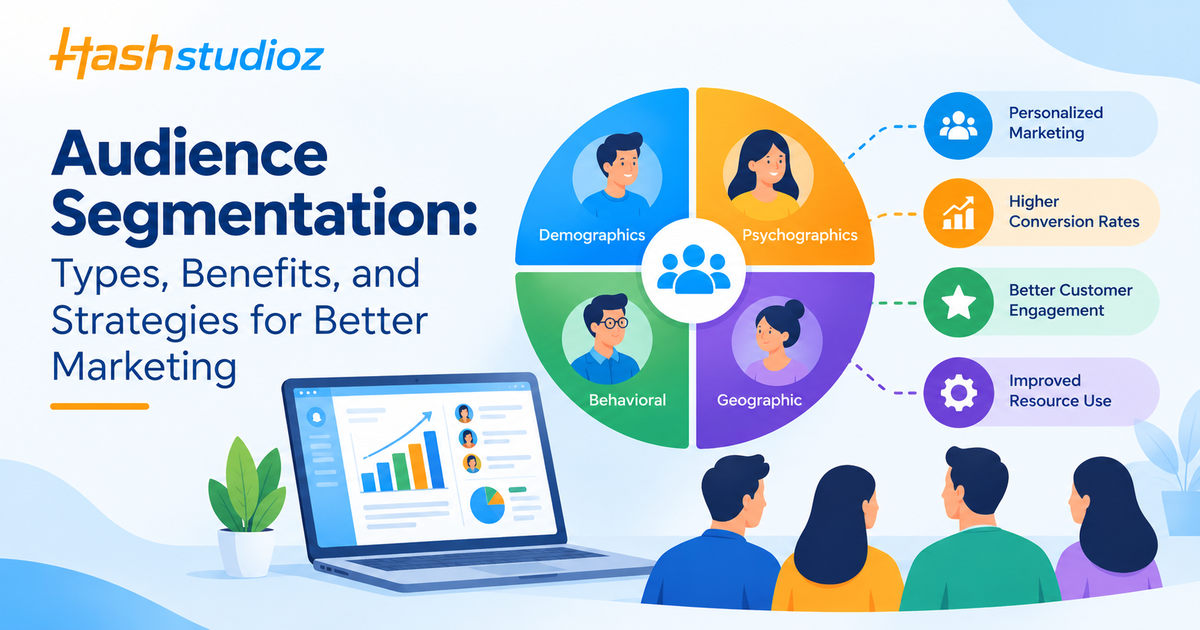
Marketing becomes more effective when businesses understand who they are trying to reach and what those people need. However, not every customer has the same interests, purchasing behavior, expectations, or reasons for choosing a product. Sending the same message to an entire audience can make campaigns less relevant and leave important customer needs unaddressed. This is where Audience Segmentation becomes valuable.
Audience Segmentation helps marketers divide a broad audience into smaller groups based on shared characteristics, interests, behaviors, or requirements. Businesses can then use these groups to plan targeted campaigns, personalize communications, improve lead nurturing, and make more informed marketing decisions. Whether you run an e-commerce store, a SaaS company, or a B2B service business, understanding your audience can help you develop a more focused marketing strategy.
In this article, we will explore what Audience Segmentation means, its key benefits, six common types, practical applications, and strategies for different industries.
Table of Contents
What is Audience Segmentation Meaning?
Audience segmentation is the process of dividing a broad group of existing or potential customers into smaller groups that share relevant characteristics. These characteristics may include demographics, geographic location, interests, purchasing behavior, company attributes, or technology usage. The purpose is to understand the differences between audience groups and create marketing activities that better match their needs.
To define Audience Segmentation in simple terms, imagine an online retailer selling clothing. Its customers may include people shopping for everyday wear, customers looking for formal clothing, and buyers interested in sportswear. Instead of sending everyone identical promotional emails, the retailer can organize customers into relevant groups and share product recommendations that match their interests.
Audience Segmentation is useful in both business-to-consumer (B2C) and business-to-business (B2B) marketing. B2C businesses may segment customers according to purchase history, preferences, and location. B2B companies may group prospects by industry, company size, business needs, or existing technology systems.
What are Audience Segmentation Techniques?
1. Demographic Segmentation
Demographic segmentation divides an audience based on measurable personal characteristics, such as:
- Age
- Gender
- Income
- Education
- Occupation
- Family size
- Marital status
- Generation
Example: A financial services company may create different marketing campaigns for students, working professionals, and retirees based on their financial requirements.
2. Geographic Segmentation
Geographic segmentation groups audiences according to their physical location and regional characteristics.
Common factors include:
- Country
- State or region
- City
- Neighborhood
- Climate
- Population density
- Urban or rural location
Example: A clothing retailer may promote winter collections in colder regions and summer clothing in warmer locations.
3. Psychographic Segmentation
Psychographic segmentation categorizes audiences according to their lifestyles, interests, values, attitudes, and opinions.
It focuses on understanding what people prefer and what influences their choices.
Common factors include:
- Lifestyle
- Personal interests
- Values and beliefs
- Attitudes
- Hobbies
- Personality traits
- Opinions
Example: A travel company may target adventure enthusiasts, luxury travelers, and people interested in cultural experiences with different travel packages.
4. Behavioral Segmentation
Behavioral segmentation groups audiences according to their actions and interactions with a business, product, or service.
Businesses may consider:
- Purchase history
- Product usage
- Website activity
- Brand loyalty
- Purchase frequency
- Customer engagement
- Previous interactions
Example: An e-commerce business may create separate groups for frequent buyers, first-time customers, and visitors who abandon their shopping carts.
5. Firmographic Segmentation
Firmographic segmentation is primarily used in B2B marketing to categorize businesses according to organizational characteristics.
Common factors include:
- Industry
- Company size
- Annual revenue
- Number of employees
- Business location
- Organization type
- Growth stage
Example: A software development company may target startups, medium-sized businesses, and large enterprises with different software solutions.
6. Technographic Segmentation
Technographic segmentation groups audiences based on the technologies, software, devices, and platforms they use.
Factors may include:
- Existing software
- Technology stack
- Operating systems
- Devices used
- Cloud platforms
- Technology adoption
Example: A CRM provider may identify businesses using spreadsheets, competing CRM platforms, or other customer management tools to understand their technology requirements.
7. Needs-Based Segmentation
Needs-based segmentation divides audiences according to their specific requirements, problems, and expectations.
Businesses identify what customers want to achieve and group them based on similar needs.
Example: A CRM company may identify separate groups looking for contact management, sales automation, customer support, or reporting capabilities.
Also Read : ERP System for Manufacturing: : Benefits, Features, and How It Works
8. Value-Based Segmentation
Value-based segmentation groups customers according to the economic value they provide or their potential value to a business.
Businesses may consider:
- Purchase value
- Customer lifetime value
- Spending patterns
- Purchase frequency
- Revenue contribution
Example: An online retailer may distinguish between frequent high-value customers and occasional low-spending customers.
9. Occasion-Based Segmentation
Occasion-based segmentation groups customers according to specific occasions or situations that influence product purchases or usage.
These occasions may include:
- Festivals and holidays
- Birthdays and anniversaries
- Seasonal events
- Special celebrations
- Daily or routine usage occasions
Example: A gift retailer may create separate campaigns for customers shopping for birthdays, weddings, and festive occasions.
10. Benefit-Based Segmentation
Benefit-based segmentation divides audiences according to the specific benefits they seek from a product or service.
Different customers may purchase the same product for different reasons.
Common factors include:
- Convenience
- Affordability
- Quality
- Performance
- Reliability
- Time savings
Example: Customers purchasing a smartphone may prioritize camera quality, battery life, performance, or affordability.
11. Usage-Rate Segmentation
Usage-rate segmentation groups customers according to how frequently or extensively they use a product or service.
Common groups include:
- Light users
- Medium users
- Heavy users
- Non-users
Example: A streaming platform may distinguish between occasional viewers and users who watch content regularly.
12. Customer Lifecycle Segmentation
Customer lifecycle segmentation organizes audiences according to their current stage in the relationship with a business.
Common groups include:
- Prospects
- New customers
- First-time buyers
- Repeat customers
- Loyal customers
- Inactive customers
Example: A SaaS company may send onboarding communication to new users and re-engagement messages to customers who have stopped using its platform.
13. Generational Segmentation
Generational segmentation groups audiences according to the generation or age cohort they belong to.
Businesses may use this approach to study differences in preferences, media habits, and purchasing behavior.
Example: A brand may develop different communication approaches for Gen Z, Millennials, and older generations based on relevant audience research.
14. Seasonal Segmentation
Seasonal segmentation divides audiences according to seasonal patterns, periods, or events that influence their purchasing interests.
Example: A retailer may organize campaigns around summer products, winter collections, back-to-school periods, or holiday shopping seasons.
15. Predictive Segmentation
Predictive segmentation uses historical customer information and analytical models to identify groups based on predicted behaviors or outcomes.
It may help businesses identify customers who are more likely to purchase, disengage, or respond to a particular campaign.
Example: An online retailer may use historical purchase and browsing information to identify customers who are likely to purchase a particular product category.
Key Benefits of Audience Segmentation
1. More Relevant Marketing Messages
Segmentation lets marketers tailor content, recommendations, and offers to each group’s interests. For example, a software company can send onboarding emails to new users and advanced-feature emails to experienced ones.
2. Better Use of Marketing Resources
Budgets, time, and creative resources are limited. Segmentation helps teams prioritize the audiences that best fit their campaign goals, and segment-level results show where to adjust.
3. Improved Customer Experience
Customers receive content tied to their interests, past interactions, or buying stage instead of unrelated promotions. Personalization should stay useful and respectful, though, because excessive use of personal data can erode trust.
4. More Focused Lead Nurturing
Businesses can group leads by interest, engagement, or readiness to buy. For example, a B2B company can send educational content to early researchers and product demos to qualified leads.
5. Clearer Campaign Measurement
Segment-level reporting lets marketers compare how groups respond, using metrics such as clicks, conversions, engagement, and revenue. These comparisons reveal how to improve messaging, timing, targeting, and budget allocation.
Why Audience Segmentation Matters in Marketing?
Modern marketing involves multiple channels, customer touchpoints, and buying journeys. A broad campaign may reach many people without addressing the specific needs that influence their decisions.
It matters for several reasons:
- Different customer needs: People may purchase the same product for different reasons. Segmentation helps businesses account for those differences.
- Channel selection: Different audience groups may prefer different ways of receiving information, such as email, search, social media, or direct communication.
- Buying journey alignment: Prospects discovering a problem may need educational content, while those comparing solutions may need demonstrations, pricing information, or detailed comparisons.
- Marketing and sales coordination: Shared audience definitions can help marketing and sales teams organize leads, prioritize follow-ups, and communicate consistently.
- Performance evaluation: Comparing campaign outcomes across segments can help teams understand which messages and approaches are working.
6 Key Types of Audience Segmentation
Email Marketing
Email marketing is a common application of Audience Segmentation. Businesses can organize subscribers by interests, previous purchases, lifecycle stage, or engagement.
For example, a software company may send onboarding emails to new users, feature announcements to active customers, and educational resources to subscribers who have not yet tried its product.
The purpose is to make email content more relevant to the recipient rather than sending every message to the entire list.
Paid Advertising
Advertising platforms provide audience options based on factors such as interests, purchase intent, demographics, and previous interactions, subject to the platform’s policies and available targeting features.
A business could use separate campaigns for people researching a product category and existing customers interested in related services.
Marketers should also review campaign exclusions, frequency, consent requirements, and applicable personalized advertising restrictions.
Website Personalization
Website experiences can be adapted to reflect a visitor’s likely needs or previous interactions, where appropriate.
For example, a B2B website could provide industry-specific case studies, product information, or service pages based on the visitor’s selected industry or the campaign they followed.
Personalization should improve navigation and relevance without making unsupported assumptions about an individual visitor.
Lead Nurturing and CRM Campaigns
Customer relationship management (CRM) platforms can help businesses organize contact records, track interactions, and create segments for marketing and sales activities.
For example, a sales team may group leads according to industry, service interest, engagement level, or sales stage. Marketing can then provide relevant resources while sales representatives prioritize appropriate follow-ups.
For successful implementation, businesses should maintain consistent data fields, clear segment definitions, and agreed-upon qualification criteria.
Content Marketing
Segmentation can guide content planning by revealing the questions different audience groups need answered.
A software company might create introductory articles for beginners, comparison pages for buyers evaluating solutions, and implementation resources for customers preparing to adopt a product.
This approach helps align content with search intent and the buyer’s journey. Marketers should use audience research and search data to validate which topics are relevant.
Ready to make your Marketing more effective?
Contact HashStudioz to explore tailored digital solutions that help you connect with your target audience and achieve your marketing goals.
What is Audience Segmentation Analysis?
Audience Segmentation analysis is the process of examining audience data to identify meaningful groups, understand their characteristics, and determine how those groups relate to marketing objectives.
It goes beyond creating lists. The analysis should help marketers understand which segments exist, what distinguishes them, and how the business can use those differences to make informed decisions.
A practical Audience Segmentation analysis typically involves five steps.
1. Define the objective. Decide what the analysis should support, such as improving lead quality, increasing repeat purchases, understanding customer needs, or evaluating campaign engagement.
2. Gather relevant data. Use appropriate information from sources such as CRM records, customer surveys, website analytics, purchase history, and campaign reports. Check whether the data is accurate, current, and collected for appropriate purposes.
3. Identify shared characteristics. Look for patterns in customer needs, behaviors, preferences, or business attributes. Select criteria that are relevant to the objective rather than grouping people simply because data is available.
4. Evaluate the segments. Assess whether each group is sufficiently distinct, relevant to the business, and practical to reach. Review its size, needs, potential value, and the resources required to serve it.
5. Test and refine. Develop campaigns for selected segments and measure their outcomes against suitable benchmarks. Update the segment definitions when customer behavior or business priorities change.
For example, a SaaS company may analyze product usage and find that some customers regularly use core features but have not adopted available integrations. It could test an educational campaign explaining those integrations and measure engagement or adoption afterward.
Best Practices for Effective Audience Segmentation
Effective segmentation requires more than collecting customer information. The following practices can help businesses create useful, manageable, and responsible audience groups.
Start With Clear Business Objectives
- Define what the segmentation exercise should achieve before choosing the criteria. A campaign focused on customer retention may require different segments from one designed to generate new B2B leads.
- Clear objectives help teams avoid collecting unnecessary data or creating groups that do not support a practical decision.
Use Reliable and Relevant Data
- Incomplete or outdated data can lead to incorrect segment assignments. Review customer records, standardize important fields, and establish processes for correcting errors.
- Where possible, use relevant first-party data collected directly through appropriate customer interactions.
Combine Segmentation Criteria Carefully
- A single characteristic may not be sufficient to explain customer needs. Combining relevant attributes can create more useful groups.
- For example, a business might combine industry, company size, and CRM adoption stage to develop more specific B2B segments. However, adding too many criteria can make groups difficult to manage and reach.
Make Segments Actionable
- Every segment should have a clear purpose. Decide what message, content, offer, or customer experience will differ for that group.
- If two segments require the same action and provide no meaningful analytical distinction, consider whether they need to remain separate.
Respect Privacy and Customer Preferences
- Collect and use personal information transparently and in accordance with applicable laws, consent requirements, and platform policies. Provide appropriate privacy notices and honor opt-out preferences where required.
- Avoid using sensitive personal attributes in ways that are prohibited or inappropriate.
Measure Results and Update Segments
- Customer preferences, product needs, and campaign performance can change. Review segment definitions periodically and evaluate their contribution using metrics relevant to the campaign objective.
- Depending on the goal, these may include qualified leads, conversion rate, repeat purchases, engagement, retention, or revenue. Compare results carefully and avoid assuming that segmentation alone caused a change in performance.
Audience Segmentation Strategies Across Industries
Audience Segmentation can be adapted to different industries because customer needs, purchasing processes, and business objectives vary.
1. E-commerce and Retail
Retailers can segment customers by purchase history, product interests, shopping frequency, and customer lifecycle stage. These segments can inform product recommendations, relevant promotions, replenishment reminders, and loyalty communications.
For example, a retailer could send product-care advice to recent buyers and relevant complementary product suggestions to customers whose purchase history supports those recommendations.
2. SaaS and Technology
SaaS companies can segment audiences by company size, industry, product usage, subscription status, and technology requirements. These groups can guide educational content, onboarding, feature announcements, and upgrade communications.
A company serving both small businesses and enterprises may need different messaging about ease of use, integrations, administration, and scalability.
3. Real Estate
Real estate businesses can segment audiences according to property preferences, budget ranges voluntarily provided by prospective buyers, preferred locations, and stage in the buying process.
For example, someone exploring residential properties may need introductory information, while a qualified prospect who has requested a viewing may benefit from property-specific details and appointment coordination.
4. Healthcare and Wellness
Healthcare and wellness organizations must apply additional care when working with sensitive information. Depending on the service and applicable regulations, segmentation may focus on service interests, appointment preferences, communication choices, or other appropriately collected information.
Marketing teams should not assume that ordinary advertising practices are suitable for health-related data. Privacy, confidentiality, consent, and relevant legal requirements must guide the approach.
5. B2B Services and Consulting
B2B service providers can use firmographic and technographic segmentation to organize potential clients by industry, company size, existing systems, and business requirements.
For example, a CRM consulting company could develop different campaigns for organizations seeking a new CRM implementation, businesses requiring integrations, and enterprises looking to improve an existing CRM environment.
This approach helps align marketing content with business challenges and supports more relevant conversations between marketing and sales teams.
Conclusion
Audience Segmentation helps businesses organize their audiences into meaningful groups and create marketing activities that better reflect customer needs, interests, behaviors, and business requirements. Demographic, geographic, psychographic, behavioral, firmographic, and technographic segmentation each provide a different perspective on an audience.
The most effective approach starts with a clear objective, uses reliable and appropriate data, and turns audience insights into relevant actions. Businesses should also measure outcomes, review segment definitions, and respect customer privacy.
Rather than creating as many segments as possible, focus on groups that help your team make better decisions and deliver more useful marketing experiences.
FAQs
1. What is Audience Segmentation?
Audience Segmentation is the process of dividing a broad audience into smaller groups based on shared characteristics, interests, needs, or behaviors. It helps businesses tailor marketing messages and campaigns to different groups.
2. What are the four main types of Audience Segmentation?
The four main types of Audience Segmentation are demographic, geographic, psychographic, and behavioral segmentation. Demographic segmentation groups people by characteristics such as age and occupation, while geographic segmentation focuses on location. Psychographic segmentation considers interests, values, and lifestyles, whereas behavioral segmentation focuses on actions such as purchase history, product usage, and brand interactions.
3. What are some Audience Segmentation examples?
Examples include grouping retail customers by purchase history, website visitors by engagement, B2B prospects by industry and company size, and subscribers by interests or lifecycle stage.
4. How do you do Audience Segmentation?
Start by defining a marketing objective, gathering relevant data, selecting meaningful criteria, creating practical audience groups, and testing campaigns. Review the results and refine the segments as customer needs change.
5. What is Audience Segmentation analysis?
Audience Segmentation analysis examines customer or prospect data to identify meaningful groups, understand their characteristics, and determine how to use those insights in marketing decisions. It includes evaluating segment relevance and measuring campaign outcomes.

Harshita Rawat is a digital marketing and SEO professional specializing in SEO content, Salesforce, CRM, and technology topics. She writes practical, research-driven content to help businesses understand emerging technologies and digital strategies.