

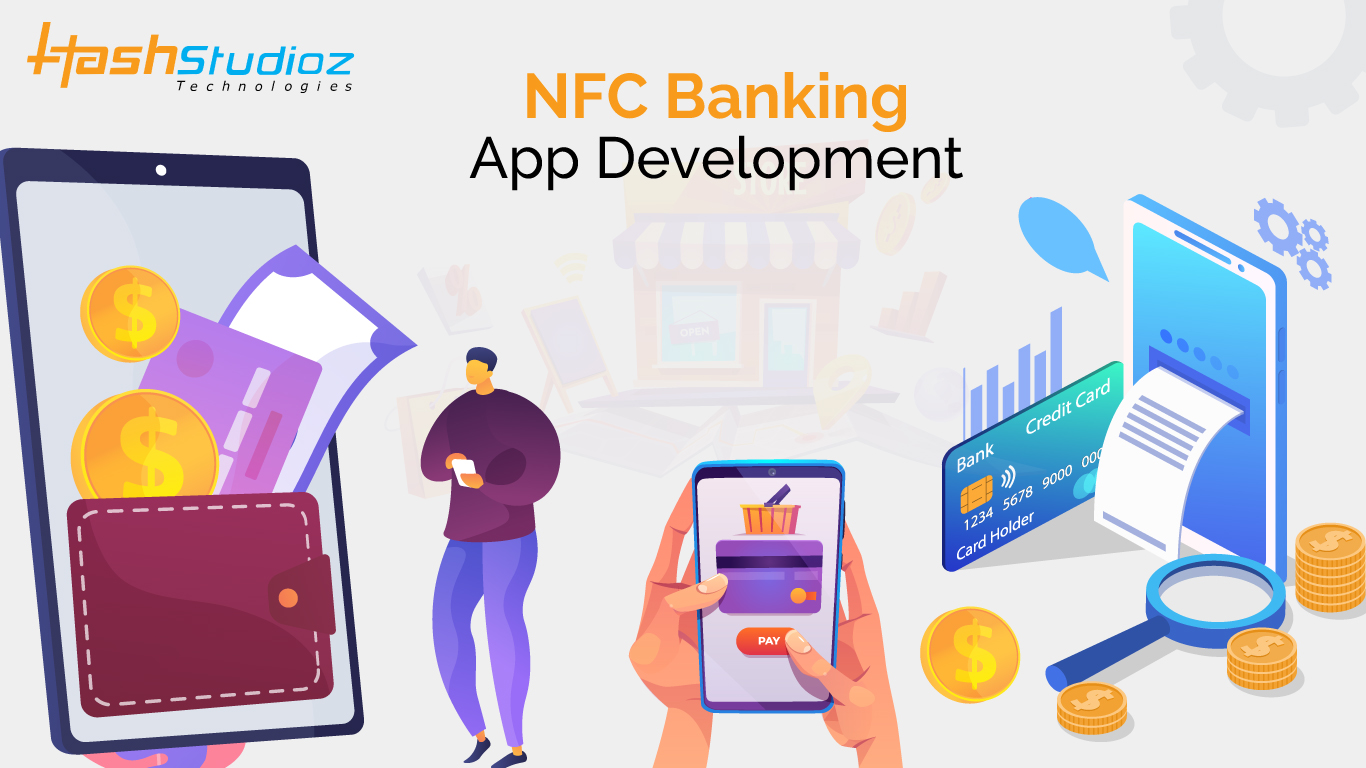
Mobile banking has changed how customers manage their finances, and users now expect secure, fast, contactless experiences from their banking apps. To meet those expectations, banks and fintech companies are integrating NFC into mobile applications for tap-to-pay and other proximity-based payment flows. The NFC market continues to grow, with recent reports valuing it at USD 23.6 billion in 2025 and projecting further expansion in the coming years.
Customer expectations continue to evolve with the growth of digital banking and contactless payments. As a result, NFC banking app development has become a strategic investment for banks and fintech companies looking to deliver secure and convenient payment experiences.
Table of Contents
What is NFC?
NFC (Near Field Communication) is a short-range wireless communication technology that allows two NFC-enabled devices to exchange encrypted data when they are placed within a few centimeters of each other. Based on RFID technology, NFC enables secure and fast communication between smartphones, payment terminals, smart cards, and NFC tags.
NFC uses electromagnetic fields to transfer information between devices without requiring physical contact. In banking and payment applications, this technology allows users to complete contactless transactions by tapping their smartphones or wearable devices near NFC-enabled payment terminals.
Unlike traditional card payments, NFC transactions use security mechanisms such as encryption and tokenization to protect sensitive financial data. Instead of sharing actual card details, the system generates a secure digital token for each transaction, reducing the risk of fraud.
Today, NFC technology is widely used in mobile payment platforms, digital wallets, and banking applications across regions such as Europe, Asia, and North America. As consumers increasingly prefer faster and contactless payment experiences, banks and fintech companies are adopting NFC to improve payment convenience and customer engagement.
How Do NFC Payments Work?
NFC (Near Field Communication) payments work by enabling secure wireless communication between an NFC-enabled smartphone, wearable device, and a compatible payment terminal. When the device is placed within a few centimeters of the terminal, the NFC chip transfers encrypted transaction data to initiate the payment process.
The payment process usually involves several security layers. The NFC-enabled device communicates with the payment terminal, generates a secure token instead of sharing the user’s actual card details, and sends the transaction request through the payment network for authorization. The bank then verifies the transaction before completing the payment.
NFC banking apps provide a fast and secure payment experience by combining NFC technology with encryption, tokenization, and user authentication methods such as fingerprints or facial recognition. Popular digital wallet platforms use NFC to support contactless payments while reducing exposure to sensitive financial information.
Users can also store multiple debit and credit cards securely on their smartphones and select their preferred payment method during transactions. Since NFC payments require close proximity and usually require device authentication, they reduce the risk of unauthorized transactions while providing a convenient alternative to physical cards.
NFC Use Cases in Banking Applications
Contactless Mobile Payments
The most common use case of NFC in banking apps is contactless payment processing. Banks integrate NFC technology with mobile wallets and payment systems to allow customers to make secure transactions by tapping smartphones or wearable devices near NFC-enabled payment terminals.
Modern NFC payment solutions use technologies such as tokenization, encryption, and biometric authentication to protect financial data. Instead of transferring actual card information, the system generates a secure digital token for each transaction, reducing the risk of unauthorized access.
Platforms such as Apple Pay, Google Wallet, and Samsung Wallet use NFC technology to provide fast and secure payment experiences for users worldwide.
Digital Identity Verification and KYC
NFC technology helps banks improve customer onboarding and identity verification processes. NFC-enabled smartphones can read information stored in electronic identity documents, passports, and smart cards to verify customer details quickly.
Banks can use NFC-based verification during account opening, loan applications, and customer authentication processes. Combined with biometric verification and digital KYC workflows, NFC helps reduce manual verification time and improves security.
Smart Bank Branch Experience
Banks are using NFC technology to create more personalized branch experiences. NFC tags placed inside branches can allow customers to check in, select services, schedule appointments, and receive updates through their mobile banking applications.
This approach helps banks reduce waiting times, improve employee coordination, and provide customers with faster service.
Appointment Scheduling and Queue Management
NFC-enabled banking applications can simplify appointment booking for services such as loans, mortgage consultations, and financial advisory sessions.
Customers can tap their smartphones on NFC tags placed inside branches, view available time slots, and schedule meetings directly through the banking app. Integration with calendar systems allows users to receive reminders and manage appointments easily.
Secure Document Verification
NFC technology can support faster document verification during banking processes. Many government-issued documents, including electronic passports and identity cards, contain RFID chips that NFC-enabled devices can read.
Banks can use this capability for customer onboarding, compliance checks, and digital identity verification. NFC reduces manual data entry and improves accuracy during verification workflows.
NFC-Enabled Digital Wallet Integration
NFC banking apps can integrate with digital wallets to support secure contactless payments and card management. Customers can store multiple payment credentials on their smartphones, select preferred cards, and complete transactions without carrying physical cards.
Banks can also combine NFC wallets with loyalty programs, rewards, and personalized offers to improve customer engagement.
Most Trustworthy And Secure NFC Payment Apps Available Today
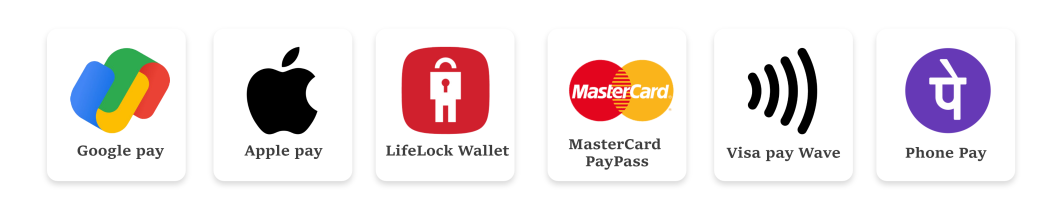
Popular NFC Payment Platforms and Contactless Payment Solutions
Several digital wallet platforms and payment technologies use NFC to enable secure contactless transactions. These solutions combine NFC communication with encryption, tokenization, and biometric authentication to protect payment information while providing a fast checkout experience.
| Platform | Primary Use | NFC Support | Key Features |
|---|---|---|---|
| Google Wallet | Android contactless payments | Yes | Stores debit and credit cards, loyalty cards, and transit passes with tokenized payments. |
| Apple Pay | iPhone, Apple Watch, and other Apple devices | Yes | Uses Face ID, Touch ID, or passcode authentication with device-specific payment tokens. |
| Samsung Wallet | Samsung Galaxy devices | Yes | Supports contactless payments, digital IDs, loyalty cards, and transit passes. |
| Mastercard Contactless | Global card payment network | Yes | Enables tap-to-pay transactions using NFC-enabled cards, smartphones, and wearable devices. |
| Visa Contactless | Global card payment network | Yes | Supports secure contactless payments through bank cards and digital wallets using tokenization. |
| PhonePe | UPI-based digital payments in India | Limited* | Supports UPI payments, bill payments, recharges, and merchant payments. NFC Tap & Pay is available on supported Android devices and eligible cards. |
*NFC Tap & Pay availability depends on device compatibility, supported banks, and card issuers.
These platforms demonstrate how NFC has become a core technology for modern digital payments. Banks and fintech companies can integrate similar capabilities into their mobile banking applications to provide secure contactless payments, digital card management, biometric authentication, and a seamless customer experience.
Why Choose NFC Banking App Development?
NFC technology helps banks and fintech companies deliver faster, secure, and convenient digital payment experiences. By integrating NFC capabilities into mobile banking applications, businesses can improve customer engagement, reduce payment friction, and support modern contactless financial services.
Enhanced Payment Security
Security is one of the biggest advantages of NFC banking applications. Unlike traditional payment methods that rely on static card information, NFC payments use technologies such as tokenization, encryption, and dynamic transaction data to protect sensitive financial details. Each transaction generates secure payment credentials, reducing the risk of unauthorized access and fraud.
Better Customer Convenience
NFC banking apps allow customers to store multiple payment cards on their smartphones and complete transactions without carrying physical cards. Users can make payments through smartphones, smartwatches, and other wearable devices by simply tapping them on compatible payment terminals.
Faster Transactions
NFC payments provide a faster checkout experience compared with traditional card insertion methods. Customers can complete transactions within seconds by bringing their NFC-enabled device close to a payment terminal. This reduces waiting time and improves the overall payment experience.
Improved Customer Engagement
Banks can use NFC technology beyond payments. NFC-enabled banking apps can support digital identity verification, loyalty programs, branch check-ins, and personalized customer services. These features help financial institutions create more interactive and customer-focused banking experiences.
Support for Digital Banking Growth
As consumers increasingly prefer mobile-first financial services, NFC banking applications help banks meet changing expectations. By combining NFC with mobile wallets, biometric authentication, and digital banking platforms, financial institutions can provide secure and future-ready payment solutions.
Also Read: Future of Artificial Intelligence in Banking & Financial Industries
How to Add NFC Features to Your Banking App
Adding NFC features to a banking application requires proper planning, technical integration, and security implementation. Banks and fintech companies need to connect NFC capabilities with payment systems, authentication methods, and existing banking infrastructure to deliver secure contactless experiences.
Define NFC Use Cases and Requirements
Before development begins, businesses should identify how NFC will be used in their banking app. Common use cases include contactless payments, digital wallet integration, identity verification, cardless ATM withdrawals, and smart branch services. Defining clear goals helps teams select the right NFC approach and features.
Select the Right NFC Technology
Developers choose NFC technologies based on the app’s requirements. Payment-focused applications may use Host Card Emulation (HCE) or Secure Element (SE) for secure transactions, while NFC tags can support customer interactions, branch check-ins, and information sharing.
Integrate NFC APIs and Payment Systems
The development team integrates NFC functionality using platform-specific frameworks such as Android NFC APIs and Apple’s Core NFC framework. The app is also connected with payment gateways, banking APIs, and digital wallet platforms to enable smooth transaction processing.
Implement Security Measures
Security is a critical part of NFC banking app development. Modern NFC solutions use encryption, tokenization, biometric authentication, and multi-factor authentication to protect customer data and prevent unauthorized transactions. Banks also need to follow security standards such as PCI DSS and EMVCo.
Test and Deploy the Application
Before launch, developers test NFC features across different devices, payment terminals, and operating systems. Security testing, transaction testing, and performance checks ensure that the application delivers reliable and secure payment experiences.
Choose an Experienced NFC App Development Partner
Working with an experienced fintech development company helps businesses build scalable NFC banking solutions. Companies should evaluate a partner’s NFC expertise, security knowledge, banking experience, and ability to support future enhancements such as AI-based fraud detection and digital wallet features.
Conclusion
With the help of the NFC contactless payment system, retail store customers are allowed to keep their card information secure on their phones and pay with a few clicks on their phone or close to the NFC reader.
Despite NFC’s wide range of applications, the real world is adopting it at a moderate rate. By providing quick, simple and completely secure financial transactions, banks implementing NFC technology are a step ahead of their competitors and sometimes even ahead of the curve.
HashStudioz is the fastest-growing app development company that has an experienced enterprise mobile app development team with the necessary qualifications to assist you with NFC payment options. We use AI in finance app development and have extensive knowledge of designing, building and developing customized NFC-based solutions and services that can help you deliver interactive customer experiences.