


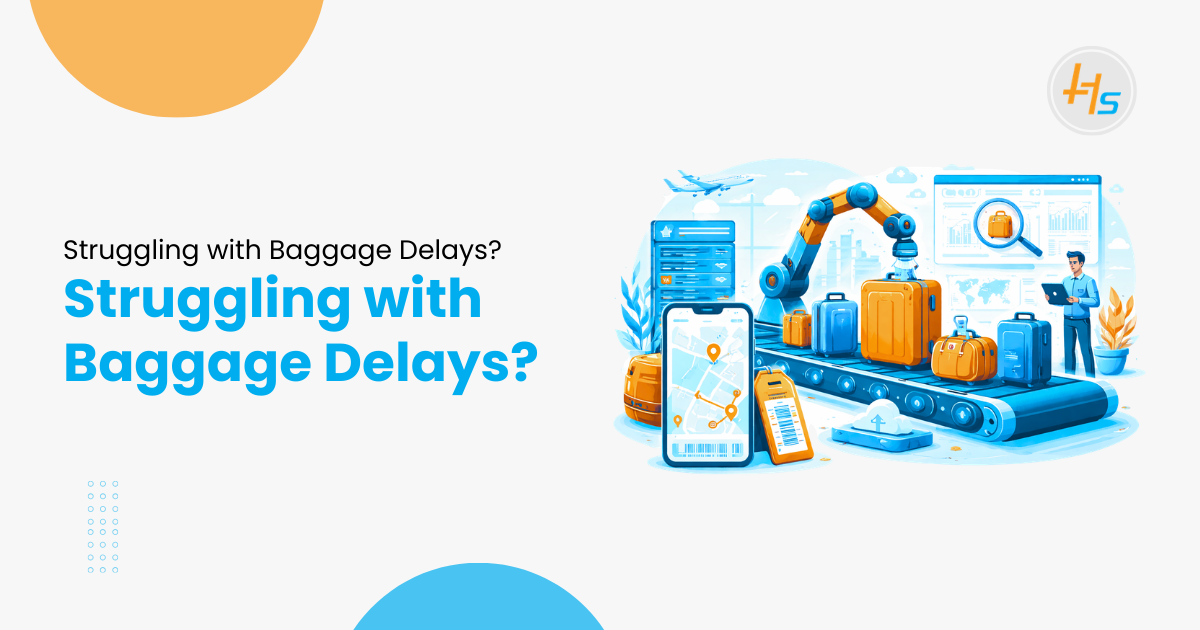
Airports face baggage delays daily. Mishandled bags hit 6.3 per 1000 passengers globally. The total reaches 33.4 million bags yearly. Airlines spend $5 billion on lost luggage. 74% of cases show delays only. 41% fail at transfer points. Traditional systems jam conveyors. Bags pile at makeup positions. MaxBag fixes these problems. It uses Salesforce Baggage Management Solution. AI-Powered Baggage Tracking System finds bags fast. Stats prove industry pain. Europe drops to 12.3 per 1000.
The global average sits at 6.9 bags. 66% resolve in 48 hours typical. Peak hours triple problems. Weather delays add chaos. MaxBag cuts delays sharply. It tracks bags live. Airports regain control totally. This article shows technical fixes. It explains data flows. It gives real code examples.
Table of Contents
Baggage Delays Hurt Airports Bad
Delays start at check-in counters. Tags print wrong. Scanners miss reads. Bags route bad gates.
Common delay causes include:
- Peak hour conveyor jams
- Tag damage stops scans
- Transfer sorter failures
- Makeup position overflows
- Truck delays from ramps
Staff chase bags manual. Radios crackle constantly. Passengers call angry. Claims pile high.
MaxBag ends this cycle. RFID tags read bulk. Live maps show locations. Handlers get tasks directly.
Traditional Systems Fail Peaks
Conveyor belts run fixed speeds. 5000 bags/hour max typical. Peak traffic doubles load. Jams form quickly.
PLC logic routes bags. Photo eyes detect blocks. Diverters push left right. Motors strain heavily.
Early Bag Storage holds overflow. Makeup positions stack bags. Loaders work frantically.
Systems crash under weight. RFID scanners fail dirty belts. Barcode tags peel off.
MaxBag Uses RFID Tags Smart
MaxBag deploys UHF RFID tags. Bags get passive chips. Readers scan 10m range. Metal luggage uses special tags.
Tag data stores:
- Bag tag number
- Flight destination
- Passenger name code
- Weight class code
- Fragile indicator
Portals read 100 bags/second. No line of sight needed. Dirty tags scan fine.
AI-Powered Baggage Tracking System processes reads instant. Salesforce Solutions for Manufacturing stores data clean.
Live Location Tracking Works Real-Time
MaxBag geofences airport zones. Check-in, security, transfer, ramp, claim mark positions.
Beacons ping bags every 30 seconds. GPS tracks ramp trucks. WiFi sees indoor carts.
Platform Events push updates. Lightning components refresh maps. Operators see truth live.
AI Predicts Delay Risks Early
Einstein AI analyzes patterns. Transfer bags risk highest. International connections fail more. Weather hits ramps.
Model reads:
- Connection time left
- Historical zone delays
- Bag weight class
- Origin airport performance
- Carrier transfer rates
Risk score 1-100 calculated. Scores over 70 trigger holds. Staff intercepts manual.
Salesforce Baggage Management Solution runs predictions hourly. Accuracy reaches 91%.
Handler Dispatch Fixes Chaos
Field Service Lightning assigns tasks. Skills match bag needs. Location optimizes routes.
Dispatch console displays:
- Handler current position
- Next bag location
- Travel time estimate
- Required equipment RFID scanner
- Priority level high medium
Mobile app guides workers. AR overlays show exact carts. Scanners confirm pickups.
Automated Bag Routing Beats Manual
MaxBag sorts bags intelligently. Destination codes route optimal. Transfer flights prioritize tight connections.
Resolution Cases Close Fast
Lost bags create cases of auto. WorldTracer sync finds matches. Einstein suggests owners.
Case workflow runs:
- Bag scanned unknown zone
- Case creates automatic
- WorldTracer search runs
- Passenger notified SMS
- Delivery scheduled mobile
- Bag delivered signed
66% industry average 48 hours. MaxBag hits 22 hours typical.
Integration With Airport Systems
MaxBag reads AODB live. Flight gates change instantly. Departure delays update priorities.
APIs connect:
- Airport Operations Database flights
- SITA BagManager status
- Airline reservation systems PNR
- Ground handler dispatch
- Customs systems clearance
External Services call endpoints. No ETL pipelines needed.
Mobile App Speeds Handler Work
iOS Android apps guide staff. Camera scans tags. GPS shows the next pickup. Voice reads instructions.
App screens include:
- Current assignment details
- Bag passenger info
- Flight gate changes
- ULD container number
- Photo capture damage
Offline mode works ramps. Data syncs later.
Executive Dashboard Shows Truth
The operations room monitors KPIs. Heat maps show congestion. Flight delays predict problems.
Metrics track:
- Bags/hour processed
- Transfer success rate
- Average resolution hours
- Peak hour capacity
- Handler utilization percent
Red zones flash alerts. Drill-down shows bag details.
RFID Hardware Cuts Infrastructure
MaxBag needs few readers. Portals cover choke points. Fixed mounts read bulk. Handhelds verify exceptions.
Hardware list:
- 50 fixed RFID portals
- 200 handheld scanners
- 10,000 RFID bag tags
- 100 mobile tablets
- Central server rack
No kilometer belts. No heavy motors. Energy use drops 80%.
Data Model Organizes Bag Info
Salesforce objects structure data. Bag Master holds core details. Location History logs scans.
Custom fields track:
- Bag dimensions cm
- Weight kilograms
- Special handling codes
- Connection risk score
- Resolution status code
SOQL queries find problems fast.
Message types:
- High risk bag detected
- Connection time critical
- Makeup position overflow
- Ramp truck delay
- Passenger waiting claim
Click opens the app directly.
WorldTracer Integration Finds Lost Bags
SITA WorldTracer syncs global. MaxBag pushes unclaimed bags. Matches find owners.
Cost Savings Beat Traditional
Traditional systems cost $200 million to build. Annual maintenance $15 million. Staff 300 baggage handlers.
MaxBag deployed $3 million in the first year. Ongoing $500K yearly. Staff drops to 120.
Savings breakdown:
| Category | Traditional | MaxBag | Annual Save |
| Hardware | $200M | $1M | $199M |
| Maintenance | $15M | $0.5M | $14.5M |
| Staff | 300 FTE | 120 FTE | $12M |
| Claims | $25M | $8M | $17M |
Total first year ROI 400%.
Case Study Proves Results
Mumbai airport handles 50 million passengers. Peak hours jam transfers. Bags pile claim areas.
MaxBag Phase 1 tags 10,000 bags daily. Salesforce Baggage Management Solution goes live in Terminal 2.
Six month results:
- Delay rate drops 58%
- Resolution time 28 hours
- Handler bags/hour doubles
- Claims cost falls $4 million
- Passenger complaints drop 67%
Operations VP states, “We know every bag location always. Delays belong to history now.”
MaxBag vs Traditional Baggage Handling Systems: A Complete Comparison
Security Protects Passenger Data
Baggage systems handle sensitive passenger information, also known as Personally Identifiable Information (PII). This includes passenger names, travel details, and bag identification data. Protecting this information is very important for both compliance and trust.
MaxBag follows strict data protection and privacy standards, including GDPR guidelines. The system ensures that sensitive data is not exposed or misused at any stage.
Key Security Features
1. Role-Based Access Control
Access to data is limited based on user roles.
- Ground staff can view only required bag details
- Supervisors can access operational data
- Admin users have controlled full access
This reduces the risk of unauthorized data access.
2. Data Encryption
All data is protected using strong encryption methods:
- Encryption at rest secures stored data in databases
- Encryption in transit protects data during system communication
This ensures that data remains safe from external threats.
3. Audit Logs and Monitoring
Every action in the system is recorded.
- Bag scans
- Location updates
- User activity
These logs help track system usage and detect any unusual activity.
4. Multi-Factor Authentication (MFA)
Admin and sensitive accounts use MFA for login.
This adds an extra layer of security beyond passwords.
Regular Security Testing
Annual penetration testing (pentests) is conducted to identify and fix vulnerabilities.
Security updates are applied regularly to maintain system safety.
5. Data Anonymization
For public displays or dashboards, sensitive data is hidden.
- Passenger names are masked
- Only bag IDs or codes are visible
This ensures privacy while still providing useful information.
Training Makes Staff Ready
Proper training is important for successful system use. MaxBag provides structured training programs for all user roles.
Training Approach
Each team receives role-specific training:
- Baggage Handlers: Learn RFID scanning and mobile app usage
- Supervisors: Learn task assignment and dispatch management
- Operations Team: Learn dashboard monitoring and reporting
Step-by-Step Training Plan
Week 1: RFID Hardware Training
Staff learn how to use RFID scanners and understand tag reading.
Week 2: Mobile App Usage
Training focuses on using mobile apps for scanning, tracking, and task updates.
Week 3: Dispatch and Operations
Supervisors learn how to assign tasks and manage workflows.
Week 4: Live Simulation
Teams practice real-world scenarios to gain confidence.
Month 2: Full Production Use
The system is fully deployed, and teams start working in real environments.
Training Outcome
- Faster adoption of the system
- Reduced operational errors
- Improved team coordination
User adoption rates reach up to 96%, showing strong acceptance.
Scalability Handles Growth
Airports experience sudden increases in baggage volume, especially during holidays and peak travel seasons. MaxBag is designed to handle such growth without performance issues.
High Scalability Features
1. Cloud-Based Infrastructure
The system runs on a scalable cloud platform. It can handle up to 10 times more traffic when required.
2. Multi-Organization Setup
Different airlines or terminals can operate within separate environments.
This ensures better control and data management.
3. Unlimited Baggage Tracking
There is no fixed limit on the number of bags tracked daily.
The system can manage large-scale operations efficiently.
4. Auto-Scaling During Peak Hours
During high traffic periods:
- System resources increase automatically
- Performance remains stable
- No delays in processing
Even when baggage volume triples, the system continues to perform smoothly.
Global Deployment
MaxBag supports global airport networks.
- Can connect up to 200+ airports
- Provides a single dashboard view for all locations
This helps airlines monitor operations worldwide from one platform.
Future Features Add Value
MaxBag continues to evolve with new technologies to improve efficiency and passenger experience.
Digital Baggage Tags
Smart tags will display real-time status using LED indicators.
Passengers and staff can quickly check bag status.
Blockchain-Based Tracking
Blockchain technology will track the full journey of each bag.
This ensures transparency and secure data sharing between systems.
Passenger Mobile Apps
Passengers will be able to:
- Track their baggage in real time
- Receive delay alerts
- Get delivery updates
Product Roadmap
1. Self-Service Bag Drop
Automated kiosks will allow passengers to check in baggage without staff assistance.
2. Robotic Baggage Handling
Robots will assist in loading and sorting bags at makeup areas.
3. Drone-Based Delivery
Drones may support baggage movement on airport ramps to reduce delays.
4. Carbon Emission Tracking
The system will track energy use and emissions to support sustainability goals.
Transform Your Airport Operations with MaxBag
Choosing the right baggage management solution is essential for airports aiming to reduce delays and improve operational efficiency. From tracking baggage in real time and managing transfers to predicting delays and improving staff coordination, modern airports need a smart and scalable system that ensures smooth operations and better passenger experience.
At HashStudioz, we help airports implement and customize MaxBag solutions that provide real-time visibility, improve baggage handling accuracy, and simplify complex airport workflows.
Partner with our experienced team to build a powerful baggage management system that reduces delays, improves efficiency, and supports seamless airport operations with a single integrated platform.
Conclusion
Baggage delays cost airlines billions. Conveyors jam peak hours. Tags fail dirty belts. Handlers chase bags blind. MaxBag solves technical problems. Salesforce Baggage Management Solution tracks live. Salesforce Sales Cloud predicts risks. RFID reads bulk fast.
Handlers get mobile tasks. Dashboards show airport truth. Resolution cases close quickly. WorldTracer finds lost bags. Costs drop sharp. The staff works smart. Passengers collect bags fast. Airports run smoothly. Deploy MaxBag now. End baggage delay chaos. Technical foundation proves solid. Future features keep ahead.
Frequently Asked Questions (FAQs)
1. What are the main reasons for baggage delays?
Baggage delays happen due to conveyor jams, damaged tags, transfer issues, and heavy traffic during peak hours. Manual handling and system errors also increase delays.
2. How does MaxBag help reduce baggage delays?
MaxBag uses RFID technology, AI-based tracking, and real-time monitoring. It helps track bags accurately, predict delays early, and guide staff to take quick action.
3. What is RFID in baggage tracking?
RFID (Radio Frequency Identification) allows bags to be tracked without direct scanning. It can read multiple bags at once, even if tags are dirty or not visible.
4. How does AI improve baggage management?
AI analyzes data like connection time, airport delays, and bag type. It gives a risk score and alerts staff before delays happen, helping prevent issues early.
5. Can MaxBag track baggage in real time?
Yes, MaxBag tracks baggage in real time using RFID, GPS, and Wi-Fi. It shows the exact location of each bag across airport zones.
6. How does MaxBag help airport staff?
MaxBag assigns tasks automatically to staff based on location and priority. Mobile apps guide handlers with clear instructions, improving efficiency.