


Mobile apps continue to play a major role in how businesses engage customers, deliver services, and generate revenue. Global consumer spending on mobile applications reached approximately $155.8 billion in 2025, reflecting the growing reliance on mobile-first experiences across industries.
For businesses planning a new mobile application, choosing the right platform remains one of the most important decisions. Android and iOS each offer unique advantages in terms of development, audience reach, monetization opportunities, and user experience.
In this article, we will compare Android and iOS app development across 10 key factors to help you determine the best platform for your business goals.
Table of Contents
1. Programming Languages Used
Android app development has evolved significantly over the years. While Java remains widely used for maintaining and supporting existing applications, Kotlin is now Google’s preferred programming language for Android development. Kotlin offers concise syntax, improved code safety, and faster development compared to Java, making it the first choice for most modern Android projects.
For iOS app development, Swift remains Apple’s primary programming language. Swift is known for its high performance, clean syntax, and strong security features. It helps developers build scalable and feature-rich applications while reducing development time.
Both Kotlin and Swift support modern mobile app requirements, including cloud integrations, AI-powered features, real-time communication, and advanced user experiences. The choice between Android and iOS development depends more on business goals and target audience than the programming language itself.
Do you want to turn your app idea into reality with no more delay?
2. Integrated Development Environment (IDE) availability
Android developers primarily use Android Studio, Google’s official Integrated Development Environment (IDE) for building Android applications. It offers advanced features such as intelligent code completion, real-time debugging, performance monitoring, testing tools, and support for modern frameworks. Android Studio also integrates with cloud services and AI-assisted development tools to improve developer productivity.
For iOS app development, developers use Xcode, Apple’s official IDE for creating applications across iPhone, iPad, Apple Watch, and Mac devices. Xcode provides a comprehensive development environment with interface design tools, code testing capabilities, performance analysis, and seamless integration with Apple’s ecosystem.
Both Android Studio and Xcode continue to evolve with features that help developers build, test, and deploy applications more efficiently while maintaining high performance and security standards.
3. Operating System Implementations
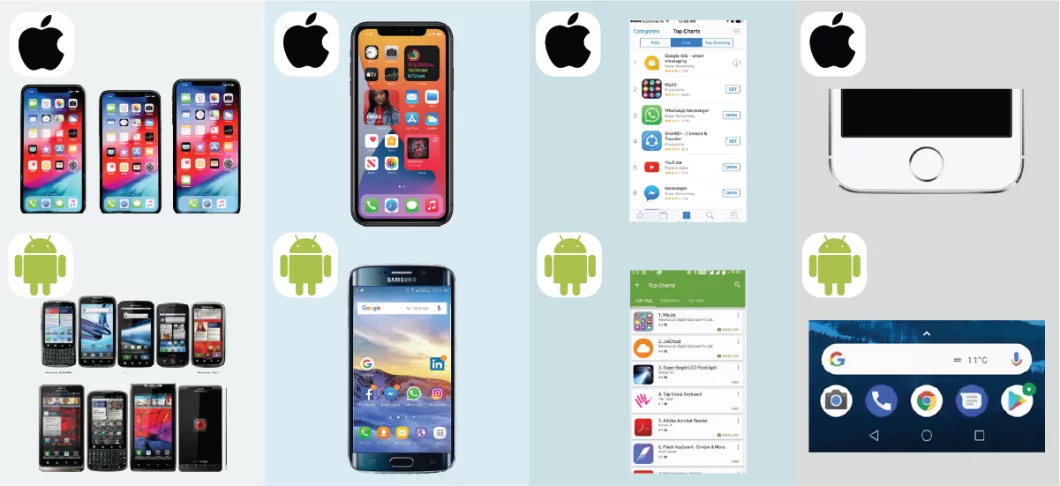
Screen & Resolutions: Android devices are available across a wide range of manufacturers, screen sizes, and display resolutions. This diversity provides users with more options but requires developers to test applications across multiple devices and configurations.
In contrast, Apple’s ecosystem includes a limited number of devices with standardized hardware and display specifications. This consistency simplifies testing and optimization, allowing developers to deliver a more uniform user experience across iPhones and iPads. Both Android and iOS devices now support high-resolution displays, advanced refresh rates, and improved visual performance ensuring high-quality user experiences across modern mobile applications.
UI Interface: Android offers greater customization, allowing users to modify themes, widgets, layouts, and navigation styles according to their preferences.
iOS follows a more standardized approach, focusing on consistency, simplicity, and a seamless user experience across Apple devices.
Menu Bar: Android applications commonly use navigation drawers, bottom navigation bars, and gesture-based controls for navigation.
iOS primarily relies on tab bars and gesture navigation, following Apple’s design guidelines to provide a consistent user experience.
Home/Back button: Modern Android devices support both gesture navigation and traditional navigation buttons, including the Back button.
iOS primarily uses gesture-based navigation, allowing users to move between screens and applications through swipe actions.
4. In-Demand for Audience
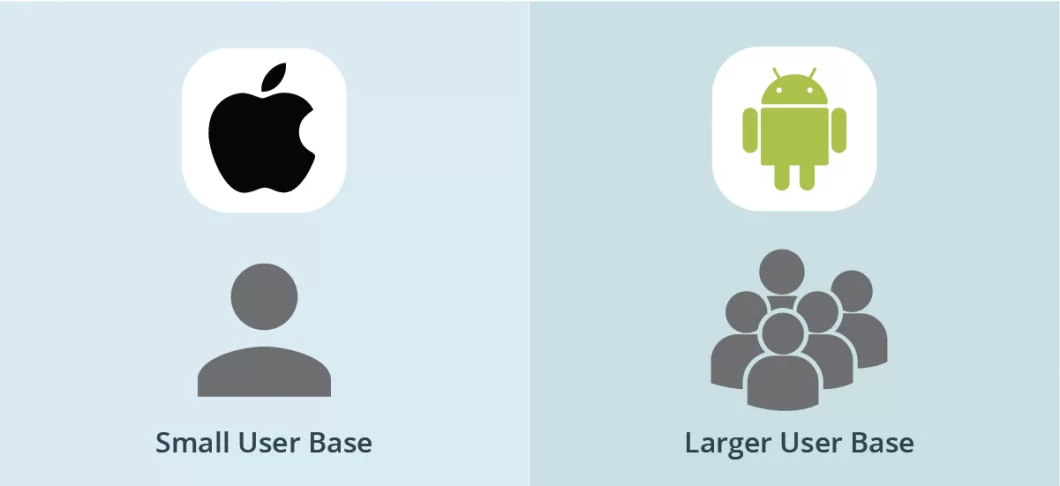
Android holds a larger global market share due to its wide availability across budget and mid-range devices, especially in emerging markets such as Asia, Africa, and South America.
iOS has a smaller user base but generally demonstrates higher engagement and stronger in-app spending behavior, particularly in developed markets like North America and Western Europe.
For businesses, Android offers broader reach, while iOS often delivers higher revenue per user, making both platforms valuable depending on business goals and target audience.
5. Monetization Marking
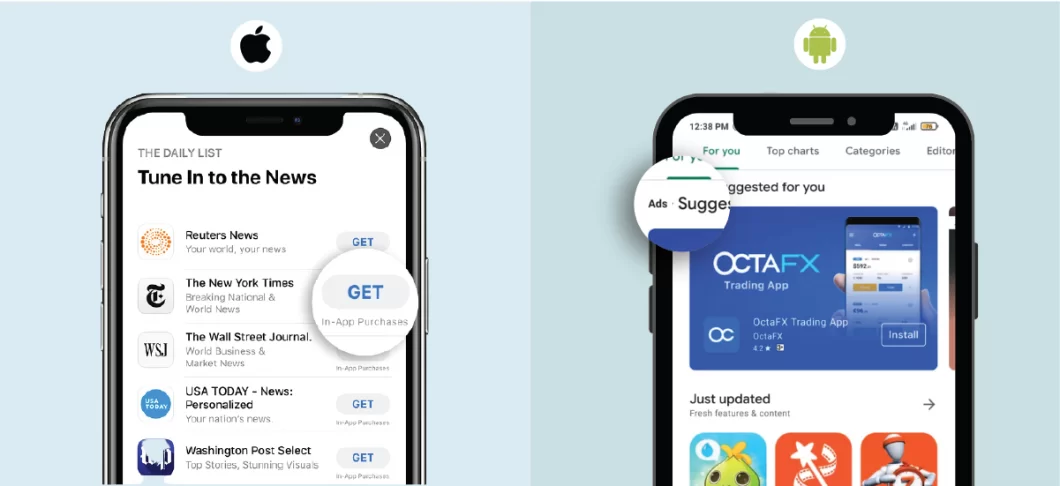
Android applications often rely on a combination of ad-based revenue, freemium models, and in-app purchases due to their large global user base.
iOS apps generate higher revenue per user and are more focused on subscriptions and in-app purchases, supported by stronger user spending behavior.
In 2026, subscription-based models and AI-powered app features have become the primary drivers of mobile app revenue across both platforms.
6. Complexity in Development
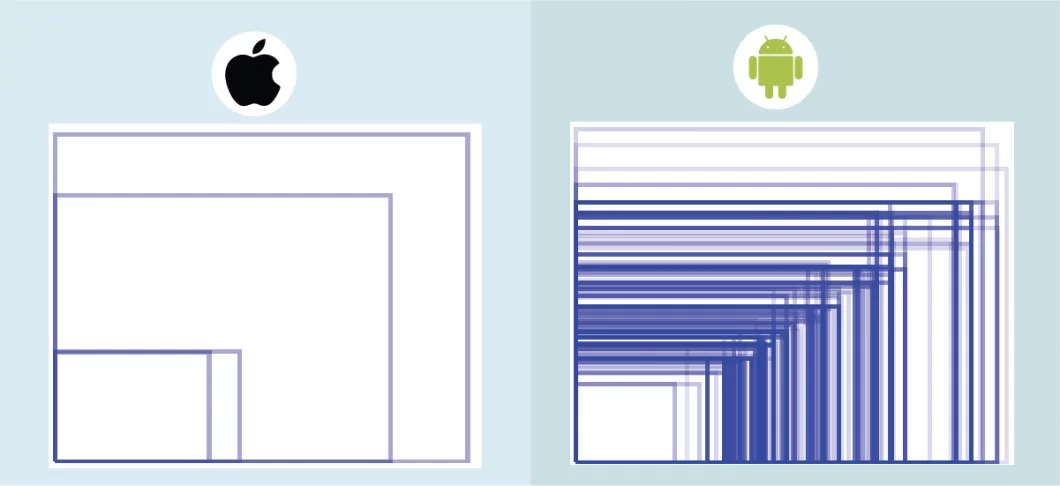
Android development involves higher testing complexity due to a wide range of devices, screen sizes, and OS versions. This increases QA effort and requires broader compatibility checks.
iOS development is generally more consistent because Apple controls both hardware and software, resulting in fewer device variations and more predictable performance.
Modern cross-platform frameworks and AI-assisted development tools have reduced overall complexity for both platforms, making app development faster and more efficient than in previous years.
7. Fast-Paced Development
App development timelines depend on factors such as feature complexity, third-party integrations, testing requirements, and design scope rather than the platform alone.
Android development may require additional testing due to device diversity, while iOS benefits from a more controlled ecosystem.
With modern frameworks like Flutter, React Native, and AI-assisted development tools, the overall development speed gap between Android and iOS has significantly reduced.
8. Cost Analysis
Mobile app development cost depends on factors such as feature complexity, UI design requirements, backend infrastructure, third-party integrations, and testing scope.
Android apps may require higher testing effort due to device fragmentation, while iOS apps often involve more predictable development cycles.
Cross-platform frameworks and reusable codebases have reduced overall development costs, especially for businesses targeting both platforms simultaneously. Long-term costs also include maintenance, updates, and scalability planning.
9. The Deployment Saga
Deployment processes differ between Android and iOS due to their store policies and review systems.
Google Play Store uses a more automated review process with staged rollouts, allowing developers to release updates gradually and fix issues quickly if needed.
Apple App Store follows a stricter review process with detailed app validation, which can increase approval time but ensures higher quality and security standards.
Modern development pipelines use CI/CD automation to streamline builds, testing, and deployment across both platforms, improving release speed and reliability.
10. Market Dominance
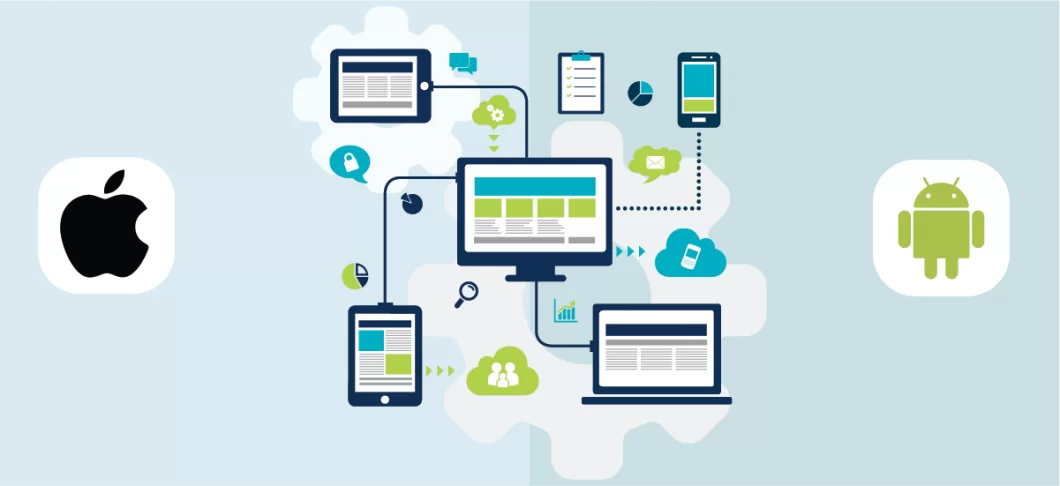
Android and iOS dominate the global smartphone ecosystem, with Android holding the largest share of devices worldwide due to its presence across multiple manufacturers and price segments.
iOS maintains a smaller share but remains strong in premium markets, particularly in regions like North America, Japan, and Western Europe.
While Android leads in global usage, iOS continues to generate a higher share of mobile app revenue, making both platforms strategically important for businesses targeting different market segments.
How to Choose the right one: Android Vs iOS
Choosing between Android and iOS depends on your business goals, target audience, and revenue strategy.
If your goal is maximum global reach, Android is a better choice due to its large user base across emerging markets.
If your goal is higher revenue per user and stronger monetization through subscriptions, iOS is more effective in premium markets.
For startups and growing businesses, a dual-platform strategy is often the most balanced approach, especially when scaling is a priority.
Ultimately, the right choice depends on whether your focus is market expansion, monetization efficiency, or long-term scalability.
The Conclusion
When opting for a platform to develop the mobile application it is highly recommended to be well aware of the different aspects of the available development architectures in the market.
It allows you to be more specific in your requirements and helps you to develop a well-planned mobile application for your business.
Although numerous companies are available for mobile app development a leading organization that has significantly worked on creating some of the best mobile apps in both Android and iOS for enterprises under the domain of Automotive, Healthcare, Manufacturing, and Retail is Hashstudioz Technologies.
Hashstudioz Technologies under its expert team of skilled developers in Android and iOS can help you out in the development of a leading mobile app for your enterprise. You can reach out to know more about the company and explore the opportunity for your mobile app development.
Hope you have found this article helpful while making decision which platform to choose your next business idea. Hashstudioz has already delivered various app projects ranging from fleet management to on demand apps. Interested to check our app development services and various industry based apps delivered? Click here
At the same time, If you have any specific query feel free to discuss with us by clicking here or send your requirements to info@localhost
Frequently Asked Questions
1. Which is better for app development, Android or iOS?
Android is better for reaching a larger global audience, while iOS is better for higher revenue per user and premium markets.
2. Is Android app development more expensive than iOS?
Not necessarily. Costs depend on app complexity, but Android may require more testing due to device variety.
3. Which platform makes more money, Android or iOS?
iOS apps generally generate higher revenue per user, while Android earns more through larger user volume.
4. Can one app work on both Android and iOS?
Yes, cross-platform frameworks like Flutter and React Native allow a single codebase for both platforms.
5. Which platform is better for startups?
Startups targeting reach often choose Android first, while those focusing on monetization prefer iOS.